



Articles by Chris Clifton
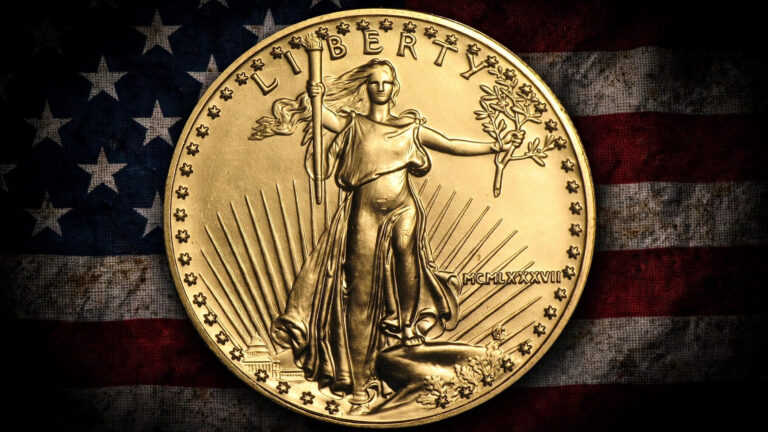
Why Are 1987 American Gold Eagles Dated MCMLXXXVII?
1987 American Gold Eagles are dated MCMLXXXVII because the young series wrote its dates in Roman numerals, as the Saint-Gaudens double eagle it revives had done. MCMLXXXVII is simply 1987 in Roman numerals. The Mint kept the format for the Gold Eagle's first six years — MCMLXXXVI through MCMXCI, 1986 to 1991 — then switched to ordinary Arabic numerals in 1992 after the public complained the Roman dates were confusing. In that second bullion year, the one-ounce coin's mintage was 1,045,500.
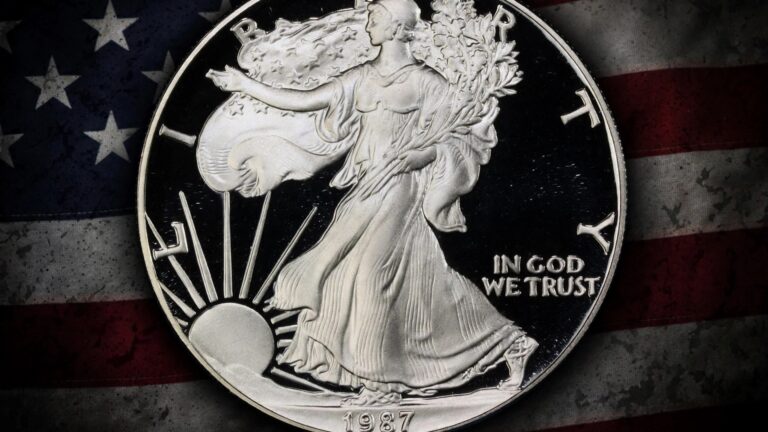
What Is the 1987-S Proof American Silver Eagle?
The 1987-S proof American Silver Eagle is the second-year proof of the young Silver Eagle series, struck at San Francisco with a mintage of 904,732. Only the first-year 1986-S proof stands above it: that coin sold 1,446,778 pieces and remains the highest proof mintage in the entire series. The 1987-S is therefore the second-ranked proof of the program — a big mintage by any later standard, struck while the series was still new and its collector base was forming.
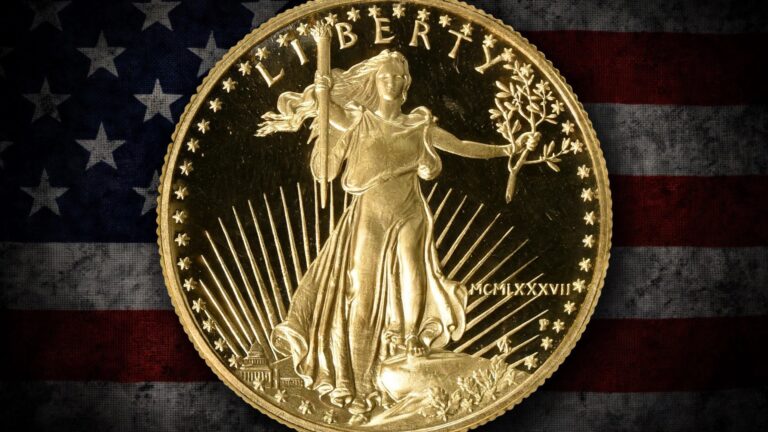
What Was the First Fractional-Size Proof American Gold Eagle?
The first fractional-size proof American Gold Eagle is the 1987-P $25 half-ounce coin. In the program's 1986 debut year, the Mint had offered a proof Gold Eagle in the one-ounce size only; in 1987 it extended the proof line to the half ounce, striking 143,398 of the $25 coins at Philadelphia. The new fractional proof was sold alongside the one-ounce proof — itself struck to 147,498 pieces — in a two-coin proof set, the format that introduced proof Gold Eagle collecting below the one-ounce size.
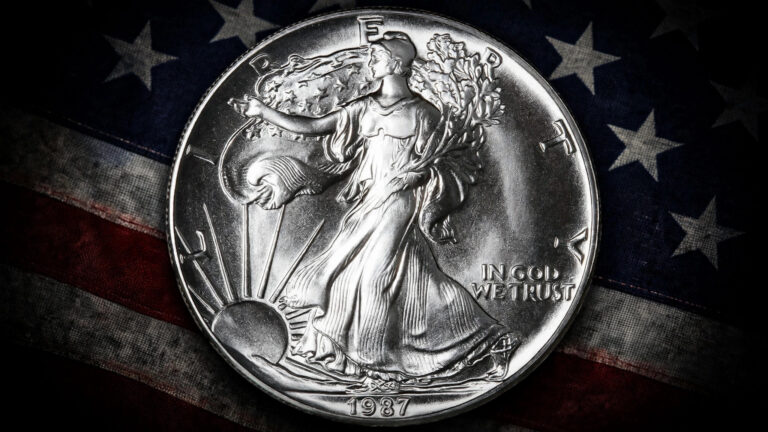
Why Did 1987 American Silver Eagle Bullion Output More Than Double?
Bullion American Silver Eagle production more than doubled in the program's second year because first-year demand had only begun to build: the U.S. Mint struck 11,442,335 bullion Silver Eagles in 1987, up from 5,393,005 in the 1986 debut year. The 1987 figure became the young series' production record and stood until 2007. A much later detail, confirmed in a Mint response to a Freedom of Information Act request, is that the entire 1987 bullion mintage was struck at San Francisco — a fact the coins themselves, which carry no mint mark, do not reveal.
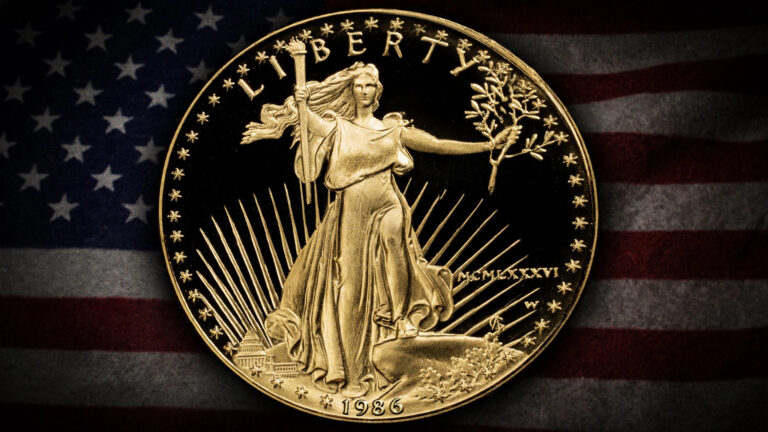
What Is the 1986-W Proof American Gold Eagle?
The 1986-W Proof American Gold Eagle is the one-ounce proof struck at West Point in the Gold Eagle program's debut year — and it was the only proof Gold Eagle offered in 1986. Where the bullion program launched in four sizes at once, the proof lineup began with a single coin. Its mintage of 446,290 remains the highest ever recorded for a proof Gold Eagle of any year or size, a record set in the program's first months and never since approached.
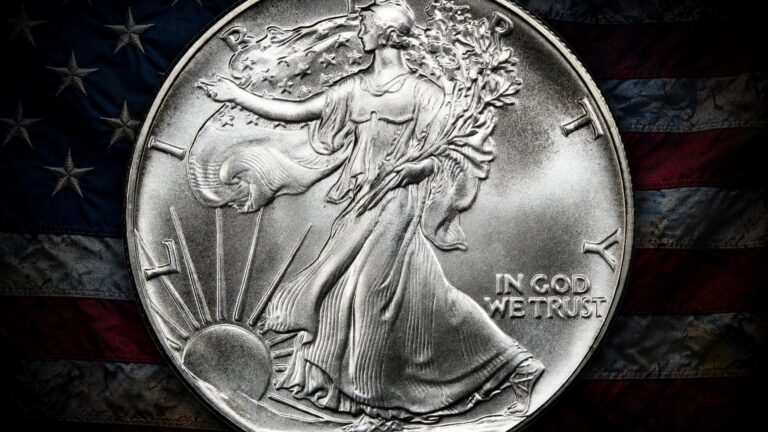
What Was the First American Silver Eagle Bullion Coin?
The first American Silver Eagle bullion coin reached the public on November 24, 1986 — a one-ounce silver bullion coin authorized by the Liberty Coin Act and struck from silver held in the Defense National Stockpile. The program began with a ceremony: Treasury Secretary James Baker struck the first coin at the San Francisco Mint on October 29, 1986. The first-year mintage of 5,393,005 coins sold out almost immediately. The coin pairs Adolph A. Weinman's Walking Liberty with John Mercanti's heraldic eagle, two designs that have defined the series ever since.
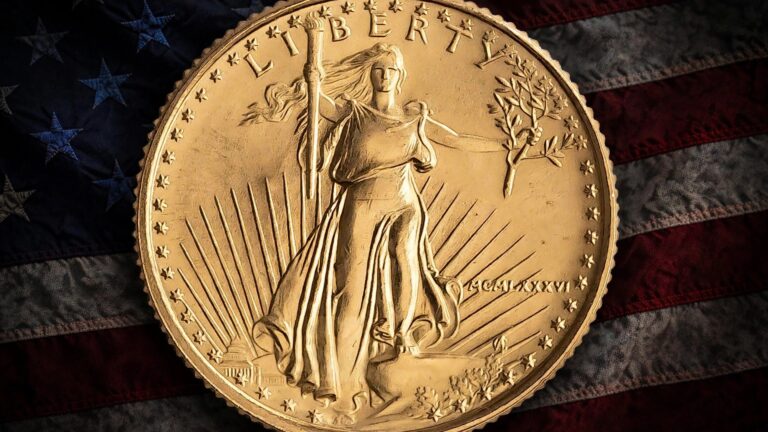
What Were the First American Gold Eagle Bullion Coins?
The first American Gold Eagle bullion coins were released on October 20, 1986, under the Gold Bullion Coin Act of 1985. They were the first gold bullion coins the United States Mint had ever issued, and they ended a gap of more than fifty years in American gold coinage: no U.S. gold coins had been struck since the early 1930s. For the design, the Mint reached back to the most admired gold coin in its history — Augustus Saint-Gaudens' double-eagle Liberty, created for the $20 gold piece of 1907. The one-ounce bullion coin's first-year mintage was 1,362,650 pieces.
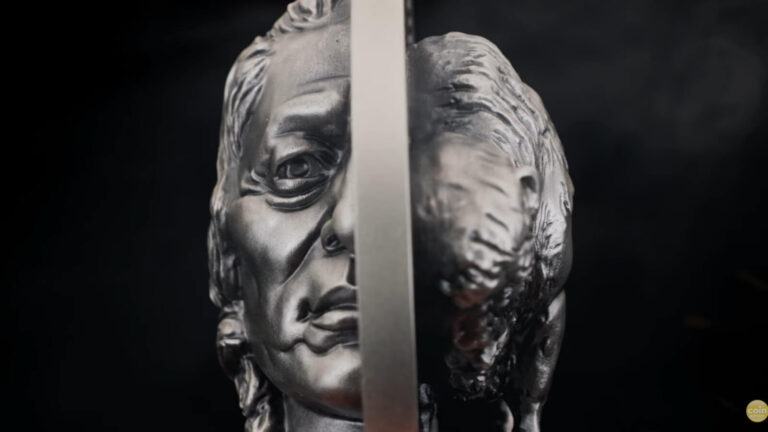
What Is the Coming To Life™ Buffalo Nickel?
The Coming To Life Buffalo Nickel is the second issue in The XceptionalMint's Coming To Life series: Michael Gaudioso's original three-dimensional interpretation of James Earle Fraser's 1913 Buffalo nickel, struck in 5 ounces of .999 fine silver with the sculpture rising a full 33 mm from the surface. Produced by the private XceptionalMint and issued by the Oglala Lakota Sioux Nation as its five-cent coin, it is limited to 5,000 pieces. It is not a U.S. Mint product, not United States legal tender, and not a reissue of Fraser's nickel — it is Gaudioso's extrapolation of that design into free-standing sculpture that happens to be a coin.
What Is the Coming To Life™ 2026 Bicentennial Quarter Drummer Boy?
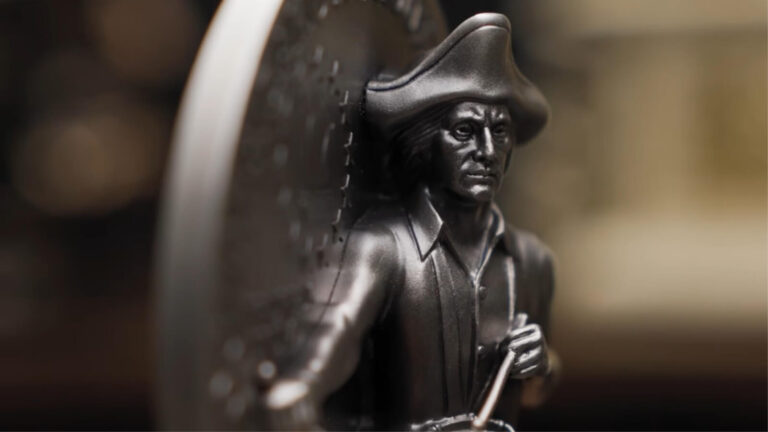
The Coming To Life 2026 Bicentennial Quarter Drummer Boy is the third issue in The XceptionalMint's Coming To Life series: Michael Gaudioso's original three-dimensional interpretation of Jack L. Ahr's beloved Drummer Boy, struck in 5 ounces of .999 fine silver and dual-dated 1776–2026 for America's 250th anniversary. Limited to 1,776 pieces — a mintage chosen for the year of independence — it is a privately produced quarter dollar of the Oglala Lakota Sioux Nation, not a U.S. Mint coin and not United States legal tender.
What Is the Coming To Life™ Silver Eagle Type 2?
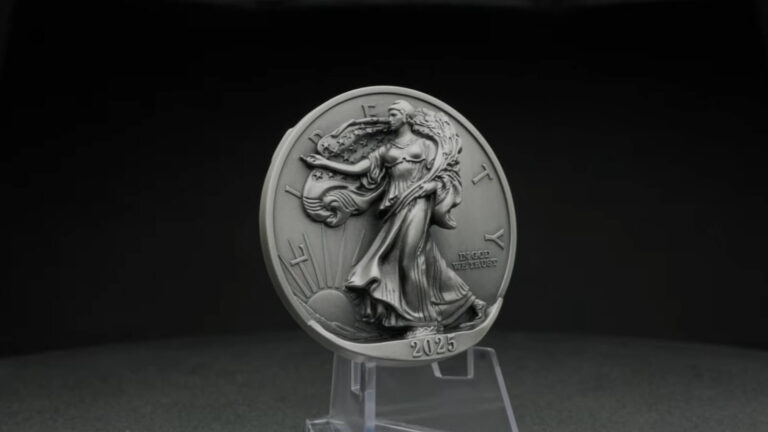
The Coming To Life Silver Eagle Type 2 is the coin that launched the Coming To Life series: Michael Gaudioso's original three-dimensional interpretation of the American Silver Eagle's Type 2 design, produced by the private The XceptionalMint and issued by the Oglala Lakota Sioux Nation. Dated 2025 and struck in 5 ounces of .999 fine silver with a mintage of 2,025 individually numbered coins, it pairs Adolph A. Weinman's Walking Liberty with Emily Damstra's eagle-landing reverse — the very design Gaudioso himself sculpted for the U.S. Mint in 2021. It is not a U.S. Mint American Silver Eagle and is not United States legal tender; it is a $1 issue of the Oglala Lakota Sioux Nation.