


What Is the 1986-W Proof American Gold Eagle?
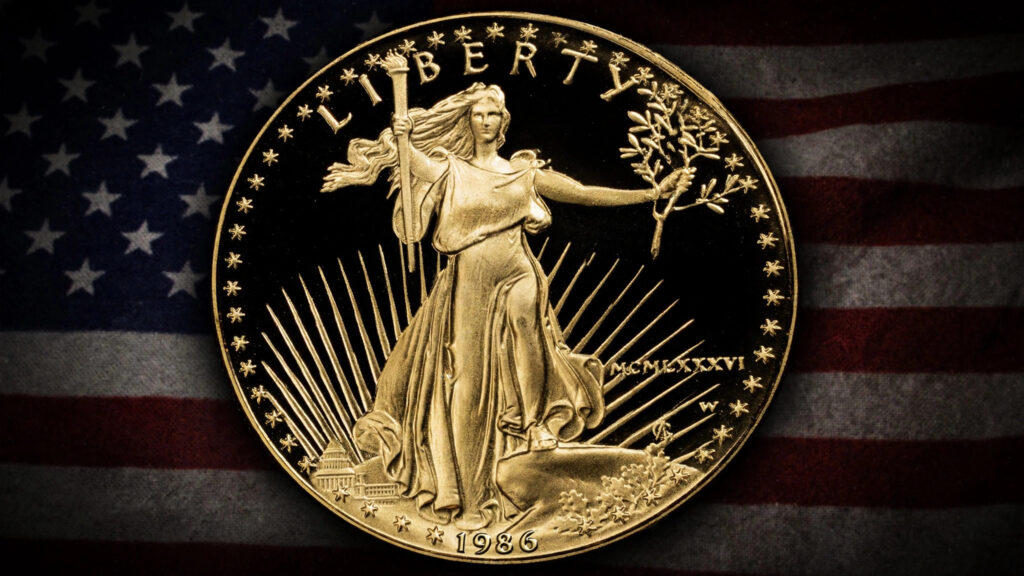
The 1986-W Proof American Gold Eagle is the one-ounce proof struck at West Point in the Gold Eagle program’s debut year — and it was the only proof Gold Eagle offered in 1986. Where the bullion program launched in four sizes at once, the proof lineup began with a single coin. Its mintage of 446,290 remains the highest ever recorded for a proof Gold Eagle of any year or size, a record set in the program’s first months and never since approached.
Key Takeaways
- The only proof Gold Eagle offered in the program’s 1986 debut year. No fractional coins were produced.
- One ounce, struck at West Point (W mintmark).
- Mintage of 446,290 — still the highest for any proof Gold Eagle.
- The bullion program, by contrast, launched in four sizes (post 10 in this series).
Why was there only one proof Gold Eagle in 1986?
Because the Mint started the proof program with the flagship alone. The American Gold Eagle debuted in October 1986 as a bullion program first — four bullion sizes, sold through the dealer network — and the collector offering was a single proof version of the one-ounce coin, struck at West Point. Fractional proof Gold Eagles did not exist yet; they were added to the program in later years. For a collector in 1986 who wanted the new coin in its finest finish, the 1986-W one-ounce proof was the whole menu.
How many 1986-W proof Gold Eagles were struck?
The West Point Mint struck 446,290 of them. Like its silver counterpart, the gold proof was a first-year phenomenon: a brand-new program, a famous revived design, and a collecting public that had waited more than fifty years for American gold coinage to return. The proof gave that public the premium version of the debut, and they bought it in numbers the program has never repeated in proof form.
Does the 1986-W’s mintage record still stand?
It stands as the largest proof Gold Eagle mintage ever. Later proof Gold Eagles — including the fractional sizes added after 1986 and the four-coin proof sets that became an annual fixture — have all sold in smaller numbers, often far smaller. The record is also a measure of the debut itself: the Gold Eagle launched on October 20, 1986 to the strongest first-year reception of any modern Mint bullion program, and the proof’s 446,290 coins were the collector share of that reception — buyers who wanted the return of American gold coinage in its finest finish, struck at West Point. The two 1986 proof Eagles together make a matched pair of records:
| 1986 proof issue | Mint | Mintage |
|---|---|---|
| Proof Silver Eagle | San Francisco (S) | 1,446,778 |
| Proof Gold Eagle | West Point (W) | 446,290 |
Both coins hold the proof mintage records for their series to this day. The gold coin’s 446,290 is not a rarity figure — the 1986-W is a common coin by mintage — but it is a permanent marker of how large the Gold Eagle’s first-year audience was, in both its bullion and proof forms.
Shop proof American Gold Eagle coins at Coin Advisor or call (877) 540-2646 to talk with an advisor about the first-year 1986-W proof.
FAQ
How many 1986-W Proof Gold Eagles were struck? 446,290, at the West Point Mint.
Was the 1986-W the only proof Gold Eagle sold in 1986? Yes. It was the only proof Gold Eagle offered in the debut year — a single one-ounce coin. Fractional proofs came later.
Is 446,290 still a record for proof Gold Eagles? Yes. It remains the highest mintage of any proof Gold Eagle, of any year or size.
Where was the 1986 proof Gold Eagle struck? At West Point, identified by the W mintmark. The companion proof Silver Eagle was struck at San Francisco.
This article was researched and drafted with AI assistance and reviewed and approved by [Author], [Role] at Coin Advisor, before publication.
Shop NGC and PCGS certified coins at Coin Advisor
Shop Coins →Related Reading
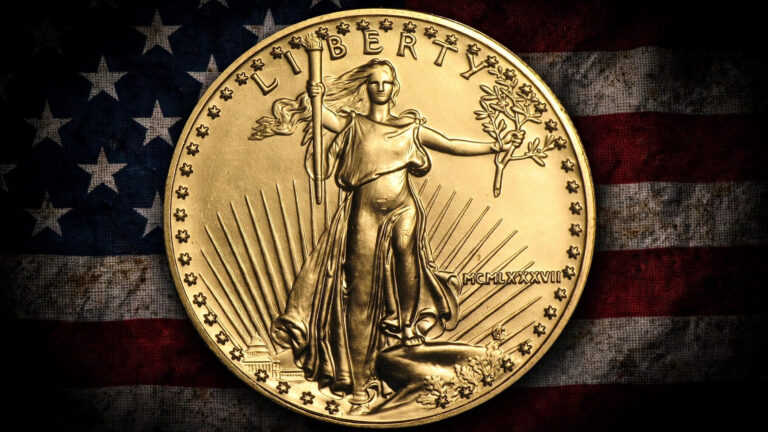
Why Are 1987 American Gold Eagles Dated MCMLXXXVII?
1987 American Gold Eagles are dated MCMLXXXVII because the young series wrote its dates in Roman numerals, as the Saint-Gaudens double eagle it revives had done. MCMLXXXVII is simply 1987 in Roman numerals. The Mint kept the format for the Gold Eagle's first six years — MCMLXXXVI through MCMXCI, 1986 to 1991 — then switched to ordinary Arabic numerals in 1992 after the public complained the Roman dates were confusing. In that second bullion year, the one-ounce coin's mintage was 1,045,500.
Read More →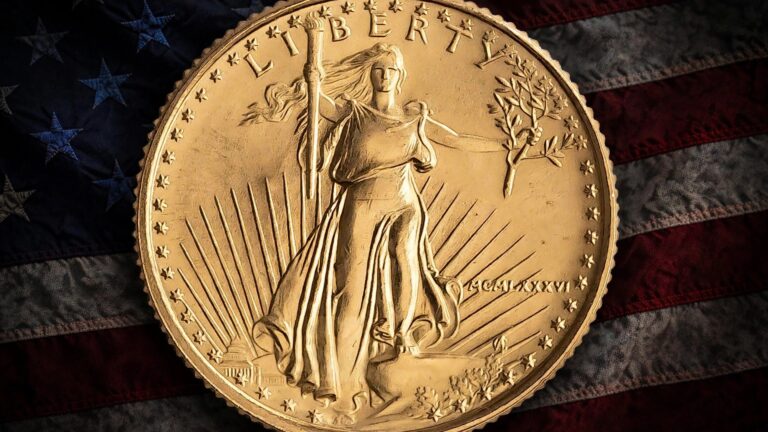
What Were the First American Gold Eagle Bullion Coins?
The first American Gold Eagle bullion coins were released on October 20, 1986, under the Gold Bullion Coin Act of 1985. They were the first gold bullion coins the United States Mint had ever issued, and they ended a gap of more than fifty years in American gold coinage: no U.S. gold coins had been struck since the early 1930s. For the design, the Mint reached back to the most admired gold coin in its history — Augustus Saint-Gaudens' double-eagle Liberty, created for the $20 gold piece of 1907. The one-ounce bullion coin's first-year mintage was 1,362,650 pieces.
Read More →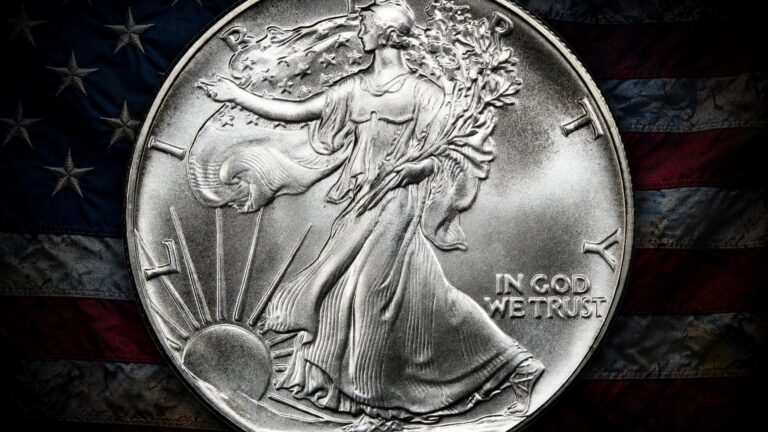
What Was the First American Silver Eagle Bullion Coin?
The first American Silver Eagle bullion coin reached the public on November 24, 1986 — a one-ounce silver bullion coin authorized by the Liberty Coin Act and struck from silver held in the Defense National Stockpile. The program began with a ceremony: Treasury Secretary James Baker struck the first coin at the San Francisco Mint on October 29, 1986. The first-year mintage of 5,393,005 coins sold out almost immediately. The coin pairs Adolph A. Weinman's Walking Liberty with John Mercanti's heraldic eagle, two designs that have defined the series ever since.
Read More →