


Who Was William M. Stewart, the Senator Who Branded 1873 a Crime?
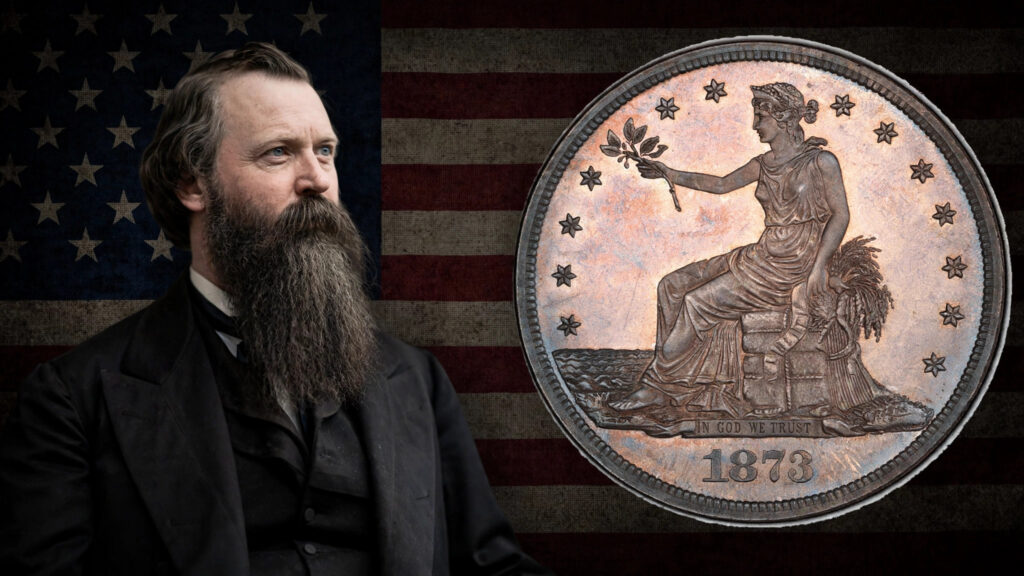
William Morris Stewart (1827–1909) was Nevada's first senator, the mining lawyer known as the "Father of the Mining Laws of the United States" for the federal mining statutes of 1866 and 1872. His place in coin history is stranger. Stewart was in the Senate in 1873 and voted for the Coinage Act that ended the silver dollar — and then, after silver's price collapsed, he returned to the Senate in 1887 and spent eighteen years denouncing that act as the "Crime of '73," claiming its passage had been a deception. The voting record is the honest footnote to his legend: the man who made "crime" the act's permanent name had been one of its supporters.
Key Takeaways
- Stewart served as Nevada's senator from 1865 to 1875 and again from 1887 to 1905.
- He wrote the federal mining-law framework of 1866 and 1872 and is credited with drafting the Fifteenth Amendment in its adopted form.
- He voted for the Coinage Act of 1873; by 1889 he was calling it a "crime" repeatedly in Senate speeches.
- His claim that the silver dollar's removal was smuggled through Congress is contradicted by the bill's printed, debated record.
How did a New York farm boy become the Comstock's lawyer?
Stewart became the West's leading mining lawyer by starting at the bottom of a mine shaft. Born in Galen, New York, on August 9, 1827, he reached California in 1850 and prospected around Nevada City, accumulating about $8,000 before quitting the diggings to study law. Admitted in 1852, he was a district attorney within a year and was writing some of the first rules for quartz mining in California. In 1860 he moved to Virginia City, Nevada, where the Comstock Lode's tangled claims produced years of litigation; Stewart defended the original claimants and, by report, earned fees reaching $500,000. When Nevada became a state in 1864, Stewart — who had chaired the judiciary committee of its constitutional convention — was elected its first senator and took his seat in February 1865.
What did Stewart build in his first Senate decade?
Stewart built the legal foundation of Western mining. His mining acts of 1866 and 1872 opened the public domain's mineral lands to citizens under rules miners had largely written for themselves on the ground, and the 1872 law, amended many times, still frames hard-rock mining on federal land today — the achievement behind his "Father of the Mining Laws" title. He is also credited with drafting the Fifteenth Amendment in the form in which it was finally adopted, and Nevada was the first state to ratify it after he telegraphed the news home. He retired in 1875 to a lucrative law and mining practice, wealthy and eminent. Few senators left a larger statutory footprint — which makes his 1873 vote the puzzle at the center of this post.
Did Stewart really vote for the "Crime of '73"?
He did — the roll calls are not ambiguous. When the coinage bill passed the Senate on January 17, 1873, by 36 votes to 14, Stewart was recorded among the yeas; he had also voted for an earlier version of the bill in 1871. Yet when he returned to the Senate in 1887, elected largely to fight the act's consequences, he argued that the dropping of the silver dollar had been concealed from Congress. In one 1889 speech he called the act a "crime" seven times, and the label stuck to it permanently. The contemporary rebuttal was savage: The Nation's editors printed the voting record against him in 1891 and noted that the bill had been printed repeatedly and debated across three Congresses. The fairest modern reading is unflattering but human. Stewart, busy with mining law and a mountain of Comstock litigation, almost certainly paid the long technical mint bill little attention in 1873. When silver prices collapsed and Nevada suffered, the oversight became indefensible — and a conspiracy was easier to explain to his constituents than a confession. John Sherman, the bill's manager, spent his own memoirs making the opposite case: that everything had been open. Both men were, in their way, revising.
What was Stewart's second career in the Senate?
Stewart's second Senate career was a campaign against his own vote. Returned in 1887 on an explicit promise to rectify what he called the crime of 1873, he fought for silver through the Sherman purchase years and bitterly opposed the 1893 repeal of the purchase clause, the fight retold in the Cleveland repeal post. When the Republican Party settled on gold in the mid-1890s, he was re-elected on the Silver Party ticket, as was his Nevada colleague John P. Jones. He also pioneered federal reclamation, proposing appropriations to irrigate the arid West before it became national policy. He retired in 1905, published his Reminiscences in 1908, and died in Washington on April 23, 1909. The phrase he spent two decades brandishing outlived everything else he wrote — which is precisely the irony his story should keep.
Collecting the Seated dollars and Comstock-era coinage of Stewart's Nevada? Browse silver coins and gold coins at Coin Advisor, or call (877) 540-2646 to talk with a Preferred Collector Division advisor.
FAQ
Did Stewart vote for the Coinage Act of 1873? Yes. He was recorded among the yeas when the bill passed the Senate on January 17, 1873, and had voted for an earlier version in 1871.
Did Stewart coin the phrase "Crime of '73"? He popularized it. From the late 1880s he called the act a "crime" in speech after speech — seven times in a single 1889 address — and the slogan grew from his campaign.
Why is Stewart called the Father of the Mining Laws? He authored the federal mining statutes of 1866 and 1872 that opened public mineral lands to claimants and still frame mining on federal land.
How long did Stewart serve in the Senate? Two stretches totaling 28 years: 1865 to 1875 as one of Nevada's first senators, and 1887 to 1905.
This article was researched and drafted with AI assistance and reviewed and approved by Chris Clifton, Founder & CEO at Coin Advisor, before publication.
Shop NGC and PCGS certified coins at Coin Advisor
Shop Coins →Related Reading
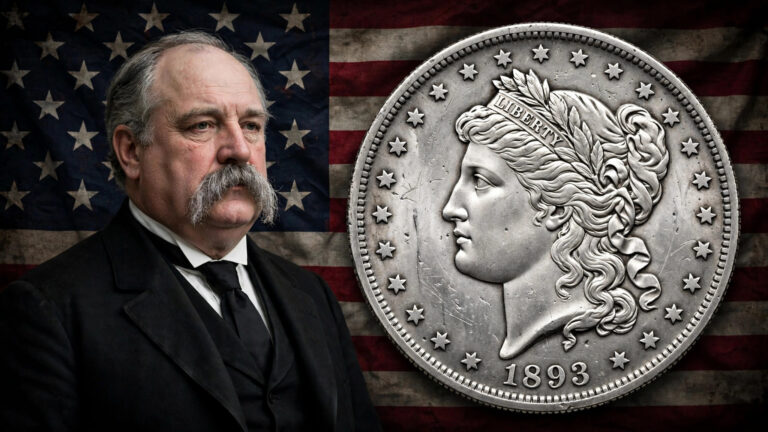
How Did Grover Cleveland’s Silver Repeal Create the Key-Date Morgans?
Grover Cleveland did not merely sign a coinage law — he forced one through. When the Panic of 1893 drained the Treasury's gold reserve below its symbolic $100 million floor, on April 22, 1893, Cleveland called Congress into special session for the single purpose of repealing the Sherman Silver Purchase Act, demanded repeal with no free-silver substitute, and pressured his own party's senators until he could sign the repeal on November 1, 1893. With the government no longer required to buy silver and coin it into dollars, Morgan dollar production collapsed — and the tiny mintages of 1893–95 became the key dates collectors chase today.
Read More →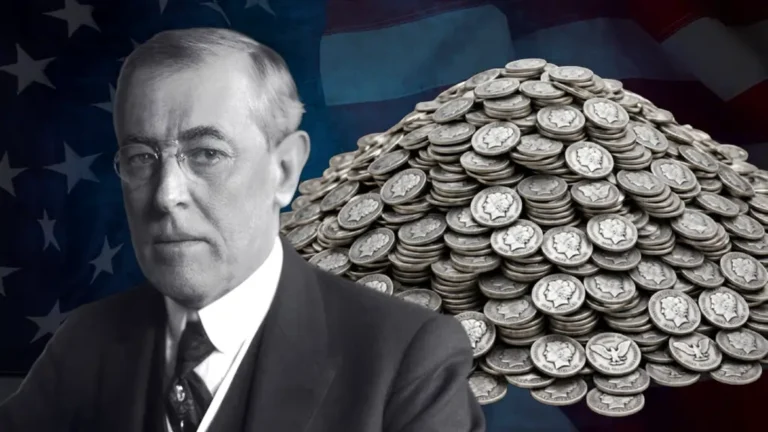
Why Did Woodrow Wilson Melt 270 Million Silver Dollars?
Woodrow Wilson signed the Pittman Act on April 23, 1918, a wartime measure that authorized melting up to 350 million silver dollars to supply Britain with bullion for India. In the end 270,232,722 silver dollars — nearly half of all ever struck — were melted, and the law's replacement clause is the direct reason the Morgan dollar returned in 1921 and the Peace dollar was born.
Read More →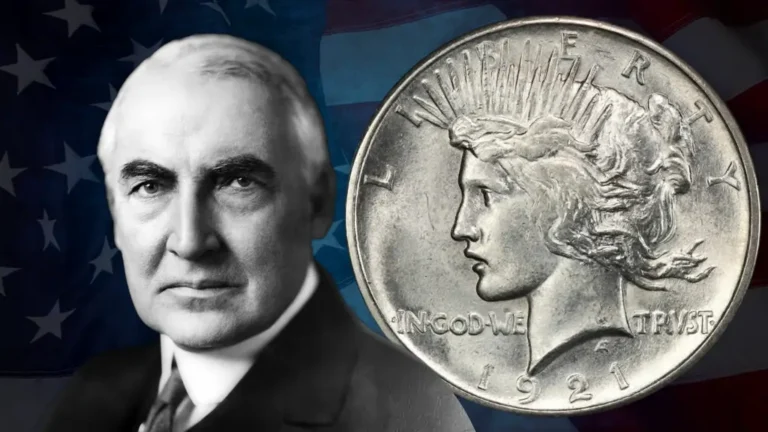
How Did Warren G. Harding Personally Shape the Peace Dollar?
Warren G. Harding shaped the Peace dollar with his own hand, unusually for a president. By Executive Order of July 28, 1921 he put coin designs under Commission of Fine Arts review, he personally approved Anthony de Francisci's winning drawings — objecting even to the dimple on Liberty's chin — and when veterans protested the broken sword on the reverse, he ordered it removed days before production began.
Read More →