


Why Did Woodrow Wilson Melt 270 Million Silver Dollars?
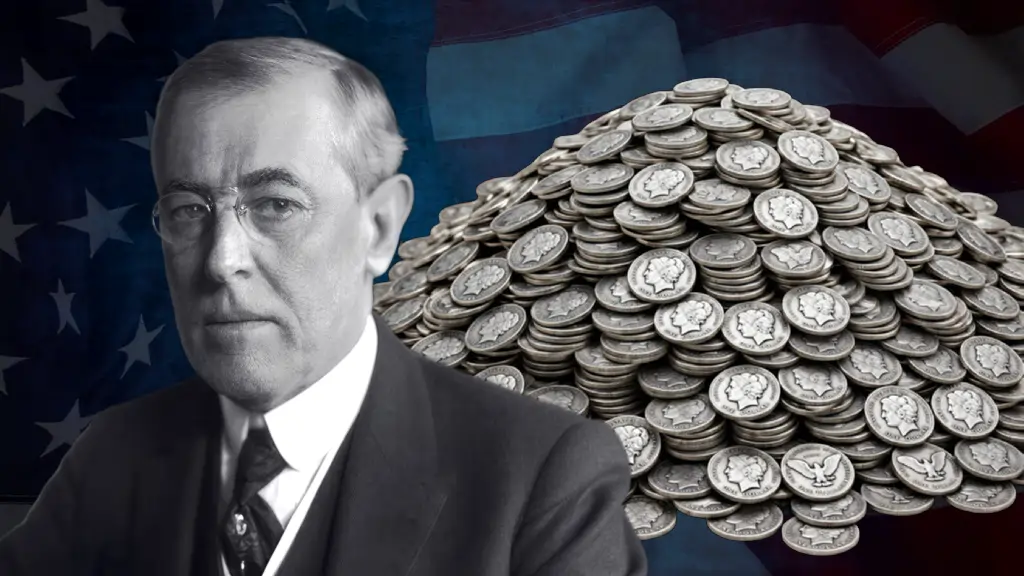
Woodrow Wilson signed the Pittman Act on April 23, 1918, a wartime measure that authorized melting up to 350 million silver dollars to supply Britain with bullion for India. In the end 270,232,722 silver dollars — nearly half of all ever struck — were melted, and the law's replacement clause is the direct reason the Morgan dollar returned in 1921 and the Peace dollar was born.
Key Takeaways
- Wilson signed the Pittman Act on April 23, 1918, authorizing the melting of up to 350 million silver dollars.
- Exactly 270,232,722 silver dollars were melted, nearly half of all standard silver dollars struck to that date.
- The Act required the Mint to buy domestic silver at $1 an ounce and coin replacement dollars.
- That replacement requirement produced the 1921 Morgan dollar and set up the Peace dollar that followed.
Why did Britain need American silver dollars in 1918?
Britain needed the silver because its war finance in India was failing. India ran on silver rupees, German propaganda whispered that Britain could not redeem its paper currency, and a run on silver threatened the colony that supplied soldiers and materiel for the First World War. London asked Washington for bullion, fast, in quantities the open market could not supply.
The United States had the metal sitting in Treasury vaults in the least useful form possible: hundreds of millions of Morgan and earlier standard silver dollars, struck under the Bland–Allison and Sherman purchase laws and mostly never circulated. Melting idle dollars into bars was the quickest way to move American silver into the British war effort. Senator Key Pittman of Nevada, whose mining state stood to gain from the replacement purchases, wrote and carried the bill.
What did the Pittman Act actually order?
The Act ordered three things: melt, sell, and replace. It authorized the Treasury to melt or break up to 350 million silver dollars and sell the bullion, at not less than $1 per ounce of fine silver, to foreign governments. Settlement actually consumed 270,232,722 coins, which were melted and shipped largely to India.
Crucially for collectors, the Act was not a one-way destruction order. It required the Mint to replace every melted dollar by buying newly mined American silver at a fixed $1 an ounce and coining it into standard silver dollars. That guaranteed market revived U.S. silver mining, and the replacement obligation sat waiting after the war for the dies to be cut. When dollar coinage resumed in 1921, it resumed under Pittman's replacement clause.
How did the melting produce the 1921 Morgan and the Peace dollar?
The replacement clause produced both coins, in sequence. The Mint first reached for the design it could strike immediately: George T. Morgan's dollar of 1878, re-engraved for a single final year. The 1921 Morgan — the only Morgan struck in Denver, and the highest-mintage issue of the series — is a Pittman Act replacement coin, not a revival anyone planned for collectors.
By late 1921 the replacement total still had room, and the new Peace dollar design, authorized to commemorate the end of the war, took over the obligation. Peace dollars struck through the 1920s completed the replacement of the melted horde. The arithmetic is why the two series meet in 1921: one law destroyed the old dollars, then paid for both of their successors. Rarity was reshaped too — melting nearly half the population made common-date Morgans scarcer in high grades than their original mintages suggest.
Was this Wilson's idea, or Pittman's?
It was Pittman's bill and Wilson's signature, and the distinction matters. The Federal Reserve Act of 1913 is Wilson's great monetary legacy, but it is a paper-currency and banking story, not a coinage one. The Pittman Act was wartime administration: the president signed a measure his government needed and Nevada's senator had written, with no record of Wilson taking a personal hand in its coinage details.
Yet Wilson's is the name on the law that did more physical damage — and more creative work — than any other single coinage act of the century. Honest framing makes the post better, not weaker: a president remembered for banking reform quietly authorized both the greatest melting and the last chapter of the classic silver dollar.
Collecting the coins Wilson's melting and replacement produced? Browse silver coins and gold coins at Coin Advisor, or call (877) 540-2646 to talk with a Preferred Collector Division advisor.
FAQ
How many silver dollars were melted under the Pittman Act? A total of 270,232,722 silver dollars were melted, out of 350 million authorized. That was nearly half of all standard silver dollars struck up to 1918.
Why were the dollars melted? Britain needed silver bullion to stabilize its currency in India during the First World War. The Treasury melted idle dollars held in its vaults and sold the metal to Britain.
Why is there a 1921 Morgan dollar? The Pittman Act required every melted dollar to be replaced using newly mined American silver bought at $1 an ounce. The Mint restarted the Morgan design in 1921 to begin that replacement coinage.
Did Wilson design or propose the Act? No. Senator Key Pittman of Nevada authored it; Wilson signed it on April 23, 1918 as a wartime measure. His coinage role was approval, not initiative.
This article was researched and drafted with AI assistance and reviewed and approved by [Author], [Role] at Coin Advisor, before publication.
Shop NGC and PCGS certified coins at Coin Advisor
Shop Coins →Related Reading
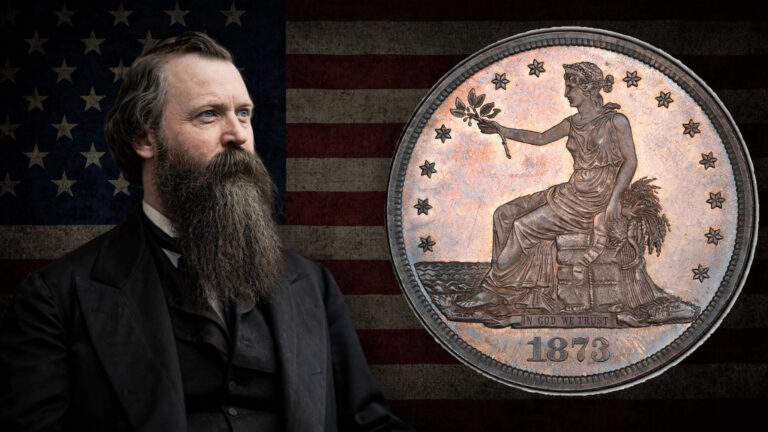
Who Was William M. Stewart, the Senator Who Branded 1873 a Crime?
William Morris Stewart (1827–1909) was Nevada's first senator, the mining lawyer known as the "Father of the Mining Laws of the United States" for the federal mining statutes of 1866 and 1872. His place in coin history is stranger. Stewart was in the Senate in 1873 and voted for the Coinage Act that ended the silver dollar — and then, after silver's price collapsed, he returned to the Senate in 1887 and spent eighteen years denouncing that act as the "Crime of '73," claiming its passage had been a deception. The voting record is the honest footnote to his legend: the man who made "crime" the act's permanent name had been one of its supporters.
Read More →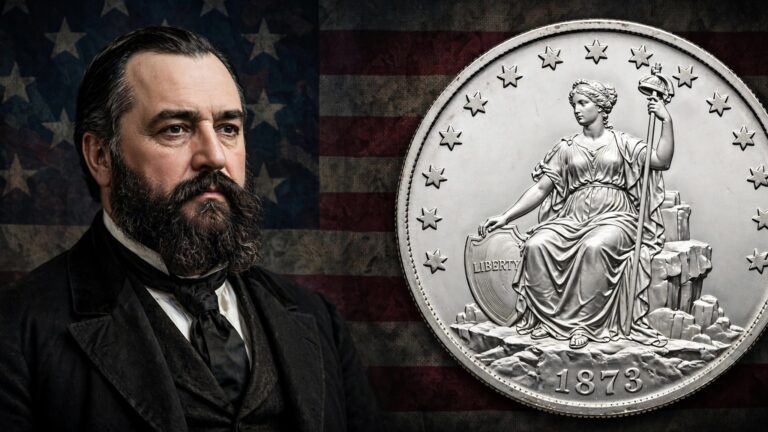
What Was the ‘Crime of ’73’ That Ulysses S. Grant Signed?
The "Crime of '73" is the bitter name silver interests gave the Coinage Act of February 12, 1873, which Ulysses S. Grant signed as a routine Mint housekeeping bill. Buried in its revision of the mint laws was one quiet omission: the standard silver dollar no longer appeared on the list of authorized coins, ending the free coinage of silver in the United States. The same act created the Trade dollar, abolished the two-cent piece, three-cent silver, and half dime, and slightly raised the weight of the remaining silver coins. Almost nobody noticed at the time — the explosion came three years later.
Read More →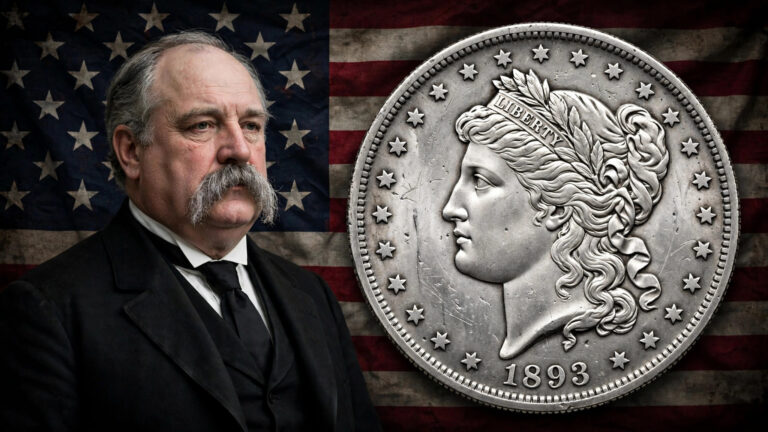
How Did Grover Cleveland’s Silver Repeal Create the Key-Date Morgans?
Grover Cleveland did not merely sign a coinage law — he forced one through. When the Panic of 1893 drained the Treasury's gold reserve below its symbolic $100 million floor, on April 22, 1893, Cleveland called Congress into special session for the single purpose of repealing the Sherman Silver Purchase Act, demanded repeal with no free-silver substitute, and pressured his own party's senators until he could sign the repeal on November 1, 1893. With the government no longer required to buy silver and coin it into dollars, Morgan dollar production collapsed — and the tiny mintages of 1893–95 became the key dates collectors chase today.
Read More →