


What Was the ‘Crime of ’73’ That Ulysses S. Grant Signed?
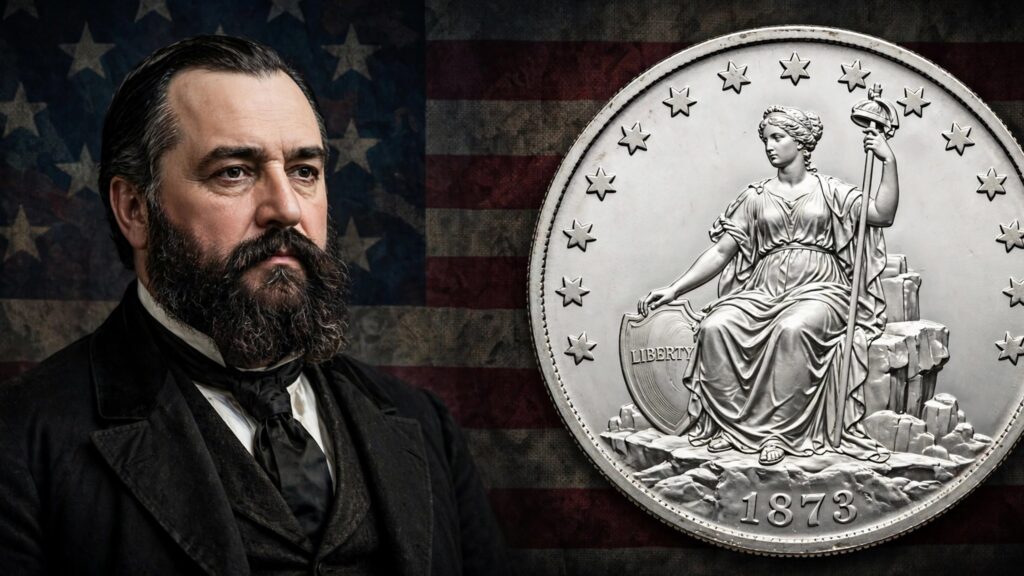
The "Crime of '73" is the bitter name silver interests gave the Coinage Act of February 12, 1873, which Ulysses S. Grant signed as a routine Mint housekeeping bill. Buried in its revision of the mint laws was one quiet omission: the standard silver dollar no longer appeared on the list of authorized coins, ending the free coinage of silver in the United States. The same act created the Trade dollar, abolished the two-cent piece, three-cent silver, and half dime, and slightly raised the weight of the remaining silver coins. Almost nobody noticed at the time — the explosion came three years later.
Key Takeaways
- Grant signed the Coinage Act of 1873 on February 12, 1873, a Mint-law revision he treated as housekeeping.
- The act omitted the standard silver dollar from authorized coinage, ending free coinage of silver and bimetallism in practice.
- It also created the Trade dollar and ended the two-cent piece, three-cent silver, and half dime.
- The "crime" charge erupted only in 1876, when falling silver prices sent miners to a Mint whose doors the act had quietly closed.
What did the Coinage Act of 1873 actually do?
It rewrote the Mint's rulebook, and one deletion changed history. The act was a comprehensive revision of the coinage laws, years in preparation at the Mint and Treasury. Its most consequential line was an absence: the standard silver dollar, authorized since 1792, was simply not among the coins the Mint was directed to strike, which meant private citizens could no longer bring silver bullion and have it coined into dollars — the end of "free coinage" for silver. In its place the act created a Trade dollar, a slightly heavier silver coin meant to compete in the China trade. It discontinued three small denominations — the two-cent piece, the three-cent silver, and the half dime — and it slightly increased the weight of the dime, quarter, and half dollar to tidy metric weights, a change the Mint marked by placing arrows beside the date.
Why did nobody call it a crime in 1873?
Because the missing dollar was not being coined anyway. Silver's market price in 1873 stood above the dollar's face value in metal terms, so no rational owner brought silver to the Mint to be coined at a loss; standard silver dollars had effectively not been struck for circulation in meaningful numbers for years. Dropping a dormant denomination from a housekeeping bill looked like tidying up, and it drew no public fight. Grant, by the available accounts, signed the measure without hesitation and without any known personal stake in the silver question. The conspiracy theories came later, invented to explain a clause nobody had bothered to debate while it was harmless.
How did the "crime" charge erupt in 1876?
When silver's price collapsed and the omission suddenly had teeth. New Western mines were pouring out silver just as European nations were demonetizing it, and by 1876 miners and bullion owners who carried silver to the Mint were turned away — the law gave them no dollar to coin it into. What had been a dormant clause now looked, to silver states, like a deliberate theft of their market, and "the Crime of '73" became the rallying cry of the free-silver movement for a generation. Congress partially reversed course with the Bland–Allison Act of 1878, which forced the Treasury to buy silver and coin Morgan dollars, but the free coinage Grant's signature ended was never restored. The argument his housekeeping bill started ran all the way to William Jennings Bryan's "Cross of Gold" campaign in 1896.
What should collectors look for from 1873?
The fingerprints of the act are all over one year's coinage. Because the weight of the subsidiary silver coins changed during 1873, dimes, quarters, and half dollars exist in two forms that year — "No Arrows" pieces at the old weight and "Arrows" pieces at the new one — varieties collectors still hunt side by side. The last regular Seated Liberty dollars were struck in 1873 before the denomination vanished from the list, and the two-cent piece, three-cent silver, and half dime all ended the same year, giving 1873 an unusual crop of final issues. The Trade dollar the act created went on to its own strange career in the China trade, returning home chopmarked by merchants — a whole collecting field born from the same signature.
Collecting the coins Grant's 1873 act produced? Browse silver coins and gold coins at Coin Advisor, or call (877) 540-2646 to talk with a Preferred Collector Division advisor.
FAQ
What was the "Crime of '73"? The nickname free-silver advocates gave the Coinage Act of 1873, which omitted the standard silver dollar from authorized coinage and ended the free coinage of silver in the United States.
Did Grant intend to end bimetallism? There is no evidence of a plot or of personal intent. Grant signed a comprehensive Mint-law revision, and the silver dollar clause drew no protest in 1873 because silver dollars were not actually being coined at the time.
Which coins ended with the 1873 act? The standard silver dollar, the two-cent piece, the three-cent silver piece, and the half dime were all discontinued by or under the act.
What is an "Arrows" 1873 coin? When the act slightly raised the weight of the dime, quarter, and half dollar, the Mint added arrows beside the date to mark the heavier standard. Both Arrows and No Arrows varieties were struck in 1873.
This article was researched and drafted with AI assistance and reviewed and approved by [Author], [Role] at Coin Advisor, before publication.
Shop NGC and PCGS certified coins at Coin Advisor
Shop Coins →Related Reading
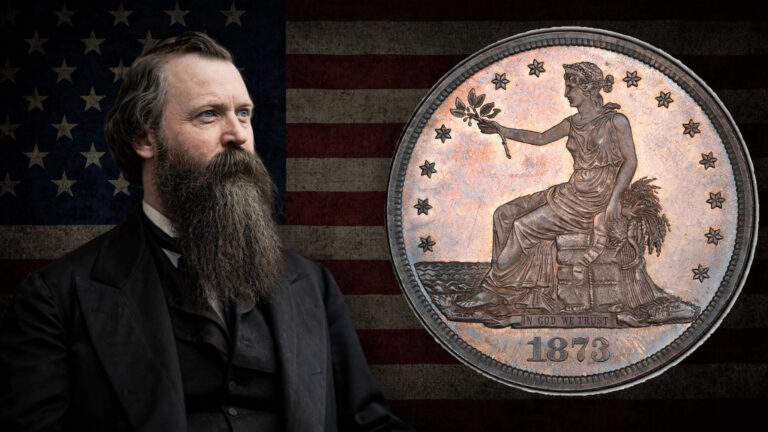
Who Was William M. Stewart, the Senator Who Branded 1873 a Crime?
William Morris Stewart (1827–1909) was Nevada's first senator, the mining lawyer known as the "Father of the Mining Laws of the United States" for the federal mining statutes of 1866 and 1872. His place in coin history is stranger. Stewart was in the Senate in 1873 and voted for the Coinage Act that ended the silver dollar — and then, after silver's price collapsed, he returned to the Senate in 1887 and spent eighteen years denouncing that act as the "Crime of '73," claiming its passage had been a deception. The voting record is the honest footnote to his legend: the man who made "crime" the act's permanent name had been one of its supporters.
Read More →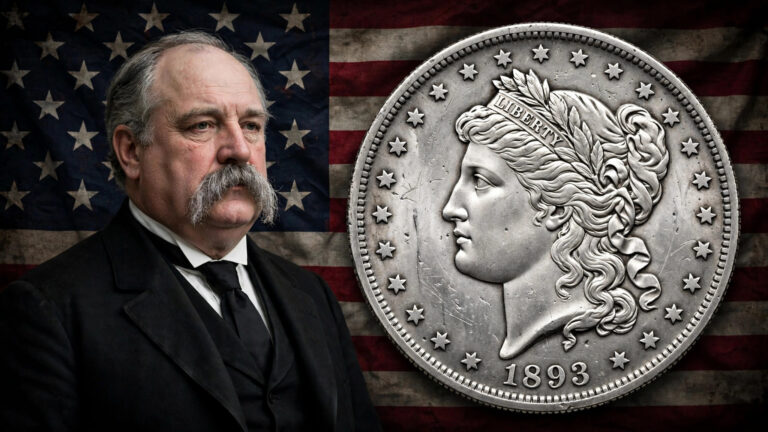
How Did Grover Cleveland’s Silver Repeal Create the Key-Date Morgans?
Grover Cleveland did not merely sign a coinage law — he forced one through. When the Panic of 1893 drained the Treasury's gold reserve below its symbolic $100 million floor, on April 22, 1893, Cleveland called Congress into special session for the single purpose of repealing the Sherman Silver Purchase Act, demanded repeal with no free-silver substitute, and pressured his own party's senators until he could sign the repeal on November 1, 1893. With the government no longer required to buy silver and coin it into dollars, Morgan dollar production collapsed — and the tiny mintages of 1893–95 became the key dates collectors chase today.
Read More →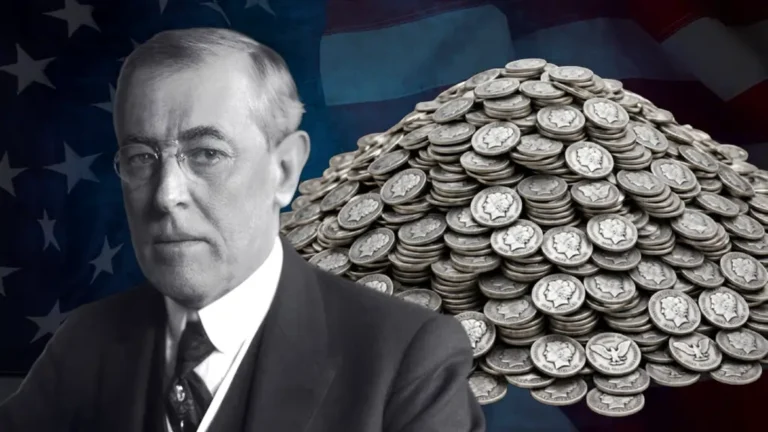
Why Did Woodrow Wilson Melt 270 Million Silver Dollars?
Woodrow Wilson signed the Pittman Act on April 23, 1918, a wartime measure that authorized melting up to 350 million silver dollars to supply Britain with bullion for India. In the end 270,232,722 silver dollars — nearly half of all ever struck — were melted, and the law's replacement clause is the direct reason the Morgan dollar returned in 1921 and the Peace dollar was born.
Read More →