


How Did Grover Cleveland’s Silver Repeal Create the Key-Date Morgans?
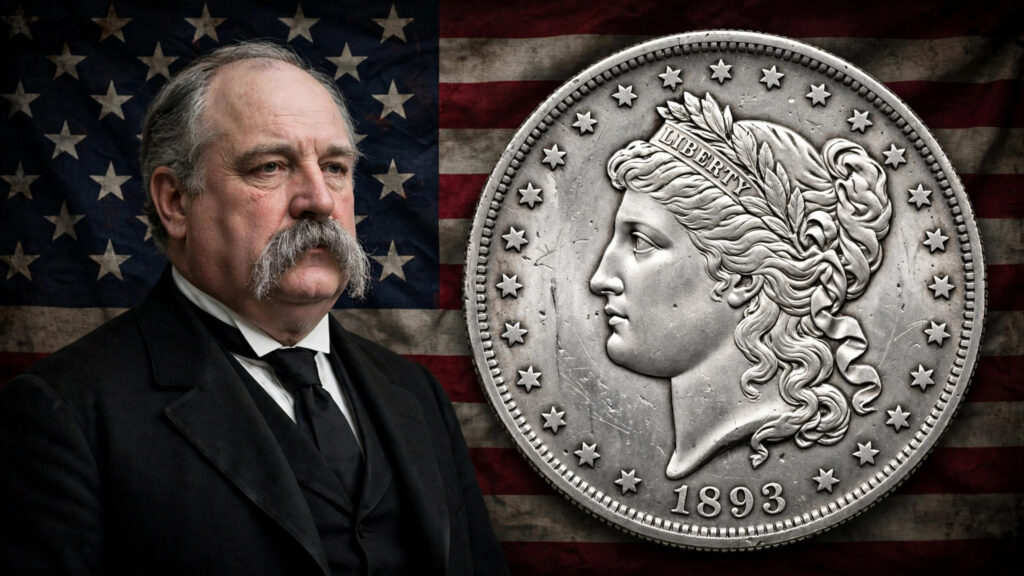
Grover Cleveland did not merely sign a coinage law — he forced one through. When the Panic of 1893 drained the Treasury's gold reserve below its symbolic $100 million floor, on April 22, 1893, Cleveland called Congress into special session for the single purpose of repealing the Sherman Silver Purchase Act, demanded repeal with no free-silver substitute, and pressured his own party's senators until he could sign the repeal on November 1, 1893. With the government no longer required to buy silver and coin it into dollars, Morgan dollar production collapsed — and the tiny mintages of 1893–95 became the key dates collectors chase today.
Key Takeaways
- Cleveland called a special session of Congress in August 1893 for one purpose: repealing the Sherman Silver Purchase Act.
- He signed the repeal on November 1, 1893, splitting his own Democratic Party to do it.
- He then defended the gold reserve with bond sales, including the famous 1895 syndicate deal.
- The collapse in silver dollar coinage that followed produced the key-date Morgans of 1893–95, above all the 1893-S.
How did the purchase law put the gold reserve in danger?
Through a redemption loop Cleveland was determined to break. The Sherman Silver Purchase Act of 1890 required the Treasury to buy 4.5 million ounces of silver every month, paying with notes that holders could redeem in gold. Every dollar coined under that system therefore pulled gold out of the Treasury while piling up silver the government was forced to absorb. When the Panic of 1893 struck, frightened noteholders redeemed in earnest, and on April 22, 1893 the gold reserve fell below $100 million — the level markets treated as the minimum backing for the nation's credit. In Cleveland's diagnosis, the purchase law itself was the leak: as long as it operated, no amount of confidence would keep gold in the vault.
What did Cleveland do that nobody made him do?
He made repeal his presidency's single fight. Cleveland summoned Congress into special session beginning in August 1893 — an extraordinary step — for the declared purpose of repealing the Sherman Act, and he insisted on clean repeal: no compromise authorizing some smaller silver purchase or free-silver substitute, which was the deal many in his own party wanted. When the bill stalled among Democratic senators, he applied the full leverage of the presidency, including federal patronage, to hold the votes. The repeal passed and he signed it on November 1, 1893, permanently splitting the Democratic Party between its gold and silver wings. Among the presidents in this series, Cleveland is the clearest case of the driver rather than the signer: the policy existed because he willed it, against his party, his Congress's instincts, and considerable political cost to himself.
How did he defend the gold reserve after repeal?
With bond sales, because repeal alone did not stop the drain. Even after November 1893, gold kept flowing out as notes issued under earlier law were presented, and Cleveland's Treasury repeatedly sold bonds to buy the reserve back up. The most famous episode came in February 1895, when the administration contracted with a banking syndicate led by J. P. Morgan to supply gold coin in exchange for bonds — a deal that stabilized the reserve but drew furious populist criticism that a president had gone hat in hand to Wall Street. Cleveland absorbed the criticism rather than abandon the policy. For collectors, the numismatic point is what all this defense meant for coinage: with the purchase mandate dead, the Mint's great engine of silver dollar production shut off almost overnight.
Which Morgan dollars did the repeal make rare?
The issues of 1893–95, struck in the wreckage of the purchase system. Once the Treasury no longer had to coin millions of mandated dollars, mintages fell to a fraction of what they had been: the San Francisco Mint produced just 100,000 Morgan dollars in 1893, making the 1893-S the lowest-mintage regular issue of the series and its most famous key date. Philadelphia struck only 110,000 dollars in 1894, and the 1895 Philadelphia dollar is known solely as a proof — 880 pieces, with no circulation strikes delivered — and is often called the King of Morgan Dollars. These are not rarities manufactured by hoarding or accident; they are the direct arithmetic of Cleveland's repeal, the collecting legacy of a president who decided the gold standard was worth a party split and took it.
Collecting the key-date Morgans Cleveland's repeal produced? Browse silver coins and gold coins at Coin Advisor, or call (877) 540-2646 to talk with a Preferred Collector Division advisor.
FAQ
What did Cleveland repeal in 1893? The Sherman Silver Purchase Act of 1890, which had required the Treasury to buy 4.5 million ounces of silver monthly. Cleveland signed the repeal on November 1, 1893, after a special session of Congress.
Why did repeal make Morgan dollars rare? The purchase law had forced the Mint to coin millions of silver dollars a year. With the mandate gone, dollar coinage collapsed, leaving the tiny mintages of 1893–95.
What is the rarest regular-issue Morgan dollar? The 1893-S, with a mintage of 100,000 pieces — the lowest of any regular Morgan dollar issue. The 1895 Philadelphia dollar exists only as an 880-piece proof.
Did repeal end the silver fight? No. Free-silver Democrats regrouped behind William Jennings Bryan in 1896, and the question was not settled until the Gold Standard Act of 1900.
This article was researched and drafted with AI assistance and reviewed and approved by [Author], [Role] at Coin Advisor, before publication.
Shop NGC and PCGS certified coins at Coin Advisor
Shop Coins →Related Reading
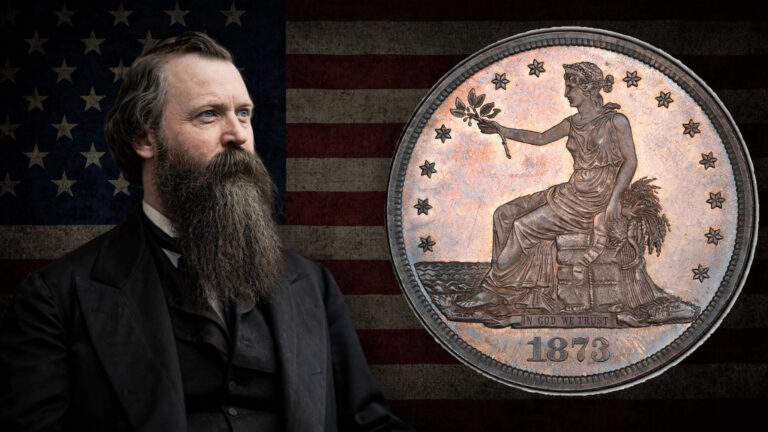
Who Was William M. Stewart, the Senator Who Branded 1873 a Crime?
William Morris Stewart (1827–1909) was Nevada's first senator, the mining lawyer known as the "Father of the Mining Laws of the United States" for the federal mining statutes of 1866 and 1872. His place in coin history is stranger. Stewart was in the Senate in 1873 and voted for the Coinage Act that ended the silver dollar — and then, after silver's price collapsed, he returned to the Senate in 1887 and spent eighteen years denouncing that act as the "Crime of '73," claiming its passage had been a deception. The voting record is the honest footnote to his legend: the man who made "crime" the act's permanent name had been one of its supporters.
Read More →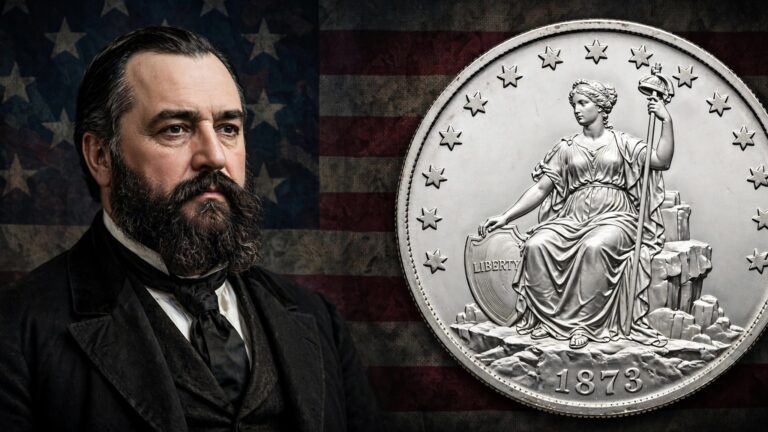
What Was the ‘Crime of ’73’ That Ulysses S. Grant Signed?
The "Crime of '73" is the bitter name silver interests gave the Coinage Act of February 12, 1873, which Ulysses S. Grant signed as a routine Mint housekeeping bill. Buried in its revision of the mint laws was one quiet omission: the standard silver dollar no longer appeared on the list of authorized coins, ending the free coinage of silver in the United States. The same act created the Trade dollar, abolished the two-cent piece, three-cent silver, and half dime, and slightly raised the weight of the remaining silver coins. Almost nobody noticed at the time — the explosion came three years later.
Read More →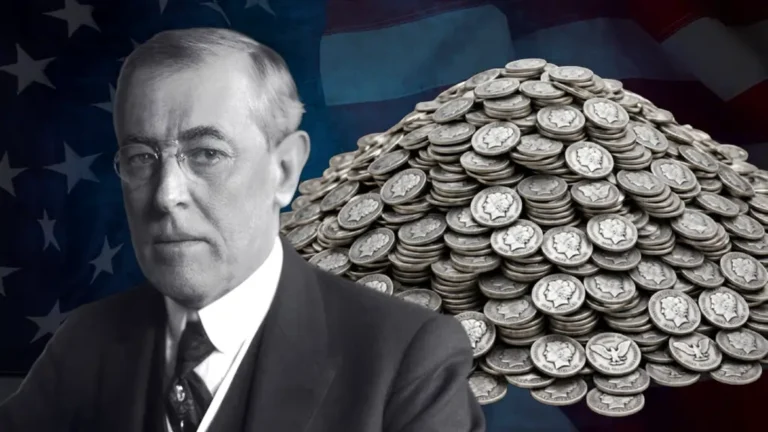
Why Did Woodrow Wilson Melt 270 Million Silver Dollars?
Woodrow Wilson signed the Pittman Act on April 23, 1918, a wartime measure that authorized melting up to 350 million silver dollars to supply Britain with bullion for India. In the end 270,232,722 silver dollars — nearly half of all ever struck — were melted, and the law's replacement clause is the direct reason the Morgan dollar returned in 1921 and the Peace dollar was born.
Read More →