


How Did Warren G. Harding Personally Shape the Peace Dollar?
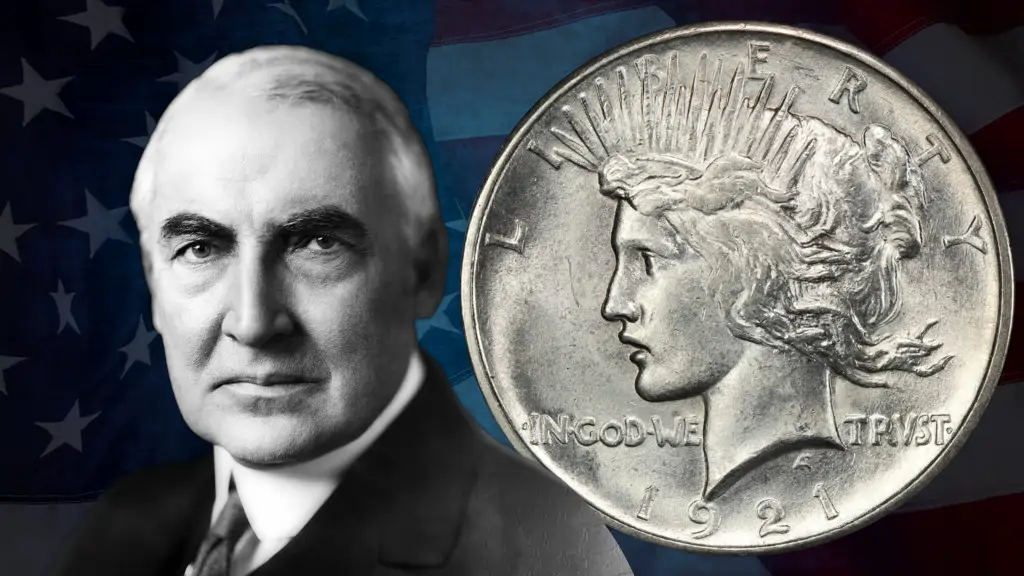
Warren G. Harding shaped the Peace dollar with his own hand, unusually for a president. By Executive Order of July 28, 1921 he put coin designs under Commission of Fine Arts review, he personally approved Anthony de Francisci's winning drawings — objecting even to the dimple on Liberty's chin — and when veterans protested the broken sword on the reverse, he ordered it removed days before production began.
Key Takeaways
- Harding's Executive Order of July 28, 1921 gave the Commission of Fine Arts formal review over coin designs, an influence that persists today.
- He personally approved de Francisci's Peace dollar drawings in December 1921, down to questioning the dimple on Liberty's chin.
- On his order, the broken sword was removed from the reverse and replaced by the olive branch.
- Production began December 26, 1921 — days after his edits — making Harding the most hands-on president the Peace dollar had.
How did a peace coin get proposed in the first place?
The peace coin began with collectors, not the White House. Farran Zerbe, the tireless promoter behind the American Numismatic Association's journal, campaigned in 1920 for a coin commemorating the end of the First World War, and the idea moved through Congress without needing new legislation: the Pittman Act's replacement coinage still required silver dollars, so a new design could ride on existing authority.
Harding's administration wanted the symbol. The president was negotiating the Washington disarmament conference and had formally ended the state of war with Germany in 1921; a dollar proclaiming peace fit his "return to normalcy" perfectly. The Commission of Fine Arts ran a competition among leading sculptors, and Anthony de Francisci — a Sicilian-born sculptor whose wife Teresa modeled for Liberty — won with a youthful, wind-swept Liberty and an eagle at rest, watching the sunrise.
What did Harding's 1921 executive order change about coin design?
His executive order made expert review a permanent step. On July 28, 1921, Harding issued an Executive Order formally assigning the Commission of Fine Arts to review designs for coins — extending an arrangement Theodore Roosevelt had used informally for the great 1907 redesigns into standing practice.
The Peace dollar was the order's first great test, arriving at the White House with the Commission's process behind it. The habit never left: a century later, the Commission still reviews U.S. coin and medal designs, and the Citizens Coinage Advisory Committee works alongside it. Harding's least-remembered signature may be his most durable coinage legacy, because it shaped how every later design gets judged before it is struck.
Why did Harding order the broken sword taken off the coin?
He removed the sword because it read as defeat instead of peace. De Francisci's original reverse showed the eagle perched on a broken sword, symbolizing disarmament. As photographs circulated in December 1921, objections rose — from veterans' groups and newspapers — that a broken sword suggested American surrender or a shattered army, the opposite of the intended message.
Harding agreed and personally ordered the sword removed. Chief Engraver George T. Morgan reworked the model at the last moment, substituting an olive branch under the eagle's talons, and the change was made so late that no broken-sword Peace dollar was ever struck. Production began on December 26, 1921, and the first coins were presented to Harding himself. Every Peace dollar in every collection carries his edit on its reverse.
What did Harding actually approve, personally?
Harding approved the design at portrait level. Shown de Francisci's drawings, he passed them with one famous nitpick — he objected to the dimple on Liberty's chin, a detail the sculptor defended and kept. The episode is small, but it shows a president looking at a coin design the way an art director would, not rubber-stamping a committee's paperwork.
Put the pieces together — the design-review order, the personal approval, the chin, the sword — and Harding is the rare case where "the president shaped this coin" is literally true. He did not draw it and did not engrave it, but the Peace dollar that exists, rather than the one that was drawn, is the one Warren Harding edited.
Collecting the coins Harding personally edited into existence? Browse silver coins and gold coins at Coin Advisor, or call (877) 540-2646 to talk with a Preferred Collector Division advisor.
FAQ
Did any Peace dollars get struck with the broken sword? No. Harding ordered the sword removed before production began on December 26, 1921, and George T. Morgan replaced it with an olive branch. The broken sword exists only in the original models and photographs.
Who designed the Peace dollar? Anthony de Francisci won the 1921 competition; his wife Teresa was the model for Liberty. Chief Engraver George T. Morgan made the final reverse revision removing the sword.
What was Harding's July 28, 1921 executive order? It formally gave the Commission of Fine Arts review over U.S. coin designs. The Commission still reviews coin designs today.
Why was a new silver dollar needed in 1921? The Pittman Act required the Mint to replace the 270 million silver dollars melted during the war. The Peace dollar completed that replacement coinage after the 1921 Morgan.
This article was researched and drafted with AI assistance and reviewed and approved by [Author], [Role] at Coin Advisor, before publication.
Shop NGC and PCGS certified coins at Coin Advisor
Shop Coins →Related Reading
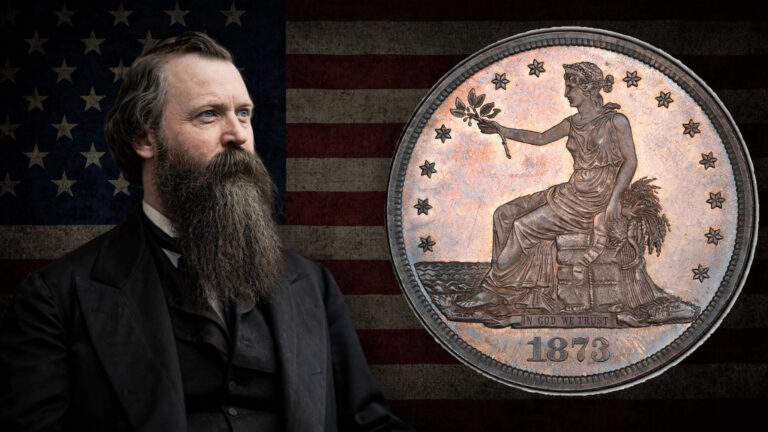
Who Was William M. Stewart, the Senator Who Branded 1873 a Crime?
William Morris Stewart (1827–1909) was Nevada's first senator, the mining lawyer known as the "Father of the Mining Laws of the United States" for the federal mining statutes of 1866 and 1872. His place in coin history is stranger. Stewart was in the Senate in 1873 and voted for the Coinage Act that ended the silver dollar — and then, after silver's price collapsed, he returned to the Senate in 1887 and spent eighteen years denouncing that act as the "Crime of '73," claiming its passage had been a deception. The voting record is the honest footnote to his legend: the man who made "crime" the act's permanent name had been one of its supporters.
Read More →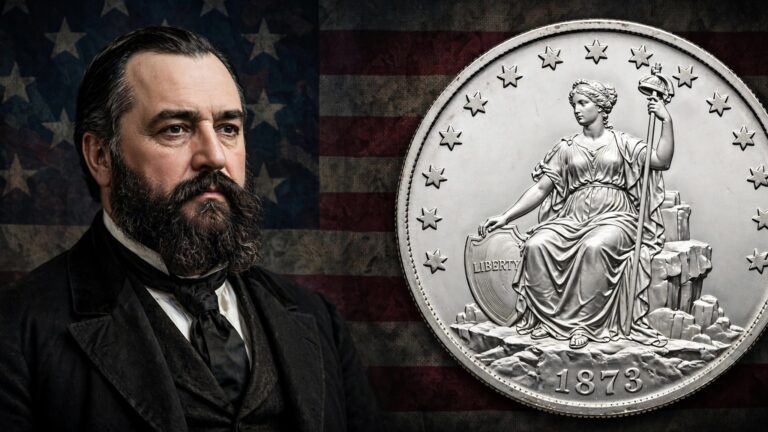
What Was the ‘Crime of ’73’ That Ulysses S. Grant Signed?
The "Crime of '73" is the bitter name silver interests gave the Coinage Act of February 12, 1873, which Ulysses S. Grant signed as a routine Mint housekeeping bill. Buried in its revision of the mint laws was one quiet omission: the standard silver dollar no longer appeared on the list of authorized coins, ending the free coinage of silver in the United States. The same act created the Trade dollar, abolished the two-cent piece, three-cent silver, and half dime, and slightly raised the weight of the remaining silver coins. Almost nobody noticed at the time — the explosion came three years later.
Read More →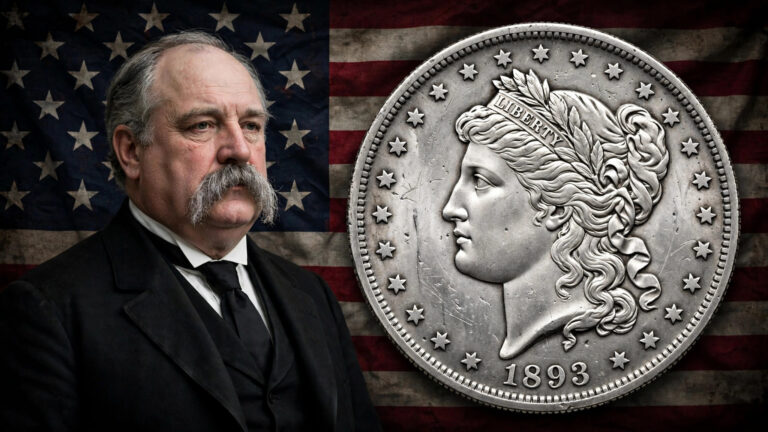
How Did Grover Cleveland’s Silver Repeal Create the Key-Date Morgans?
Grover Cleveland did not merely sign a coinage law — he forced one through. When the Panic of 1893 drained the Treasury's gold reserve below its symbolic $100 million floor, on April 22, 1893, Cleveland called Congress into special session for the single purpose of repealing the Sherman Silver Purchase Act, demanded repeal with no free-silver substitute, and pressured his own party's senators until he could sign the repeal on November 1, 1893. With the government no longer required to buy silver and coin it into dollars, Morgan dollar production collapsed — and the tiny mintages of 1893–95 became the key dates collectors chase today.
Read More →