

Who Was Robert Woolley, the Director Behind the 1916 Redesigns?
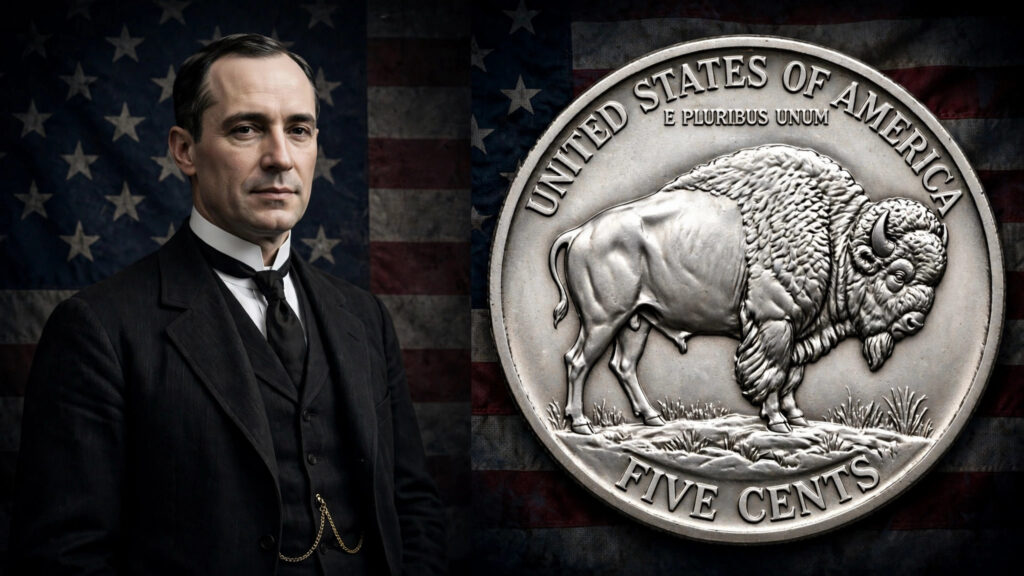
Robert Wickliffe Woolley was Director of the United States Mint from March 1915 to July 1916, and he was the director behind the 1916 redesigns in an administrative sense: he set the replacement of the Barber dime, quarter and half dollar in motion and approved its results. Woolley first gave Chief Engraver Charles E. Barber the chance to design the new coins, accepted the Commission of Fine Arts' verdict when Barber's sketches failed to impress, and oversaw the outside competition that chose Adolph A. Weinman's Winged Liberty dime and Walking Liberty half dollar and Hermon MacNeil's Standing Liberty quarter. The artistry belonged to the sculptors; the decision to hold the competition, and to back its winners, belonged to Woolley and Treasury Secretary William G. McAdoo.
Key Takeaways
- Woolley served only from March 1915 to July 1916, resigning to run President Wilson's reelection publicity.
- The Barber silver coins, approved in 1891, became eligible for replacement without Congress in 1916 under the 25-year rule.
- Barber was asked first; his sketches were rejected by the Commission of Fine Arts in December 1915.
- Weinman won two of the three commissions and MacNeil one; Woolley had left office before any of the new coins actually entered circulation.
Why could the Barber coins be replaced in 1916?
The Barber coins could be replaced in 1916 because an 1890 law let the Treasury Secretary change a coin's design, without new legislation, once that design had been in use for 25 years. Charles E. Barber's dime, quarter and half dollar — three coins sharing one Liberty head design — had been approved in 1891 and struck since 1892, so the clock ran out in 1916. Woolley and McAdoo intended to use the opportunity properly. Earlier redesigns under Theodore Roosevelt had gone to outside sculptors such as Saint-Gaudens, and Woolley wanted three distinct designs for the three silver coins rather than one shared portrait repeated at three sizes.
What was Woolley's actual role in the competition?
Woolley's actual role was that of sponsor and approver, not designer, and honest accounts of 1916 should keep that boundary clear. In April 1915 he asked Barber to prepare new designs, and in December 1915 he presented Barber's sketches to the Commission of Fine Arts. The Commission was unimpressed and recommended inviting three outside sculptors instead: Adolph A. Weinman, Hermon MacNeil and Albin Polasek. Woolley accepted that recommendation. The sculptors submitted sketches in February 1916, and on February 28 Woolley wrote to MacNeil accepting one of his models for the quarter's obverse; on March 3, 1916 the Treasury publicly announced that Weinman's designs would replace the dime and half dollar and MacNeil's the quarter. Woolley formally notified Weinman on May 29 that his dime and half dollar designs were accepted.
| Coin | Winning designer | Woolley's part |
|---|---|---|
| Dime (Winged Liberty, "Mercury") | Adolph A. Weinman | Ran the competition; notified Weinman of acceptance, May 29, 1916 |
| Quarter (Standing Liberty) | Hermon MacNeil | Accepted MacNeil's obverse model, February 28, 1916 |
| Half dollar (Walking Liberty) | Adolph A. Weinman | Announced the selection with McAdoo, March 3, 1916 |
| The losing first attempt | Charles E. Barber | Given first chance at Woolley's request; sketches rejected by the Commission |
Did Woolley stay to see the coins issued?
Woolley did not stay to see the coins issued, because he resigned on July 15, 1916 to direct publicity for President Wilson's reelection campaign. Production problems — including the excess metal "fin" at the Mercury dime's edge and the slow work of turning models into dies — delayed all three coins under his successors, first acting director Fred H. Chaffin and then Friedrich von Engelken from September 1916. The Mercury dime finally debuted on October 30, 1916, and the Walking Liberty half dollar and Standing Liberty quarter followed late that year. So the Class of 1916 entered circulation under other men's signatures, even though every design in it had been chosen on Woolley's watch.
Was the competition fair to Barber?
The competition was formally fair to Barber but hard on him in practice. Barber was 75, had designed the coins being replaced, and was given the first opportunity — a genuine courtesy, since the Roosevelt-era redesigns had bypassed the Mint's engravers entirely. When his sketches were rejected, he was then ordered to help the outside sculptors turn their models into dies for coins that would erase his own work, and his delays are part of the 1916 story. Barber died in February 1917, months after his replacements reached circulation.
Why is Woolley so little remembered?
Woolley is little remembered because his tenure was short and his contribution was procedural rather than artistic. Nobody collects a "Woolley dime"; they collect Weinman's. Yet without a director willing to ask the Commission of Fine Arts, accept its rejection of the in-house designs, and defend three separate outside commissions, the default outcome in 1916 was another set of Barber-style coins. The coins remained his most durable legacy — struck, in Weinman's two cases, for three more decades.
Woolley's competition gave America the Walking Liberty half dollar — the design later chosen for the American Silver Eagle. Browse silver coins at Coin Advisor, or call (877) 540-2646 to talk with a Preferred Collector Division advisor.
FAQ
When was Robert Woolley Director of the Mint? Woolley served from March 1915 to July 1916, resigning on July 15, 1916 to run publicity for President Wilson's reelection campaign.
Did Woolley design the Mercury dime or Walking Liberty half dollar? No. Adolph A. Weinman designed both; Woolley ran the competition that selected them and, with Treasury Secretary McAdoo, approved the results.
Why were three sculptors invited? The Commission of Fine Arts rejected Chief Engraver Barber's sketches in December 1915 and recommended outside sculptors — Weinman, Hermon MacNeil and Albin Polasek — instead.
Did the 1916 coins appear while Woolley was director? No. Delays in die preparation pushed the Mercury dime's debut to October 30, 1916, after Woolley had resigned; the quarter and half dollar followed late in 1916.
This article was researched and drafted with AI assistance and reviewed and approved by [Author], [Role] at Coin Advisor, before publication.
Shop NGC and PCGS certified coins at Coin Advisor
Shop Coins →Related Reading
Who Was David Rittenhouse, America’s First Mint Director?
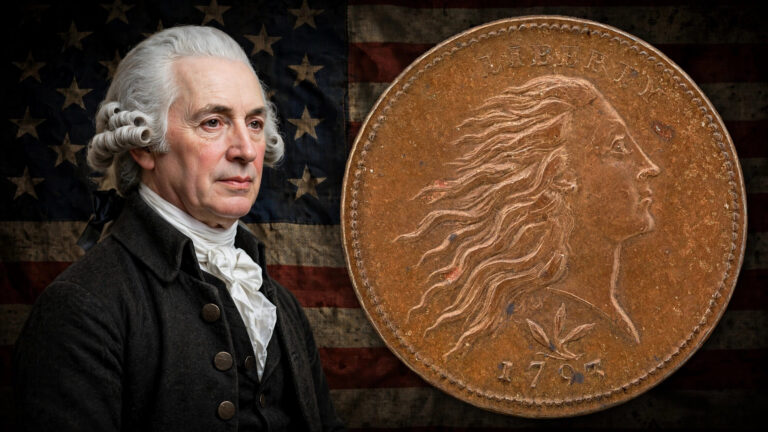
David Rittenhouse was the first Director of the United States Mint, appointed by President George Washington in April 1792 and serving until June 1795. A leading astronomer, instrument maker and scientist, he built the Mint from nothing — hiring its officers, overseeing its first buildings in Philadelphia and launching copper coinage in 1793 and silver coinage in 1794. His tenure is also remembered for a controversial decision to strike the first silver coins finer than the law allowed.
Read More →
Who Was Elias Boudinot, the Director Who Steadied the Young Mint?
Elias Boudinot was the third Director of the United States Mint, serving from October 1795 to July 1805. A former president of the Continental Congress and a respected New Jersey statesman, he restored the legal silver standard on taking office, kept the chronically underfunded Mint operating — at times depositing his own bullion to keep workers employed — and halted production of silver dollars and gold eagles in 1804 because the large coins were being exported and melted rather than circulating at home.
Read More →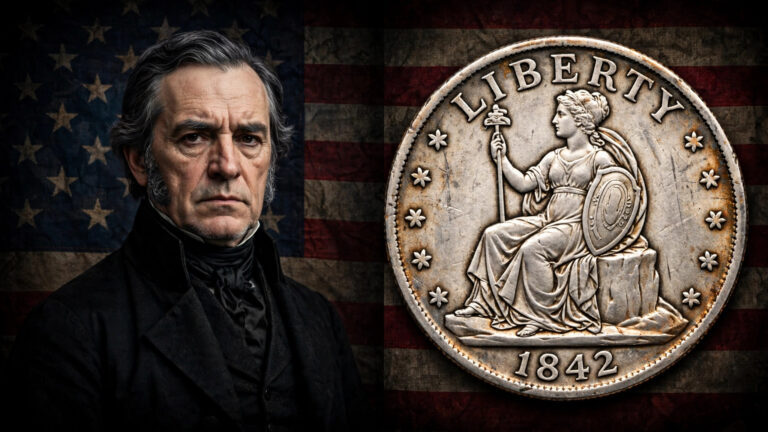
Who Was Robert Patterson, the Director Behind Seated Liberty?
Robert Maskell Patterson was Director of the United States Mint from 1835 to 1851 — the son of an earlier director also named Robert Patterson. Appointed by President Andrew Jackson, he drove the creation of Christian Gobrecht's Seated Liberty design, which spread across America's silver coinage beginning with the Gobrecht dollars of 1836 and the dime and half dime of 1837 and endured, in places, until 1891. He also resisted the gold dollar and double eagle authorized in 1849, and lost that fight to Congress.
Read More →