


Who Was David Rittenhouse, America’s First Mint Director?
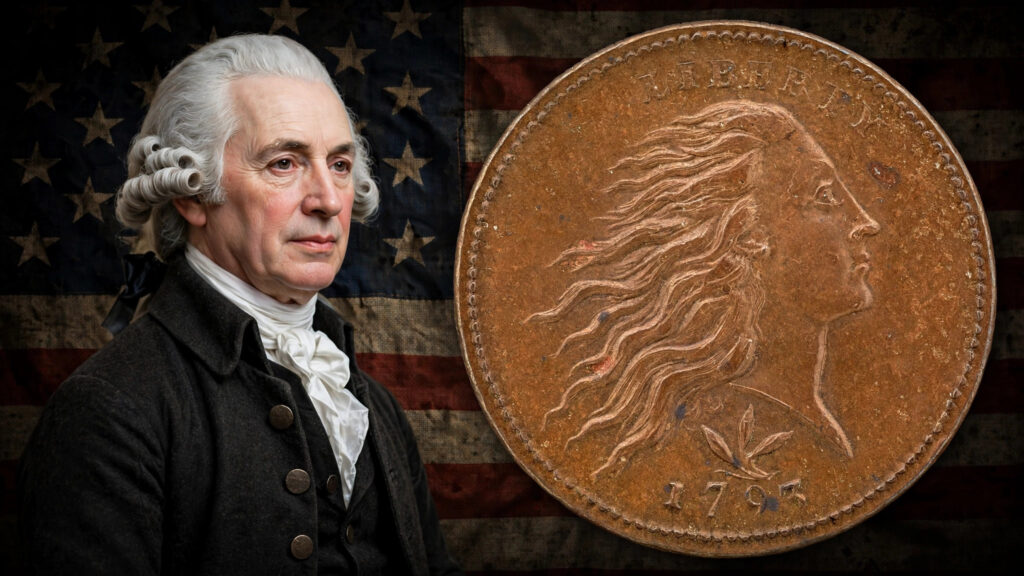
David Rittenhouse was the first Director of the United States Mint, appointed by President George Washington in April 1792 and serving until June 1795. A leading astronomer, instrument maker and scientist, he built the Mint from nothing — hiring its officers, overseeing its first buildings in Philadelphia and launching copper coinage in 1793 and silver coinage in 1794. His tenure is also remembered for a controversial decision to strike the first silver coins finer than the law allowed.
Key Takeaways
- Rittenhouse, appointed in April 1792, served until ill health forced his resignation in June 1795.
- Bonding requirements for the chief coiner and assayer delayed precious-metal coinage until Congress lowered them in March 1794.
- The first silver dollars, dated 1794, were struck October 15, 1794 — 1,758 pieces are recorded as delivered.
- Those coins were made at .900 fineness instead of the legal .8924 standard, short-changing depositors by roughly 1 percent.
Why did Washington choose a scientist to run the Mint?
Washington chose Rittenhouse because the new Mint was first a scientific and mechanical problem, and Rittenhouse was widely regarded as America's foremost scientist. He had built orreries, surveyed boundaries, observed the transit of Venus and led the American Philosophical Society. Coinage required accurate weights, reliable assays and working machinery, all areas where his reputation gave the untested federal institution immediate credibility with Congress, depositors and foreign observers.
Why did silver coinage not begin until 1794?
Silver coinage did not begin until 1794 because the Coinage Act of 1792 required the chief coiner and assayer to post $10,000 bonds that neither man could initially secure. Rittenhouse appealed through Secretary of State Thomas Jefferson, and Congress reduced the bonds in March 1794 — to $5,000 for the chief coiner and $1,000 for the assayer in the accounts most often cited. Only then could Henry Voigt and Albion Cox legally handle precious metals, which is why the Mint struck only cents and half cents in 1793.
What was the ".900 fineness" episode, exactly?
The .900 episode was an unauthorized change in the silver standard, proposed by Assayer Albion Cox and approved by Rittenhouse. The Coinage Act of 1792 set the dollar at 416 grains containing 371.25 grains of pure silver — a fineness of about .8924, derived from assays of worn Spanish dollars. Cox argued that figure was awkward to work with and claimed, implausibly to later historians, that coins below .900 would blacken in use. Rittenhouse let him strike at .900 while keeping the gross weight at 416 grains.
| Legal standard, 1792 Act | Standard actually used, 1794–95 | |
|---|---|---|
| Fineness | .8924 | .900 |
| Gross weight of dollar | 416 grains | 416 grains (unchanged) |
| Pure silver in dollar | 371.25 grains | About 374.4 grains |
| Authorized by Congress? | Yes | No |
Because the weight stayed the same, each coin carried extra silver, and a depositor who brought bullion to the Mint received fewer dollars than the law promised — a loss most accounts put at about 1 percent. Some retellings describe the change as secret; others say Rittenhouse expected Congress to approve it and acted in anticipation. Sources disagree on how openly he acted and on who above him knew, so the safest statement is that Congress had not authorized it. The largest depositor affected, John Vaughan, later petitioned Congress and was eventually reimbursed. The practice continued briefly under Rittenhouse's successor and was stopped when Elias Boudinot took office in October 1795 and restored the legal standard. Congress did not adopt .900 fineness until 1837.
What did Rittenhouse himself deposit and receive?
Rittenhouse was himself a depositor of the silver used for the first dollars, according to modern research cited by PCGS CoinFacts, which concluded the 1794 dollars were struck solely from his deposit. He received the 1,758 dollars struck on October 15, 1794, and distributed some as souvenirs to prominent visitors. That personal involvement is sometimes retold as Rittenhouse "covering the losses" himself; the documentary record more clearly supports his personal deposit and distribution role than a general personal repayment, so that stronger claim should be treated with caution.
The Flowing Hair dollars of Rittenhouse's Mint began a collecting tradition that still runs through American silver. Browse silver coins at Coin Advisor, or call (877) 540-2646 to talk with a Preferred Collector Division advisor.
FAQ
When did David Rittenhouse direct the Mint? He was appointed in April 1792 and resigned in June 1795 because of failing health; he died in 1796.
What was the first coinage under Rittenhouse? Copper cents and half cents in 1793, followed by silver half dimes, half dollars and dollars in 1794 once bonding obstacles were cleared.
Why was the .900 fineness a problem? Congress had set .8924. Striking at .900 at unchanged weight put extra silver in each coin, so depositors received about 1 percent less coin than they were owed.
Who ended the unauthorized fineness? Elias Boudinot, who became director in October 1795 and ordered a return to the legal .8924 standard.
This article was researched and drafted with AI assistance and reviewed and approved by [Author], [Role] at Coin Advisor, before publication.
Shop NGC and PCGS certified coins at Coin Advisor
Shop Coins →Related Reading
Who Was Elias Boudinot, the Director Who Steadied the Young Mint?
Elias Boudinot was the third Director of the United States Mint, serving from October 1795 to July 1805. A former president of the Continental Congress and a respected New Jersey statesman, he restored the legal silver standard on taking office, kept the chronically underfunded Mint operating — at times depositing his own bullion to keep workers employed — and halted production of silver dollars and gold eagles in 1804 because the large coins were being exported and melted rather than circulating at home.
Read More →
Who Was Robert Patterson, the Director Behind Seated Liberty?
Robert Maskell Patterson was Director of the United States Mint from 1835 to 1851 — the son of an earlier director also named Robert Patterson. Appointed by President Andrew Jackson, he drove the creation of Christian Gobrecht's Seated Liberty design, which spread across America's silver coinage beginning with the Gobrecht dollars of 1836 and the dime and half dime of 1837 and endured, in places, until 1891. He also resisted the gold dollar and double eagle authorized in 1849, and lost that fight to Congress.
Read More →
Who Was James Ross Snowden, the Director Who Invented the Mint’s Collector Business?
James Ross Snowden was Director of the United States Mint from June 1853 to May 1861, and the first director to treat collectors as a constituency of the Mint itself. A numismatist in office, he built up the Mint Cabinet — the national coin collection — catalogued it in print, and financed additions by selling or trading Mint-made patterns, restrikes and medals to collectors. He also directed the launch of the small Flying Eagle cent under the Coinage Act of February 21, 1857.
Read More →