

Who Is Paul Hollis?
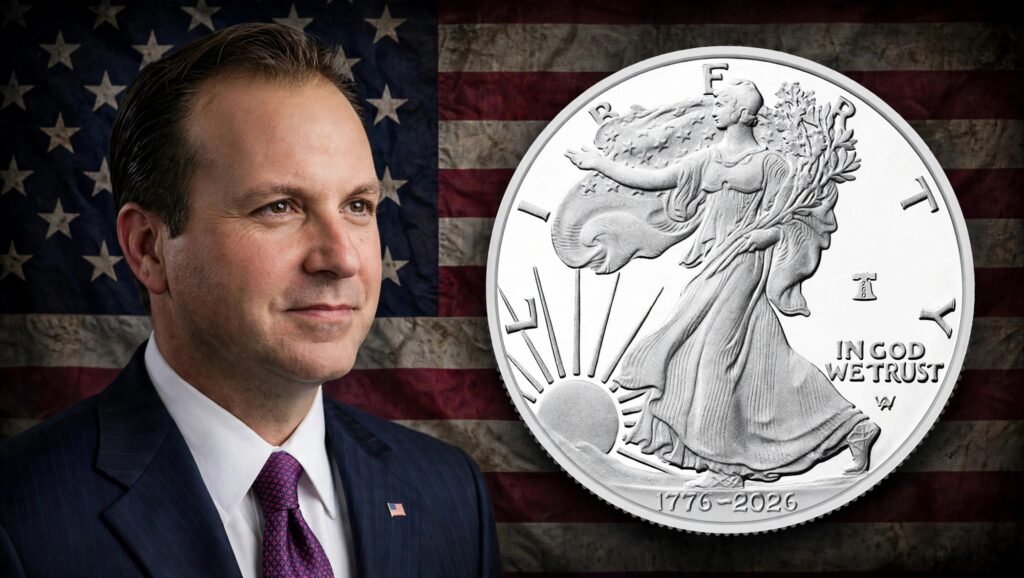
Paul Hollis is the 41st Director of the United States Mint, sworn in in January 2026. A Louisiana numismatist with more than 30 years in the coin business, he ran his own rare-coin firm for 20 years and served in the Louisiana House of Representatives before his nomination and Senate confirmation. Collectors know his name from the Mint's 2026 coins — including the Semiquincentennial issues — and from NGC labels carrying his signature, both hand-signed and facsimile.
Key Takeaways
- 41st Director of the U.S. Mint; nominated July 16, 2025, confirmed by the Senate December 18, 2025, and took the oath of office January 5, 2026.
- More than 30 years as a professional numismatist, including 20 years running Paul Hollis Rare Coins.
- Served in the Louisiana House of Representatives from 2012 to 2024 and on the Louisiana State Board of Elementary and Secondary Education.
- A 25-year Life Member of the American Numismatic Association; his signature appears on NGC labels for 2026 coins.
What did Paul Hollis do before leading the Mint?
He spent his career as a coin dealer and a public servant. A native of Louisiana and a lifelong collector, Hollis earned a bachelor's degree in political science from Louisiana State University in 1994, then built a career as a professional numismatist, running his own firm, Paul Hollis Rare Coins, for 20 years. Alongside the coin business he served three terms — 12 years — in the Louisiana House of Representatives, from 2012 to 2024, and was elected to the Louisiana State Board of Elementary and Secondary Education. He is a 25-year Life Member of the congressionally chartered American Numismatic Association and has served on the boards of the Industry Council for Tangible Assets and the Numismatic Literary Guild. That combination — dealer, collector, and legislator — is unusual for a Mint Director, and it is the reason his appointment drew attention in the hobby.
What is he responsible for as Director?
He leads the world's largest mint. As Director, Hollis oversees the design, production, and sales of circulating, numismatic, and bullion coins and medals, struck at the Mint's facilities in Philadelphia, Denver, San Francisco, and West Point. He took office in the Mint's Semiquincentennial year, and the 2026 program — including the President Donald J. Trump $1 coin, whose obverse was designed by Chief Engraver Joseph Menna — was released under his leadership. In the Mint's announcement he called it an honor to be part of the historic milestone in the nation's coinage. For collectors, the practical meaning is simple: the coins struck in 2026, from circulating quarters to the Enhanced Uncirculated Silver Eagle, were issued on his watch.
How can collectors tell a hand-signed Hollis label from a facsimile?
Read the label wording, because both kinds exist. Some 2026 coins carry labels Hollis signed by hand — for example, the 2026-W American Silver Eagle Enhanced Finish with the Liberty Bell privy, certified NGC MS70, and the 2026 Shield cent, whose label type is recorded as an authentic signature. Others carry a facsimile signature: the 2026-P Trump Dollar, for instance, is sold with an NGC label bearing a printed reproduction of Hollis's signature. A facsimile is not a fake — it is a printed reproduction applied uniformly across a set of labels — but it is not hand-signed, and a listing should say which one it is.
| Hand-signed label | Facsimile label | |
|---|---|---|
| Signature | Signed by hand, one label at a time | Printed reproduction of the signature |
| Examples | 2026-W Silver Eagle Enhanced Finish; 2026 Shield cent | 2026-P Trump Dollar |
| What to check | Label wording: authentic signature | Label wording: facsimile |
FAQ
Is Paul Hollis a coin designer? No — he is the Mint's Director and a lifelong numismatist. Designs come from the Mint's artists and its Chief Engraver.
When did he become Mint Director? Nominated July 16, 2025, confirmed by the Senate December 18, 2025, and sworn in January 5, 2026.
Does a facsimile signature mean the label is fake? No — a facsimile is a printed reproduction authorized for a set of labels. It is not hand-signed, and sellers should say so.
Which 2026 coins carry his signature? Hand-signed labels appear on the 2026 American Silver Eagle Enhanced Finish and the 2026 Shield cent; facsimile labels appear on the 2026 Trump $1. Check the label description on any coin you consider.
Shop Paul Hollis signed coins at Coin Advisor or call (877) 540-2646.
This article was researched and drafted with AI assistance and reviewed and approved by [Author], [Role] at Coin Advisor, before publication.
Shop NGC and PCGS certified coins at Coin Advisor
Shop Coins →Related Reading
Who Was David Rittenhouse, America’s First Mint Director?
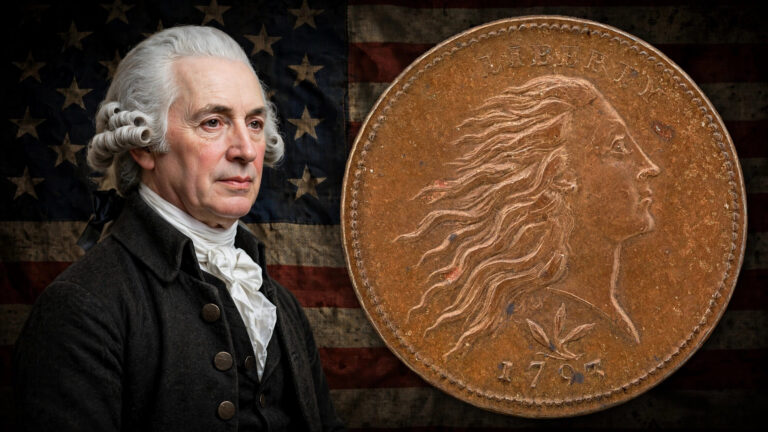
David Rittenhouse was the first Director of the United States Mint, appointed by President George Washington in April 1792 and serving until June 1795. A leading astronomer, instrument maker and scientist, he built the Mint from nothing — hiring its officers, overseeing its first buildings in Philadelphia and launching copper coinage in 1793 and silver coinage in 1794. His tenure is also remembered for a controversial decision to strike the first silver coins finer than the law allowed.
Read More →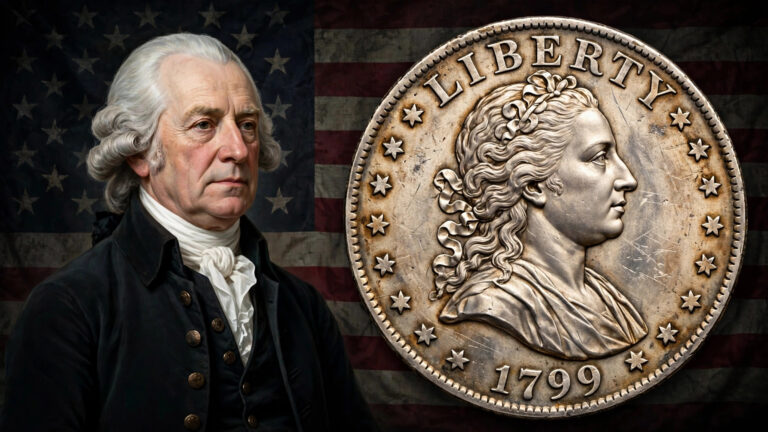
Who Was Elias Boudinot, the Director Who Steadied the Young Mint?
Elias Boudinot was the third Director of the United States Mint, serving from October 1795 to July 1805. A former president of the Continental Congress and a respected New Jersey statesman, he restored the legal silver standard on taking office, kept the chronically underfunded Mint operating — at times depositing his own bullion to keep workers employed — and halted production of silver dollars and gold eagles in 1804 because the large coins were being exported and melted rather than circulating at home.
Read More →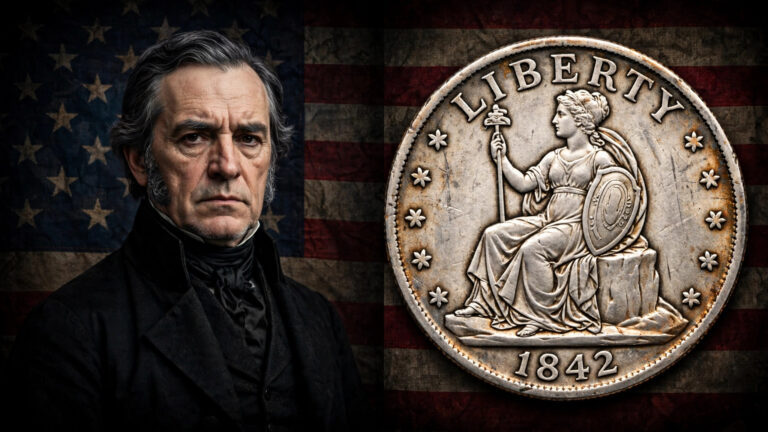
Who Was Robert Patterson, the Director Behind Seated Liberty?
Robert Maskell Patterson was Director of the United States Mint from 1835 to 1851 — the son of an earlier director also named Robert Patterson. Appointed by President Andrew Jackson, he drove the creation of Christian Gobrecht's Seated Liberty design, which spread across America's silver coinage beginning with the Gobrecht dollars of 1836 and the dime and half dime of 1837 and endured, in places, until 1891. He also resisted the gold dollar and double eagle authorized in 1849, and lost that fight to Congress.
Read More →