


What Were the First U.S. Coins?
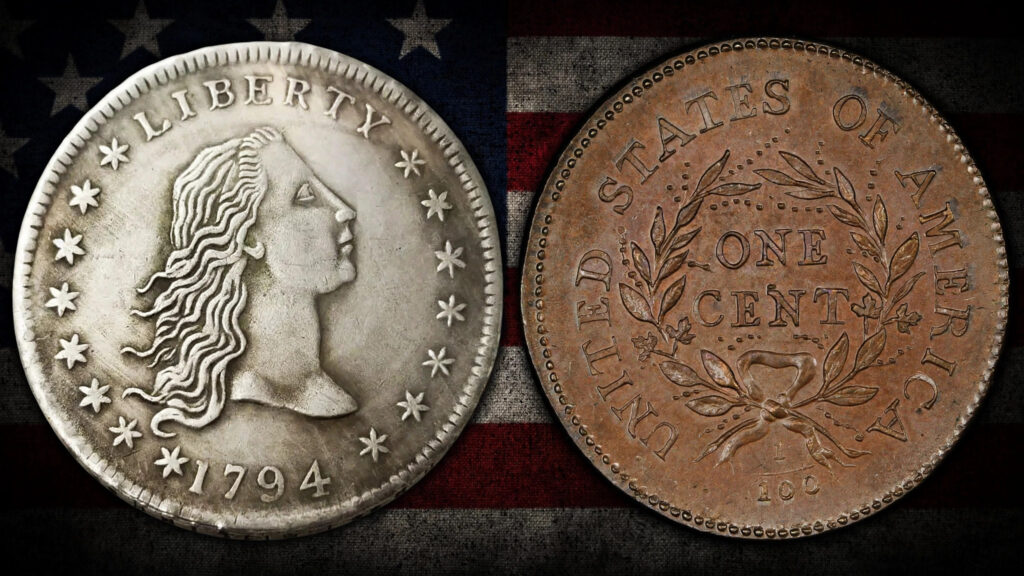
The first coins struck for circulation by the United States Mint were the 1793 cents and half cents, carrying the Flowing Hair design: Liberty with long, flowing hair on the obverse, and a chain of fifteen links — one for each state in the Union — on the reverse. The chain proved unpopular, seen by some as a symbol of bondage rather than unity, and was quickly replaced by a wreath. The Chain cent, struck for only a few months, became one of the most famous coins in American numismatics.
Key Takeaways
- First circulating U.S. coins: the 1793 Flowing Hair cents and half cents.
- The Chain reverse (fifteen links for fifteen states) lasted only a few months before the Wreath replaced it.
- The early Mint was barely a workshop: hand-operated equipment, hand-cut dies, a handful of employees.
- By 1800, the Mint struck a full range of copper, silver, and gold denominations.
What did the first Mint look like?
The Philadelphia facility was a small building with horse-powered and hand-operated equipment, a handful of employees, and dies cut by hand. The Mint's first director, David Rittenhouse, was a scientist and astronomer, not a manufacturer, and the Mint's early years were a process of learning by doing: how to prepare planchets, cut dies, strike coins consistently, and do it all at a scale that could serve a growing nation. The early output was small and its quality inconsistent — coins struck on planchets of varying quality, with strikes ranging from sharp to faint, and die cracks, planchet flaws, and striking irregularities that modern collectors study as diagnostics: the marks of a handmade process, preserved in metal.
What were the first coins?
The 1793 issues are the foundation of American numismatics. The Flowing Hair cent, the Chain cent, and the Wreath cent are among the most collected — and most counterfeited — coins in the hobby, and even worn examples are prized because they represent the very beginning of American coinage. A 1793 cent in any condition is a historical artifact: a coin struck in the first year of the Mint's operation, by a nation that had existed for less than two decades. Within a few years, the Mint's output grew to include silver dollars, half dollars, and gold coins, and the designs evolved toward the Draped Bust and Capped Bust motifs that would define the early republic — the Flowing Hair giving way to the Draped Bust in 1795, and the Chain giving way to the Wreath, and then to the Liberty Cap.
| Chain cent | Wreath cent | |
|---|---|---|
| Reverse | Chain of fifteen links | Wreath of leaves |
| Struck | First months of 1793 only | Rest of 1793 |
| Reception | Seen by some as bondage, not unity | Accepted replacement |
What did the Mint achieve in its first decade?
From 1793 to 1803, the Mint moved from first cents to a full coinage. The first silver dollar, the Flowing Hair dollar of 1794, is a landmark in its own right: the first silver dollar struck by the United States, with only a small number struck, and surviving examples among the most valuable American coins. The first gold coins, struck in 1795 — the half eagle and eagle with the Capped Bust design — established American gold coinage and remain among the most collected early American coins. By 1800, the Mint was striking a full range of denominations in copper, silver, and gold, and by 1803 it had settled into a rhythm: annual production across all denominations, designs evolving from Flowing Hair to Draped Bust to Capped Bust, and a growing competence in striking, refining, and distributing coinage. Every American collection traces back to those first, imperfect, handmade cents of 1793 — the coins that proved a new nation could make its own money. They matter not because they are beautiful, though some are, and not because they are rare, though many are, but because they are first.
FAQ
What was the first U.S. coin? The 1793 Flowing Hair cent (and half cent), struck for circulation in the Mint's first year.
Why is the Chain cent famous? Its chain-of-fifteen-links reverse lasted only a few months before being replaced by the Wreath.
What was the first U.S. silver dollar? The Flowing Hair dollar of 1794, struck in small numbers.
When did the U.S. first strike gold coins? In 1795: the Capped Bust half eagle and eagle.
Shop early American coins at Coin Advisor or call (877) 540-2646.
This article was researched and drafted with AI assistance and reviewed and approved by [Author], [Role] at Coin Advisor, before publication.
Shop NGC and PCGS certified coins at Coin Advisor
Shop Coins →Related Reading
Who Was William M. Stewart, the Senator Who Branded 1873 a Crime?
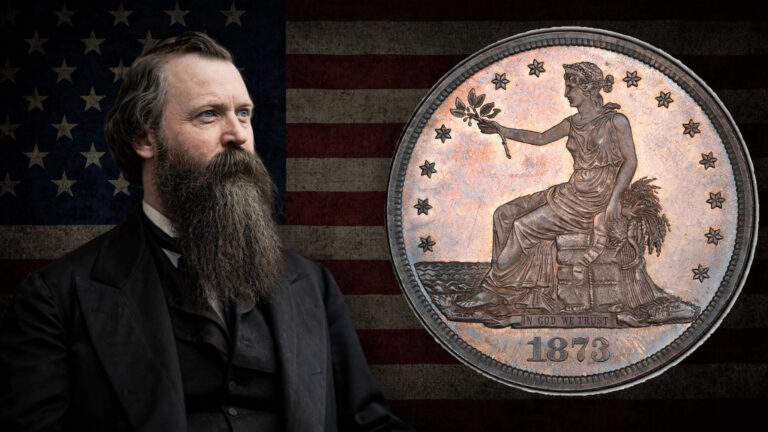
William Morris Stewart (1827–1909) was Nevada's first senator, the mining lawyer known as the "Father of the Mining Laws of the United States" for the federal mining statutes of 1866 and 1872. His place in coin history is stranger. Stewart was in the Senate in 1873 and voted for the Coinage Act that ended the silver dollar — and then, after silver's price collapsed, he returned to the Senate in 1887 and spent eighteen years denouncing that act as the "Crime of '73," claiming its passage had been a deception. The voting record is the honest footnote to his legend: the man who made "crime" the act's permanent name had been one of its supporters.
Read More →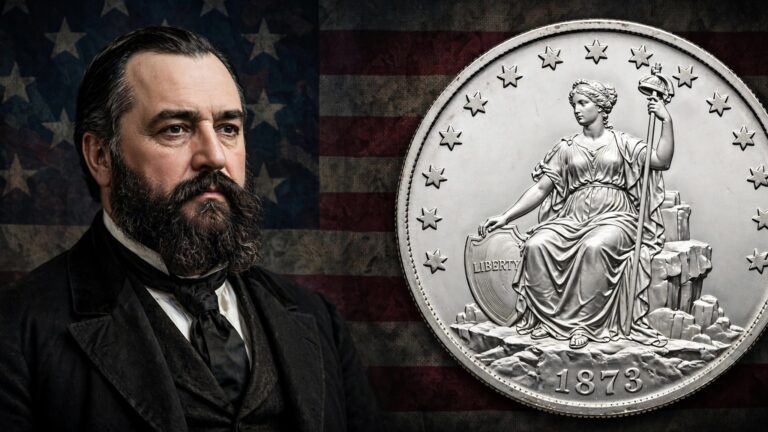
What Was the ‘Crime of ’73’ That Ulysses S. Grant Signed?
The "Crime of '73" is the bitter name silver interests gave the Coinage Act of February 12, 1873, which Ulysses S. Grant signed as a routine Mint housekeeping bill. Buried in its revision of the mint laws was one quiet omission: the standard silver dollar no longer appeared on the list of authorized coins, ending the free coinage of silver in the United States. The same act created the Trade dollar, abolished the two-cent piece, three-cent silver, and half dime, and slightly raised the weight of the remaining silver coins. Almost nobody noticed at the time — the explosion came three years later.
Read More →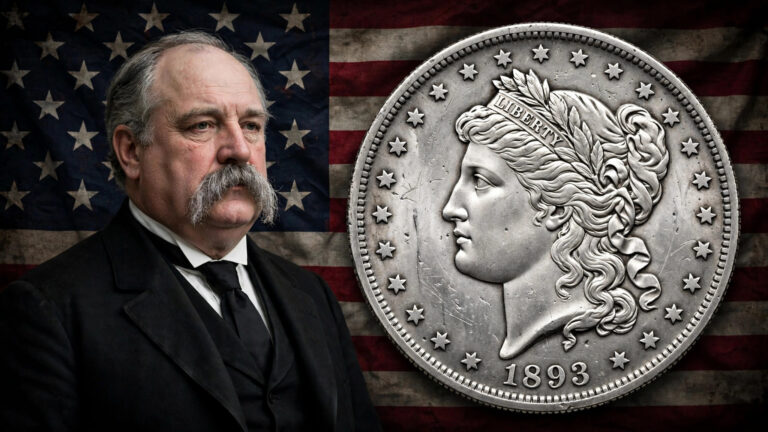
How Did Grover Cleveland’s Silver Repeal Create the Key-Date Morgans?
Grover Cleveland did not merely sign a coinage law — he forced one through. When the Panic of 1893 drained the Treasury's gold reserve below its symbolic $100 million floor, on April 22, 1893, Cleveland called Congress into special session for the single purpose of repealing the Sherman Silver Purchase Act, demanded repeal with no free-silver substitute, and pressured his own party's senators until he could sign the repeal on November 1, 1893. With the government no longer required to buy silver and coin it into dollars, Morgan dollar production collapsed — and the tiny mintages of 1893–95 became the key dates collectors chase today.
Read More →