


How Did the California Gold Rush Change American Coinage?
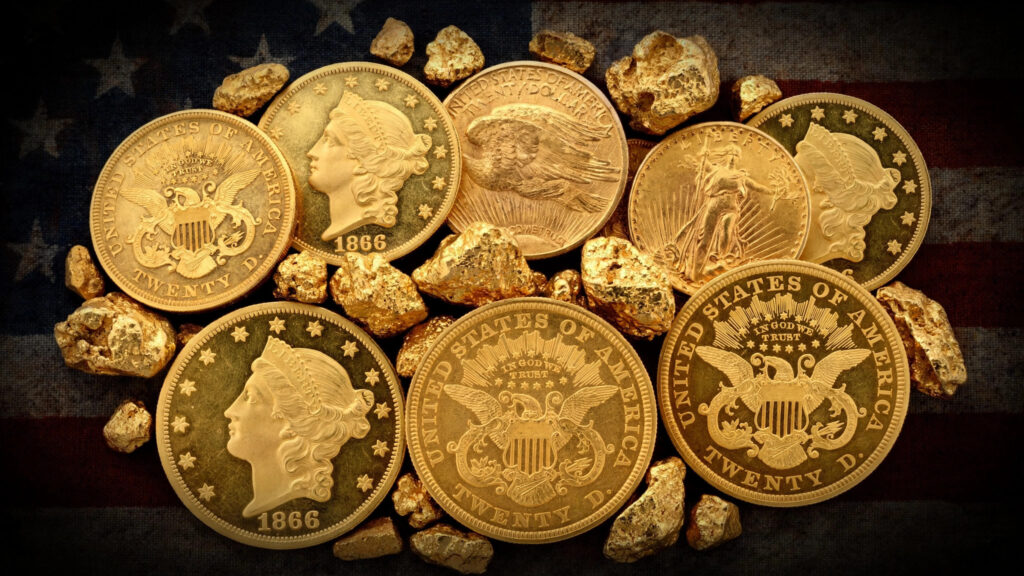
The California Gold Rush of 1848 remade American coinage: it overwhelmed the existing mints, forced the creation of the San Francisco Mint (1854) and the New York Assay Office, created two new denominations — the gold dollar (1849) and the double eagle (1850) — and, by flooding the economy with gold, made silver too valuable to use as money, triggering the silver shortage that led to the Coinage Act of 1853.
Key Takeaways
- Gold discovered at Sutter's Mill in January 1848 poured hundreds of millions of dollars' worth of metal into the economy within a few years.
- Private assayers struck "territorial gold" before the federal government caught up.
- New denominations bracketed the gold system: the smallest gold coin (gold dollar) and the largest (double eagle), both born of the rush.
- The gold flood caused the "silver famine" of the 1850s and the Coinage Act of 1853.
Why was the system unprepared?
When gold was discovered at Sutter's Mill in January 1848, the American coinage system was not ready for what followed. Within a few years, hundreds of millions of dollars' worth of gold poured out of California — an influx on a scale the nation's coinage system had never experienced. The existing mints — Philadelphia, New Orleans, Charlotte, and Dahlonega — could not handle it: too small, too distant, too slow. Private assayers and coiners stepped in first, issuing their own gold pieces to meet California's desperate need for coin. Firms like Moffat & Co., Kellogg & Co., and Wass, Molitor & Co. struck gold coins and bars that circulated widely in California, some later recognized as legal tender. These private issues — known as territorial gold — are now among the most prized coins in American numismatics, because they represent a brief period when private enterprise, not the federal government, supplied California's money. Territorial gold ranged from small gold dollars to large fifty-dollar "slugs," octagonal and round ingots that circulated as money.
How did the federal government respond?
The federal response reshaped the Mint system. San Francisco got a branch mint in 1854, the first mint in the American West, built specifically to turn California gold into United States coin close to where it was mined. The New York Assay Office opened to handle Eastern gold shipments, assaying California gold that arrived by sea and issuing bars for commerce. And the sheer volume of gold led to new denominations: the gold dollar, first struck in 1849, was a tiny coin — the smallest ever issued by the United States — created because California gold made small gold coins practical for the first time; the double eagle, first struck in 1850, was a large coin — the largest ever issued for circulation — created because California gold made large gold coins necessary. Together, they bracketed the gold coinage system: the smallest and the largest gold coins, both born of the same rush.
What did the Gold Rush do to silver?
The Gold Rush also changed the gold-silver balance in ways that shaped coinage debates for the next half century. So much gold entered the economy that silver coins became relatively more valuable as metal than as money: the silver in a silver dollar was worth more than a dollar, and silver coins began disappearing from circulation as people hoarded or melted them. That disappearance — the "silver famine" of the 1850s — led to the Coinage Act of 1853, which reduced the silver content of the smaller silver coins (dimes, quarters, and half dollars) to keep them in circulation. It was a pragmatic fix, and it worked, but it marked the beginning of the end for the full silver coinage that had defined American money since 1792. The Gold Rush proved that coinage follows commerce, not the other way around: when the economy changed, the coinage system changed with it — new mints, new denominations, new compositions. That responsiveness is one of the enduring characteristics of American coinage, and it was forged in the Gold Rush.
FAQ
What is territorial gold? Private gold coins and bars struck in California by assayers and coiners before the San Francisco Mint opened.
Which denominations did the Gold Rush create? The gold dollar (1849) and the double eagle (1850) — the smallest and largest gold coins ever issued for circulation.
Why did silver coins disappear in the 1850s? The gold flood made silver worth more as metal than as money, so coins were hoarded and melted — the "silver famine."
When did San Francisco get a mint? In 1854, the first mint in the American West, built to coin California gold near its source.
Shop Gold Rush era coins at Coin Advisor or call (877) 540-2646.
This article was researched and drafted with AI assistance and reviewed and approved by [Author], [Role] at Coin Advisor, before publication.
Shop NGC and PCGS certified coins at Coin Advisor
Shop Coins →Related Reading
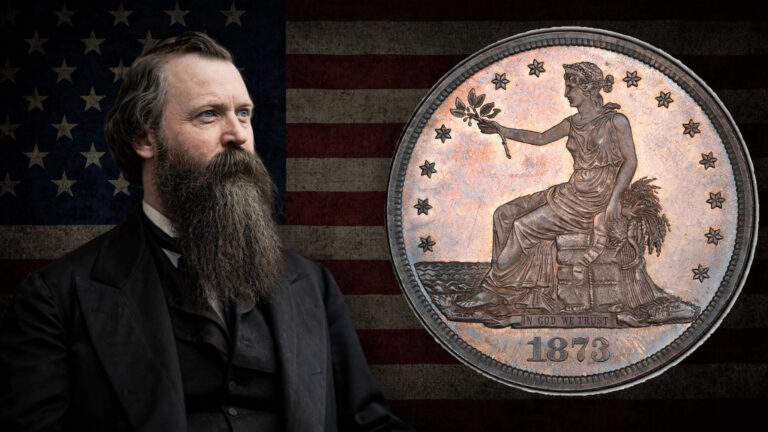
Who Was William M. Stewart, the Senator Who Branded 1873 a Crime?
William Morris Stewart (1827–1909) was Nevada's first senator, the mining lawyer known as the "Father of the Mining Laws of the United States" for the federal mining statutes of 1866 and 1872. His place in coin history is stranger. Stewart was in the Senate in 1873 and voted for the Coinage Act that ended the silver dollar — and then, after silver's price collapsed, he returned to the Senate in 1887 and spent eighteen years denouncing that act as the "Crime of '73," claiming its passage had been a deception. The voting record is the honest footnote to his legend: the man who made "crime" the act's permanent name had been one of its supporters.
Read More →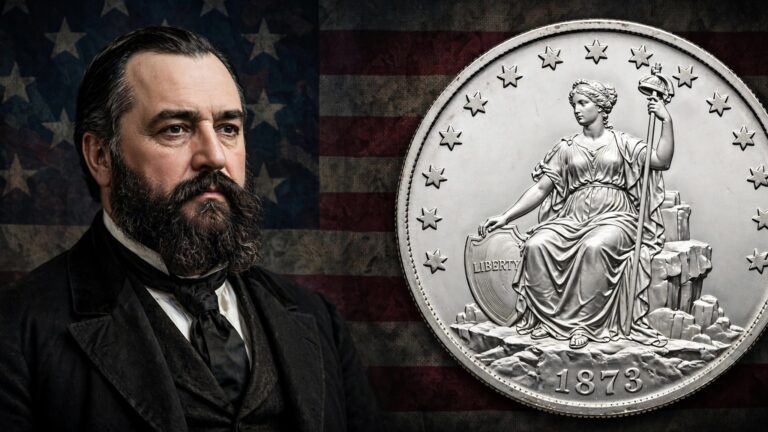
What Was the ‘Crime of ’73’ That Ulysses S. Grant Signed?
The "Crime of '73" is the bitter name silver interests gave the Coinage Act of February 12, 1873, which Ulysses S. Grant signed as a routine Mint housekeeping bill. Buried in its revision of the mint laws was one quiet omission: the standard silver dollar no longer appeared on the list of authorized coins, ending the free coinage of silver in the United States. The same act created the Trade dollar, abolished the two-cent piece, three-cent silver, and half dime, and slightly raised the weight of the remaining silver coins. Almost nobody noticed at the time — the explosion came three years later.
Read More →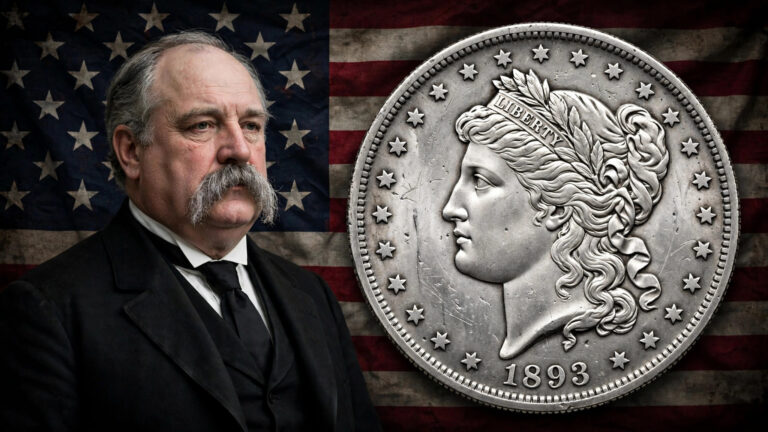
How Did Grover Cleveland’s Silver Repeal Create the Key-Date Morgans?
Grover Cleveland did not merely sign a coinage law — he forced one through. When the Panic of 1893 drained the Treasury's gold reserve below its symbolic $100 million floor, on April 22, 1893, Cleveland called Congress into special session for the single purpose of repealing the Sherman Silver Purchase Act, demanded repeal with no free-silver substitute, and pressured his own party's senators until he could sign the repeal on November 1, 1893. With the government no longer required to buy silver and coin it into dollars, Morgan dollar production collapsed — and the tiny mintages of 1893–95 became the key dates collectors chase today.
Read More →