

Who Was Frank Leach, the Director Who Fought to Strike the Saint-Gaudens Coins?
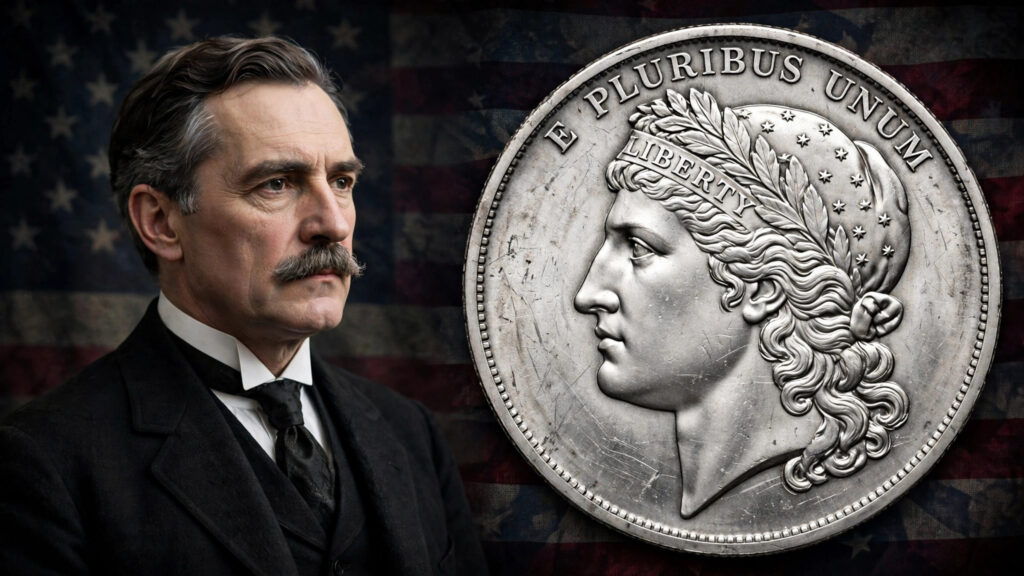
Frank Aleamon Leach was Director of the United States Mint from September 1907 to August 1909, and he fought to strike the Saint-Gaudens coins by taking President Theodore Roosevelt's side against his own Mint's production objections. Saint-Gaudens had died in August 1907, before his eagle and double eagle were ready for mass production, and the high-relief double eagle needed repeated blows from a medal press to strike up fully. Leach pushed the work through anyway, authorised a lower-relief version for circulation, oversaw Bela Lyon Pratt's recessed Indian Head quarter eagles and half eagles in 1908, and authorised the V.D.B. initials on the new Lincoln cent in 1909.
Key Takeaways
- Leach came to Washington from the San Francisco Mint, which he had run through the 1906 earthquake.
- He arrived in October 1907 with the Saint-Gaudens gold coins designed but not yet producible at scale.
- The High Relief double eagle was struck in late 1907; a reduced-relief version followed for ordinary circulation.
- He authorised Victor David Brenner's V.D.B. initials on the 1909 cent; public protest removed them within days of release, after he had left the fight to his successor.
Why was the Saint-Gaudens double eagle so hard to strike?
The double eagle was hard to strike because Saint-Gaudens designed it in the high relief of an ancient Greek coin, and modern circulation coinage could not be made that way at speed. The sculptural models had to be reduced again and again, the sharp rim threw up a raised "fin" of metal, and fully struck pieces required multiple blows from a slow medal press rather than one blow from a production press. Chief Engraver Charles E. Barber argued, with some technical justice, that the design as delivered was impractical. Leach's answer was not to abandon it but to split it: strike the High Relief version as Roosevelt wanted, in limited numbers, and prepare a lower-relief version the presses could sustain.
What did Leach actually decide?
Leach decided the questions that turned artwork into coinage, and the comparison below separates his role from the president's and the sculptor's.
| Question | Who decided it | What happened |
|---|---|---|
| Should American gold coins be redesigned at all? | President Theodore Roosevelt | He commissioned Saint-Gaudens in 1905 |
| What would the double eagle look like? | Augustus Saint-Gaudens | Striding Liberty, designed before his death in August 1907 |
| Would the impractical design be struck anyway? | Frank Leach | High Relief pieces struck from November 1907 |
| How would it circulate? | Leach, with Barber's engraving staff | Relief lowered in 1908 for mass production |
| What about the small gold coins? | Leach, accepting the Pratt–Bigelow idea | Recessed Indian Head $2.50 and $5 pieces, 1908 |
That middle row is Leach's real claim on history. Roosevelt supplied the will and Saint-Gaudens the art, but the dies, the presses and the complaints sat on the director's desk.
How did the Pratt Indian Head gold coins come about?
The Pratt coins came about because the small gold denominations could not carry the Saint-Gaudens eagle design legibly. Leach first ordered dies adapting the double eagle design in December 1907, but the required inscriptions would not fit on a quarter eagle. In April 1908 Roosevelt persuaded Leach to try a different solution championed by the president's friend William Sturgis Bigelow: a design sunk below the coin's surface, by Boston sculptor Bela Lyon Pratt. A recessed design could keep a high-relief effect, stack evenly and protect the portrait from wear. The resulting Indian Head quarter eagle and half eagle of 1908 remain the only recessed-design circulating coins the United States has issued, though Pratt was unhappy with changes made by Barber's engraving staff.
What happened with the VDB initials?
The V.D.B. initials appeared because Leach authorised them, and they disappeared because the public objected after he had effectively finished the job. Sculptor Victor David Brenner had proposed a Lincoln cent to Leach in early 1909, and on February 27, 1909 Leach authorised placing "V.D.B." at the base of the reverse. The cent was released on August 2, 1909, and newspapers and the public attacked the initials as advertising. Treasury Secretary Franklin MacVeagh ordered them removed within days. Leach had defended the designer's right to sign his work — earlier American coins carried designers' initials — but the removal was executed under his successor, Abram Andrew, and Brenner's initials did not return, in smaller form on Lincoln's shoulder, until 1918.
Why does Leach matter beyond 1907?
Leach matters because almost every coin in an American pocket changed design between 1907 and 1909, and he was the administrator in the chair for most of it. His memoir, Recollections of a Newspaperman, remains a primary source for the Saint-Gaudens coinage — and, as his own telling, it should be read as an advocate's version, not a neutral one.
The double eagle Leach fought to strike still anchors American gold collecting today. Browse gold coins at Coin Advisor, or call (877) 540-2646 to talk with a Preferred Collector Division advisor.
FAQ
When was Frank Leach Director of the Mint? Leach served from September 1907 to August 1909, taking up his duties in Washington in October 1907 after running the San Francisco Mint.
Did Leach design the Saint-Gaudens double eagle? No. Augustus Saint-Gaudens designed it; Leach's role was administrative — insisting the design be struck, managing the striking problems, and approving a lower-relief version for circulation.
What are the Pratt Indian Head gold coins? They are the recessed-design Indian Head quarter eagle ($2.50) and half eagle ($5) of 1908, designed by Bela Lyon Pratt and produced under Leach after the Saint-Gaudens design proved unworkable at that size.
Did Leach remove the VDB initials from the Lincoln cent? No. Leach authorised the initials in February 1909; they were ordered removed after public protest in August 1909 and the change was carried out under his successor.
This article was researched and drafted with AI assistance and reviewed and approved by Chris Clifton, Founder & CEO at Coin Advisor, before publication.
Shop NGC and PCGS certified coins at Coin Advisor
Shop Coins →Related Reading
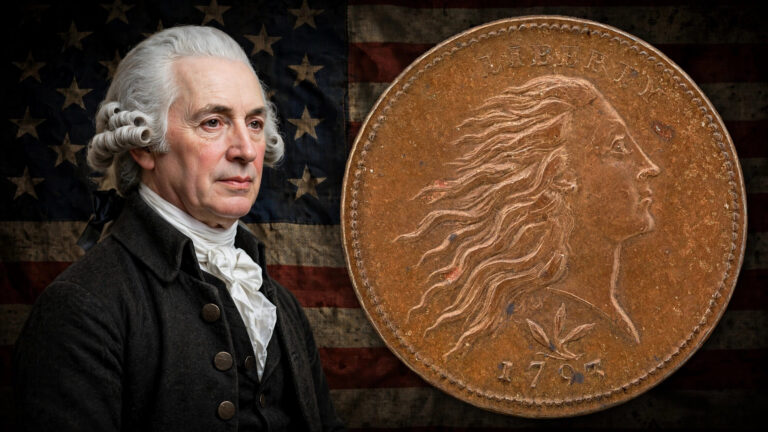
Who Was David Rittenhouse, America’s First Mint Director?
David Rittenhouse was the first Director of the United States Mint, appointed by President George Washington in April 1792 and serving until June 1795. A leading astronomer, instrument maker and scientist, he built the Mint from nothing — hiring its officers, overseeing its first buildings in Philadelphia and launching copper coinage in 1793 and silver coinage in 1794. His tenure is also remembered for a controversial decision to strike the first silver coins finer than the law allowed.
Read More →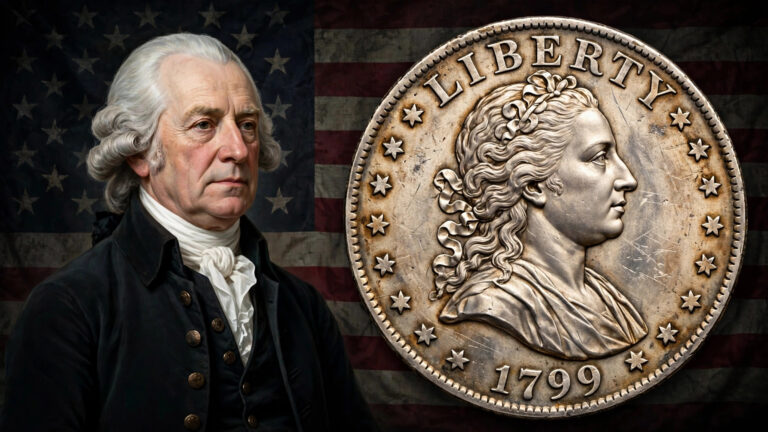
Who Was Elias Boudinot, the Director Who Steadied the Young Mint?
Elias Boudinot was the third Director of the United States Mint, serving from October 1795 to July 1805. A former president of the Continental Congress and a respected New Jersey statesman, he restored the legal silver standard on taking office, kept the chronically underfunded Mint operating — at times depositing his own bullion to keep workers employed — and halted production of silver dollars and gold eagles in 1804 because the large coins were being exported and melted rather than circulating at home.
Read More →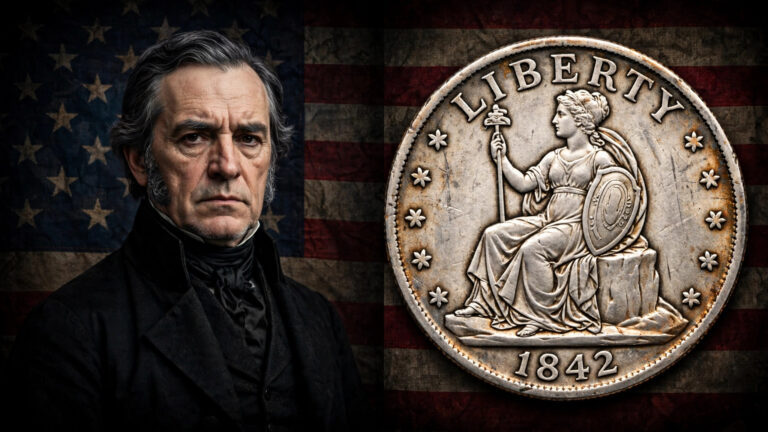
Who Was Robert Patterson, the Director Behind Seated Liberty?
Robert Maskell Patterson was Director of the United States Mint from 1835 to 1851 — the son of an earlier director also named Robert Patterson. Appointed by President Andrew Jackson, he drove the creation of Christian Gobrecht's Seated Liberty design, which spread across America's silver coinage beginning with the Gobrecht dollars of 1836 and the dime and half dime of 1837 and endured, in places, until 1891. He also resisted the gold dollar and double eagle authorized in 1849, and lost that fight to Congress.
Read More →