


How Did Lyndon B. Johnson End Silver Coinage?
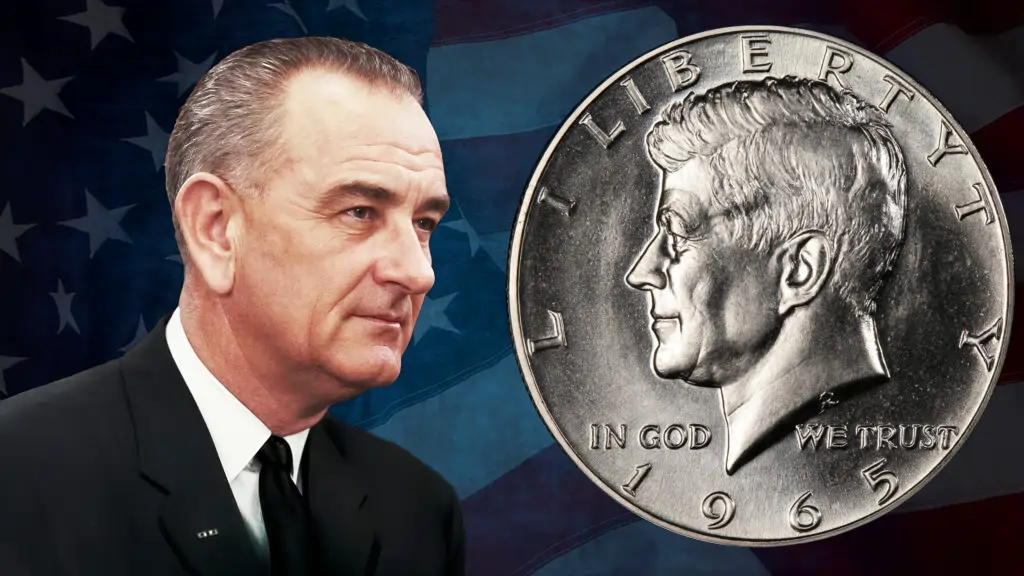
Lyndon B. Johnson ended silver coinage by proposing it himself and then signing it into law. On June 3, 1965 he asked Congress to take silver out of American coins, and on July 23, 1965 he signed the Coinage Act of 1965 (Public Law 89-81), which stripped silver from dimes and quarters entirely, cut the half dollar to 40 percent silver, and stopped silver dollar production — closing the silver system that dated to 1792.
Key Takeaways
- Johnson personally proposed removing silver to Congress on June 3, 1965, amid a national coin shortage.
- The Coinage Act of 1965, signed July 23, 1965, made dimes and quarters copper-nickel clad and cut the half dollar to 40 percent silver.
- Johnson had also signed the Kennedy half dollar authorization on December 30, 1963 — the last new 90 percent silver design.
- His administration also struck, and then destroyed, the never-released 1964-D Peace dollars in 1965.
Why did Johnson ask Congress to remove silver in 1965?
Johnson asked because silver had become too valuable to spend. Rising industrial demand and a rising silver price meant the metal in a quarter was approaching the quarter's face value, while a genuine coin shortage gripped the country — vending machines, transit systems and retailers could not get change, and the public blamed hoarders and collectors. The Treasury's silver stockpile, which backed the coinage, was draining fast.
On June 3, 1965, Johnson sent Congress a special message laying out the case personally: the nation did not need silver coins to have sound money, silver was needed for industry and defense, and continuing to mint 90 percent silver coins simply fed the stockpile to speculators. It was the president's own proposal, argued in his own message — the opposite of a bystander signature — and Congress passed his program in about seven weeks.
What exactly did the Coinage Act of 1965 change?
The Act rebuilt the minor coinage around base metal. Dimes and quarters became copper-nickel clad — the sandwich construction with a copper core that gives modern coins their copper stripe on the edge. The half dollar kept a reduced role for silver at 40 percent, clad around a silver-copper core, and production of silver dollars was prohibited outright.
The dates tell the transition: 1964 coins are the last regular 90 percent silver issues, and the Mint froze the 1964 date well into 1965 while the new presses and planchets came online, which is why mintmarks disappeared from 1965 to 1967 coinage. The half dollar's 40 percent silver version lasted through 1970 before it too went fully clad. Silver did not vanish from the Mint — proof and collector issues later revived it — but after July 23, 1965, no new circulating American coin was ever struck in 90 percent silver again.
What was Johnson's role in the Kennedy half dollar?
Johnson signed the Kennedy half into law in the first weeks of his presidency. After President Kennedy's assassination on November 22, 1963, the call for a coin memorial was immediate, and Johnson moved it through Congress at speed, signing the authorization on December 30, 1963. The half dollar was chosen partly because Jacqueline Kennedy objected to displacing Washington on the quarter.
The irony defines Johnson's coinage record: the same president authorized the most beloved 90 percent silver coin of the modern era and then, eighteen months later, ended silver coinage itself. The 1964 Kennedy half — struck in 90 percent silver for one year only — sits exactly at the hinge between those two signatures.
What happened to the 1964-D Peace dollars his administration struck?
His administration struck them in secret and destroyed them on his watch. In 1964 Congress funded a final run of silver dollars, and in May 1965 the Denver Mint struck 316,076 Peace dollars dated 1964-D. The program became a political embarrassment — critics charged the coins would be hoarded as instant rarities rather than circulate — and before any could be released, the administration reversed course and ordered them melted.
No 1964-D Peace dollar was ever issued, and Mint records say all were destroyed, though rumors of survivors have taunted collectors ever since; none has ever been authenticated. The episode unfolded in the same weeks Johnson was asking Congress to end silver coinage, which is its own commentary: by the spring of 1965, the silver dollar was already an anachronism the president was trying to retire, not revive.
Collecting the coins Johnson's 1965 act made into the last of their kind? Browse silver coins and gold coins at Coin Advisor, or call (877) 540-2646 to talk with a Preferred Collector Division advisor.
FAQ
When did the U.S. stop making silver coins for circulation? The Coinage Act of 1965, signed by President Johnson on July 23, 1965, ended 90 percent silver dimes and quarters. The 40 percent silver half dollar continued through 1970.
Why was silver removed from coins? The price of silver had risen until the metal in coins approached their face value, the Treasury's silver stockpile was draining, and a national coin shortage had developed. Johnson argued silver was needed more for industry than for coinage.
What is the last year of 90 percent silver coins? 1964 is the last year of regular-issue 90 percent silver dimes, quarters and half dollars. Silver returned later only in collector and proof issues, not in circulating coinage.
Do any 1964-D Peace dollars survive? None has ever been authenticated. The Denver Mint struck 316,076 in May 1965, and Mint records state all were melted before release.
This article was researched and drafted with AI assistance and reviewed and approved by Chris Clifton, Founder & CEO at Coin Advisor, before publication.
Shop NGC and PCGS certified coins at Coin Advisor
Shop Coins →Related Reading
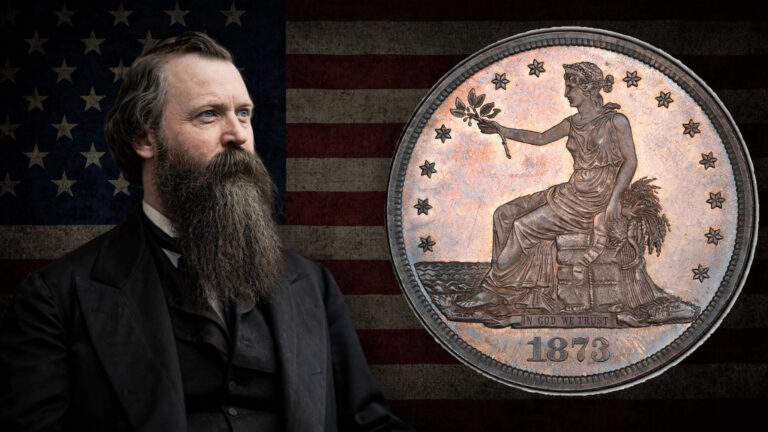
Who Was William M. Stewart, the Senator Who Branded 1873 a Crime?
William Morris Stewart (1827–1909) was Nevada's first senator, the mining lawyer known as the "Father of the Mining Laws of the United States" for the federal mining statutes of 1866 and 1872. His place in coin history is stranger. Stewart was in the Senate in 1873 and voted for the Coinage Act that ended the silver dollar — and then, after silver's price collapsed, he returned to the Senate in 1887 and spent eighteen years denouncing that act as the "Crime of '73," claiming its passage had been a deception. The voting record is the honest footnote to his legend: the man who made "crime" the act's permanent name had been one of its supporters.
Read More →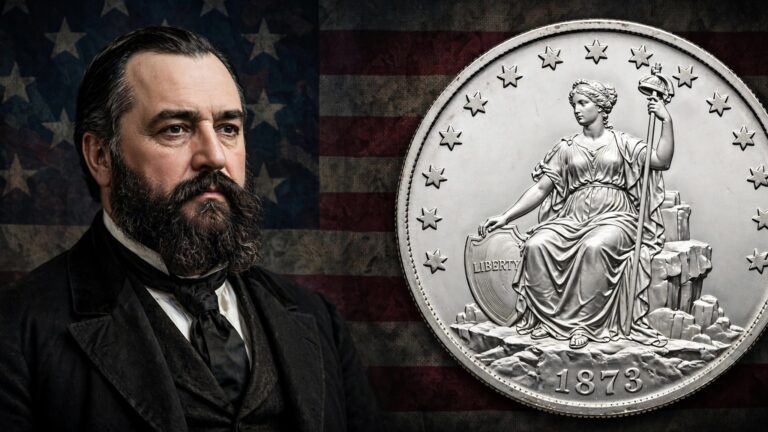
What Was the ‘Crime of ’73’ That Ulysses S. Grant Signed?
The "Crime of '73" is the bitter name silver interests gave the Coinage Act of February 12, 1873, which Ulysses S. Grant signed as a routine Mint housekeeping bill. Buried in its revision of the mint laws was one quiet omission: the standard silver dollar no longer appeared on the list of authorized coins, ending the free coinage of silver in the United States. The same act created the Trade dollar, abolished the two-cent piece, three-cent silver, and half dime, and slightly raised the weight of the remaining silver coins. Almost nobody noticed at the time — the explosion came three years later.
Read More →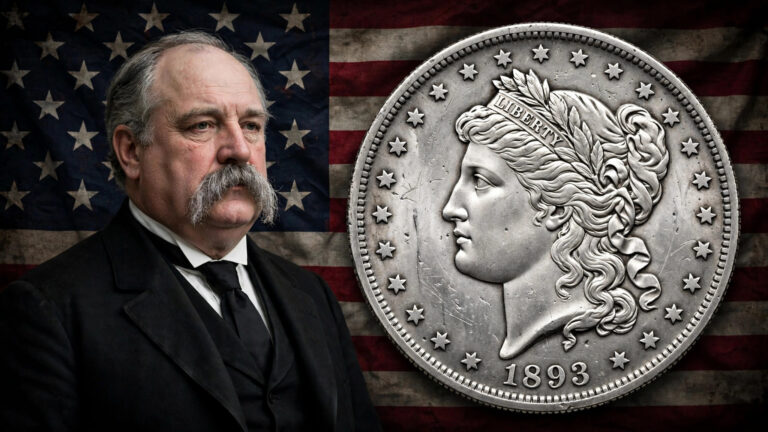
How Did Grover Cleveland’s Silver Repeal Create the Key-Date Morgans?
Grover Cleveland did not merely sign a coinage law — he forced one through. When the Panic of 1893 drained the Treasury's gold reserve below its symbolic $100 million floor, on April 22, 1893, Cleveland called Congress into special session for the single purpose of repealing the Sherman Silver Purchase Act, demanded repeal with no free-silver substitute, and pressured his own party's senators until he could sign the repeal on November 1, 1893. With the government no longer required to buy silver and coin it into dollars, Morgan dollar production collapsed — and the tiny mintages of 1893–95 became the key dates collectors chase today.
Read More →