


How Did Herbert Hoover End the First Commemorative Era and Start the Washington Quarter?
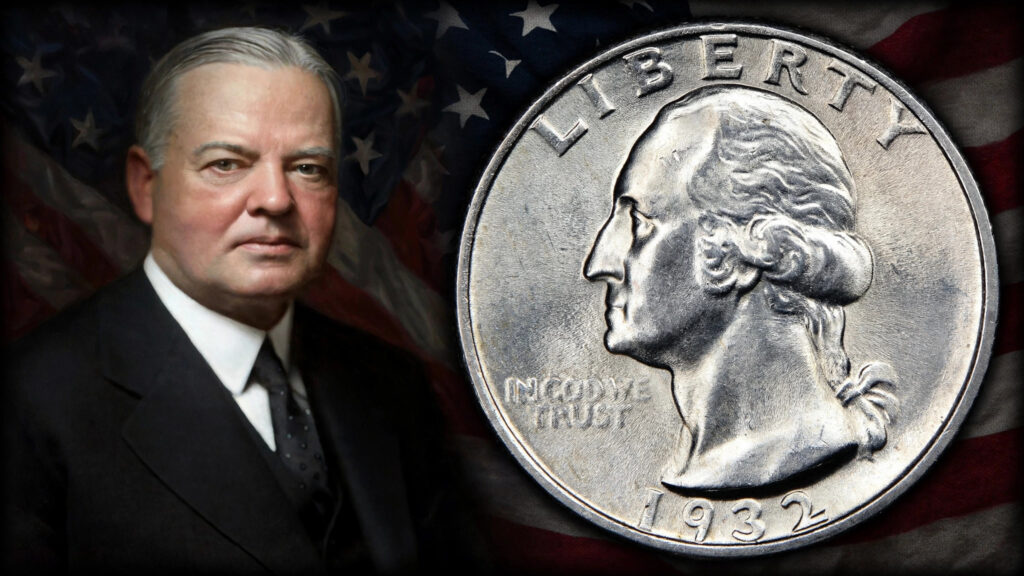
Herbert Hoover did both with a veto pen and a signature a year apart. On April 21, 1930 he vetoed a commemorative coin bill with a long message warning that the 1920s commemorative boom invited counterfeiting and produced coins nobody bought — a stance that helped end the classic commemorative era — and in March 1931 he signed the law putting George Washington's portrait on the quarter for the 1932 bicentennial.
Key Takeaways
- Hoover vetoed a commemorative coin bill on April 21, 1930, arguing commemoratives were unsold, abused and easy to counterfeit.
- His veto message captured the Treasury's case against the 1920s commemorative proliferation and helped close the classic era.
- In March 1931 he signed the law authorizing a Washington quarter for the 1932 bicentennial — the first presidential portrait on a circulating U.S. coin.
- Honestly told, Hoover was a secondary player in the quarter's design story — Congress, Mellon and the bicentennial commission did most of it.
Why did Hoover veto a commemorative coin in 1930?
Hoover vetoed it because the commemorative program had run out of control. Through the 1920s, Congress had authorized souvenir half dollars for expositions, anniversaries and local causes in growing numbers, and the results were embarrassing: issues sold poorly at their premium prices, organizers abused the program, and unsold coins — Oregon Trail halves among them — piled up or leaked into circulation. Each new design also multiplied the counterfeiter's opportunities, since the public could not recognize its own money.
His veto message of April 21, 1930, rejecting a bill for a commemorative tied to the Gadsden Purchase anniversary, made that case at length and pointed to stamps and medals as better ways to mark anniversaries. The veto held, and it expressed settled administration policy: the classic commemorative era, which had run since the 1892 Columbian half, wound down through the 1930s and effectively ended by the 1950s. Hoover did not act alone — Treasury officials had complained for years — but his was the signature that stopped a bill cold.
How did the Washington quarter come from Hoover's 1931 signature?
The quarter came from the Washington bicentennial. Congress created a commission to plan the 1932 celebration of the 200th anniversary of Washington's birth — Hoover himself served on it — and a circulating coin portrait was the obvious national souvenir. The law Hoover signed in March 1931 authorized a special 25-cent piece bearing Washington's portrait for the bicentennial year.
It was a genuine first: no president had ever appeared on a regular circulating U.S. coin, because the republic had long treated living-ruler portraiture as a monarch's habit — Lincoln's cent, issued after his death, was the lone partial exception on a minor coin. Putting Washington on the quarter in 1932 was meant as a one-year tribute. Instead the design never left: the Washington quarter became permanent, and Washington has faced right on the quarter ever since. The permanence itself, finalized under Franklin Roosevelt in 1934, is one part of the story Hoover did not control.
What part of the quarter story is not Hoover's?
The design choice is not Hoover's, and the denomination switch is not either. Congress originally discussed a commemorative half dollar before settling on the quarter. The design competition produced a celebrated controversy: the bicentennial commission favored sculptor Laura Gardin Fraser's Washington portrait — widely judged the finest entry — but Treasury Secretary Andrew Mellon chose John Flanagan's model instead, and Flanagan's Washington is the one on the quarter today.
Hoover's contribution sits upstream of those fights: he served the commission, he supported the bicentennial program, and he signed the authorizing law in March 1931. That is a real but supporting role. The honest summary is that Hoover enabled the Washington quarter without designing it, choosing it, or making it permanent — while his commemorative veto, the act most fully his, is the one collectors hear about least.
Why do these two acts belong in one story?
They belong together because both are about restraint and fitness in coinage. The veto said the Mint should not mint a new souvenir for every anniversary; the quarter signature said a single dignified portrait, struck for full circulation, was the better memorial. Within eleven months, Hoover had closed one commemorative age and opened the portrait age of American circulating coinage.
For collectors, the pairing explains two shelves at once: why classic commemoratives end in a thin trickle of 1930s issues, and why a coin in every pocket carries a president's face. Hoover is nobody's idea of a coinage visionary, but the record of 1930–31 gives him a genuine, if modest, chapter.
Collecting the coins Hoover's veto and signature produced? Browse silver coins and gold coins at Coin Advisor, or call (877) 540-2646 to talk with a Preferred Collector Division advisor.
FAQ
What commemorative bill did Hoover veto? On April 21, 1930 Hoover vetoed a bill authorizing a commemorative coin for the Gadsden Purchase anniversary, arguing in a long message that commemoratives were unsold, abused and invited counterfeiting.
When did Washington first appear on the quarter? In 1932, under the law Hoover signed in March 1931 for the bicentennial of Washington's birth. It was the first presidential portrait on a circulating U.S. coin.
Who designed the Washington quarter? John Flanagan's model was selected by Treasury Secretary Andrew Mellon. The bicentennial commission had preferred Laura Gardin Fraser's portrait, a famous controversy in the series.
Did Hoover make the Washington quarter permanent? No. The quarter was authorized as a 1932 bicentennial issue; its continuation as the permanent design was settled in 1934, during Franklin Roosevelt's presidency.
This article was researched and drafted with AI assistance and reviewed and approved by Chris Clifton, Founder & CEO at Coin Advisor, before publication.
Shop NGC and PCGS certified coins at Coin Advisor
Shop Coins →Related Reading
Who Was William M. Stewart, the Senator Who Branded 1873 a Crime?
William Morris Stewart (1827–1909) was Nevada's first senator, the mining lawyer known as the "Father of the Mining Laws of the United States" for the federal mining statutes of 1866 and 1872. His place in coin history is stranger. Stewart was in the Senate in 1873 and voted for the Coinage Act that ended the silver dollar — and then, after silver's price collapsed, he returned to the Senate in 1887 and spent eighteen years denouncing that act as the "Crime of '73," claiming its passage had been a deception. The voting record is the honest footnote to his legend: the man who made "crime" the act's permanent name had been one of its supporters.
Read More →
What Was the ‘Crime of ’73’ That Ulysses S. Grant Signed?
The "Crime of '73" is the bitter name silver interests gave the Coinage Act of February 12, 1873, which Ulysses S. Grant signed as a routine Mint housekeeping bill. Buried in its revision of the mint laws was one quiet omission: the standard silver dollar no longer appeared on the list of authorized coins, ending the free coinage of silver in the United States. The same act created the Trade dollar, abolished the two-cent piece, three-cent silver, and half dime, and slightly raised the weight of the remaining silver coins. Almost nobody noticed at the time — the explosion came three years later.
Read More →
How Did Grover Cleveland’s Silver Repeal Create the Key-Date Morgans?
Grover Cleveland did not merely sign a coinage law — he forced one through. When the Panic of 1893 drained the Treasury's gold reserve below its symbolic $100 million floor, on April 22, 1893, Cleveland called Congress into special session for the single purpose of repealing the Sherman Silver Purchase Act, demanded repeal with no free-silver substitute, and pressured his own party's senators until he could sign the repeal on November 1, 1893. With the government no longer required to buy silver and coin it into dollars, Morgan dollar production collapsed — and the tiny mintages of 1893–95 became the key dates collectors chase today.
Read More →