


Why Did the U.S. Stop Making Silver Coins?
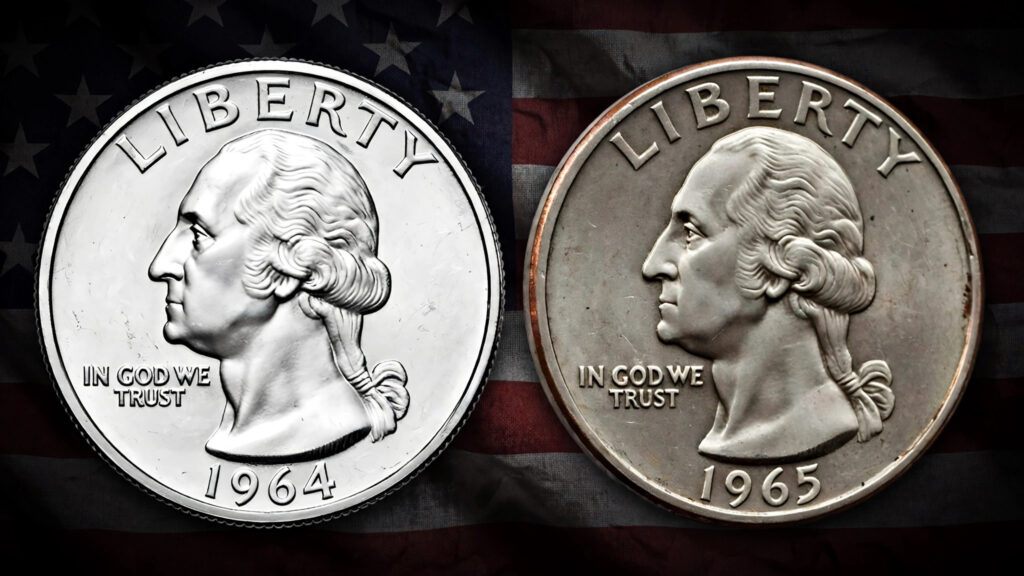
The U.S. stopped making silver circulating coins because silver became worth more than the coins' face values: by the early 1960s, the metal in a silver dime was worth more than ten cents, so coins were hoarded and melted, and the coin supply contracted into a crisis. The Coinage Act of 1965 resolved it by replacing silver dimes and quarters with copper-nickel clad coins, ending a silver tradition that stretched back to 1792.
Key Takeaways
- For 170+ years, dimes, quarters, and half dollars were 90 percent silver.
- Rising silver prices in the early 1960s made the metal worth more than face value, so coins vanished from circulation.
- The 1965 act replaced silver with copper-nickel clad: a copper core between copper-nickel outer layers.
- The dividing line for collectors: 1964 and earlier means silver; 1965 and later means clad.
Why did silver coins disappear?
For more than 170 years, American dimes, quarters, and half dollars were struck in 90 percent silver. By the early 1960s, that tradition collided with economics: the price of silver rose — driven by industrial demand, speculation, and the Treasury's own silver sales — until the metal in a silver coin was worth more than the coin's face value. A silver dime contained more than ten cents' worth of silver; a silver quarter contained more than twenty-five cents' worth. The result was predictable: coins began disappearing from circulation as people hoarded them, melted them, or simply saved them, and the nation's coin supply — already strained by a growing economy and a coin shortage in the early 1960s — contracted further. The Mint could not strike silver coins fast enough to replace the ones being hoarded, and the shortage became a crisis.
What was the clad solution?
The Coinage Act of 1965 resolved the crisis by removing silver from dimes and quarters entirely, replacing it with a copper-nickel clad composition: a copper core sandwiched between outer layers of copper-nickel alloy. The clad coins looked similar to their silver predecessors — the copper-nickel surface mimicked silver's appearance — but they contained no precious metal, and their metal value was far below their face value. Hoarding them made no economic sense, and they stayed in circulation. The half dollar kept a reduced 40 percent silver content for a few more years as a political compromise, before going clad as well in 1971. The silver dollar was not part of the change; it had not been struck for circulation since 1935. The transition was not immediate: silver coins struck in 1964 and earlier remained legal tender and circulated alongside clad coins for years, gradually disappearing as they were hoarded or withdrawn.
| Silver coinage (to 1964) | Clad coinage (1965 onward) | |
|---|---|---|
| Composition | 90% silver | Copper core, copper-nickel outer layers |
| Metal vs. face value | Metal could exceed face value | Metal far below face value |
| Behavior | Hoarded and melted when silver rose | Stayed in circulation |
| Collector dividing line | 1964 and earlier | 1965 and later |
Why does 1965 still matter to collectors?
The transition created an instant dividing line in American numismatics: 1964 and earlier means silver; 1965 and later means clad. Collectors who had never thought about composition suddenly had a reason to pull silver coins from change, and the hunt for pre-1965 silver in circulation became a national pastime that lasted for decades — a habit many collectors never fully abandoned, even after silver coins vanished from circulation. The act also authorized the Mint to continue striking silver coins for collectors — proof sets and, later, silver proof issues — even as circulating coinage went clad. That distinction, between coins made for circulation and coins made for collectors, is one of the most important in the modern hobby, and it dates to 1965: before 1965, collector coins and circulation coins were the same coins; after 1965, they were different products, struck in different metals, for different audiences. The act had a lesser-known consequence, too: from 1965 through 1967, the Mint struck no proof or mint sets at all, instead issuing Special Mint Sets — coins with a distinctive satin finish, struck with extra care but not to proof standard — as a substitute while it focused capacity on circulation strikes. The Coinage Act of 1965 ended the silver era of American coinage, an era that had begun in 1792 and lasted 173 years, and marked the moment American coinage became entirely token coinage — coins whose value comes from the government's fiat, not from the metal they contain.
FAQ
When did the U.S. stop putting silver in dimes and quarters? With the Coinage Act of 1965; the half dollar kept 40% silver until 1971.
Why did silver coins vanish from circulation? The metal became worth more than face value, so people hoarded and melted them.
What is a clad coin? A coin with a copper core sandwiched between copper-nickel outer layers — no precious metal.
Are pre-1965 silver coins still legal tender? Yes, they remain legal tender, though they circulate no longer and are collected instead.
Shop pre-1965 silver coins at Coin Advisor or call (877) 540-2646.
This article was researched and drafted with AI assistance and reviewed and approved by Chris Clifton, Founder & CEO at Coin Advisor, before publication.
Shop NGC and PCGS certified coins at Coin Advisor
Shop Coins →Related Reading
Who Was William M. Stewart, the Senator Who Branded 1873 a Crime?
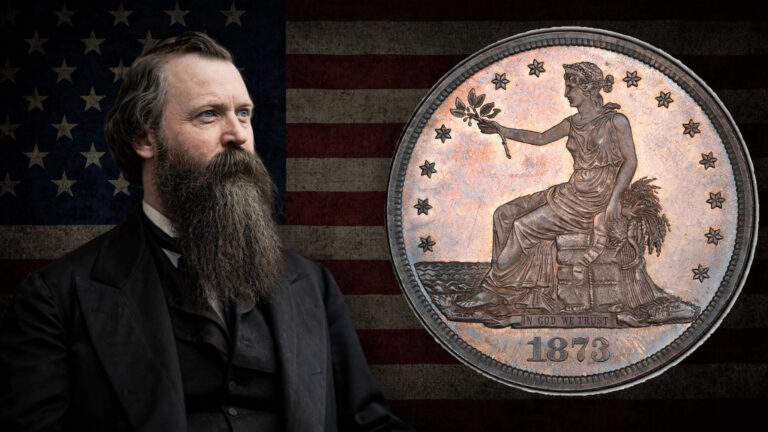
William Morris Stewart (1827–1909) was Nevada's first senator, the mining lawyer known as the "Father of the Mining Laws of the United States" for the federal mining statutes of 1866 and 1872. His place in coin history is stranger. Stewart was in the Senate in 1873 and voted for the Coinage Act that ended the silver dollar — and then, after silver's price collapsed, he returned to the Senate in 1887 and spent eighteen years denouncing that act as the "Crime of '73," claiming its passage had been a deception. The voting record is the honest footnote to his legend: the man who made "crime" the act's permanent name had been one of its supporters.
Read More →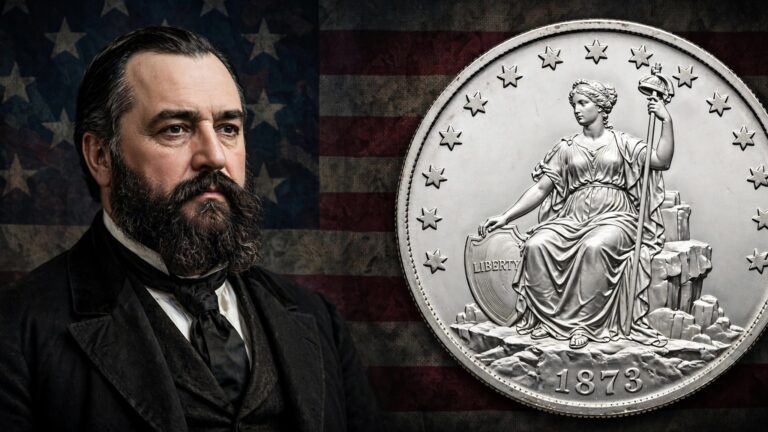
What Was the ‘Crime of ’73’ That Ulysses S. Grant Signed?
The "Crime of '73" is the bitter name silver interests gave the Coinage Act of February 12, 1873, which Ulysses S. Grant signed as a routine Mint housekeeping bill. Buried in its revision of the mint laws was one quiet omission: the standard silver dollar no longer appeared on the list of authorized coins, ending the free coinage of silver in the United States. The same act created the Trade dollar, abolished the two-cent piece, three-cent silver, and half dime, and slightly raised the weight of the remaining silver coins. Almost nobody noticed at the time — the explosion came three years later.
Read More →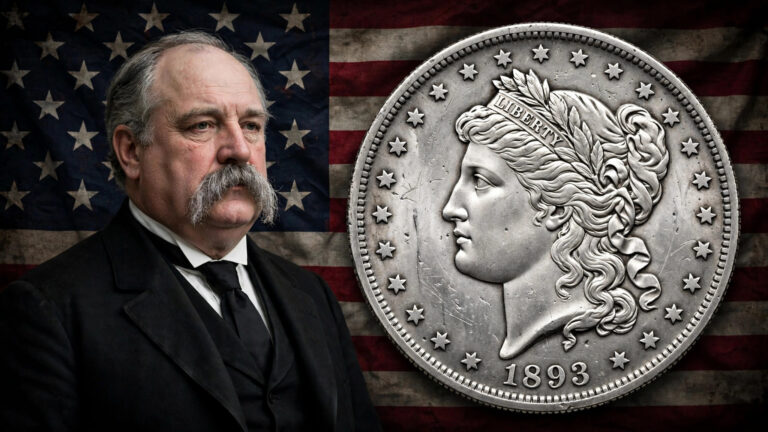
How Did Grover Cleveland’s Silver Repeal Create the Key-Date Morgans?
Grover Cleveland did not merely sign a coinage law — he forced one through. When the Panic of 1893 drained the Treasury's gold reserve below its symbolic $100 million floor, on April 22, 1893, Cleveland called Congress into special session for the single purpose of repealing the Sherman Silver Purchase Act, demanded repeal with no free-silver substitute, and pressured his own party's senators until he could sign the repeal on November 1, 1893. With the government no longer required to buy silver and coin it into dollars, Morgan dollar production collapsed — and the tiny mintages of 1893–95 became the key dates collectors chase today.
Read More →