


Who Is John Mercanti?
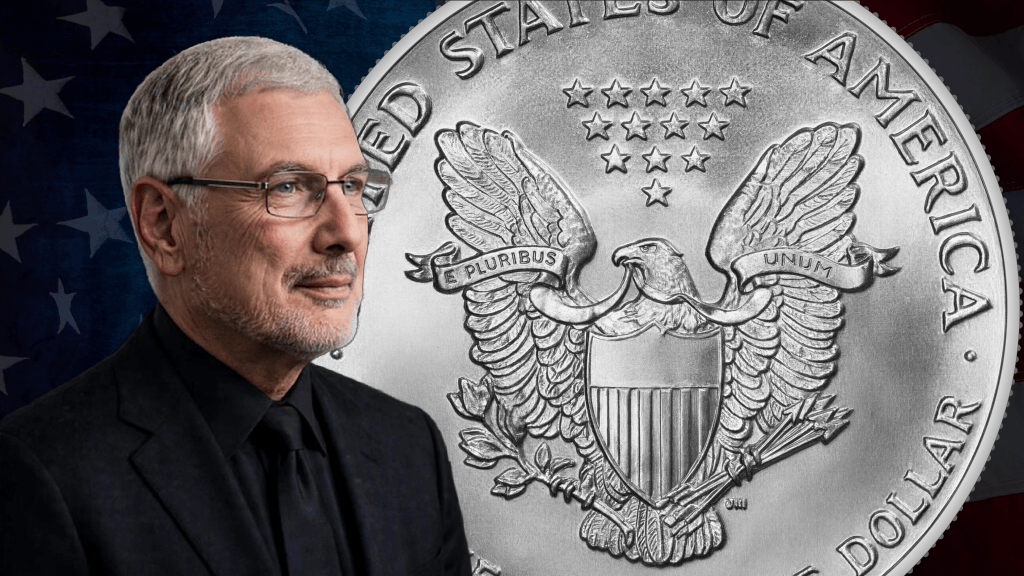
John Mercanti is the sculptor-engraver behind the reverse of the American Silver Eagle as collectors knew it for 35 years. His heraldic eagle — shield, olive branch, arrows, and thirteen stars — appeared on every Silver Eagle from 1986 until the design changed in mid-2021. He joined the U.S. Mint in 1974, became its 12th Chief Engraver, and retired in 2010 with more coin and medal designs to his name than any other Mint staff engraver.
Key Takeaways
- Mercanti designed the Silver Eagle's Type 1 reverse, used from 1986 to early 2021.
- He was the 12th Chief Engraver of the U.S. Mint.
- He also designed the Statue of Liberty obverse of the American Platinum Eagle and seven State Quarter reverses.
- His hand signature appears on PCGS Mint Engraver Series labels on certified Silver Eagles.
What did Mercanti design for the American Silver Eagle?
The reverse. When the Silver Eagle launched in 1986, Adolph A. Weinman's Walking Liberty from 1916 was chosen for the obverse, and the Mint held a competition for the reverse. Mercanti won it. His design is a heraldic eagle behind a union shield, holding an olive branch in one claw and arrows in the other, with thirteen stars above and a ribbon reading E PLURIBUS UNUM. He later said he wanted a formal eagle, not a bird in flight — a deliberate contrast with the flowing Liberty on the other side. Treasury Secretary James A. Baker III approved the models after the Commission of Fine Arts reviewed them, and the first Silver Eagles were struck on October 29, 1986, at the San Francisco Mint. Mercanti's eagle served the series for 35 years, the longest run of any Silver Eagle reverse.
What else did Mercanti design?
More than a hundred coins and medals over a 36-year Mint career. He designed the Statue of Liberty obverse of the American Platinum Eagle, first issued in 1997, and seven State Quarter reverses: Pennsylvania (1999), North Carolina (2001), Louisiana (2002), Arkansas (2003), Iowa (2004), West Virginia (2005), and South Dakota (2006). The Mint credits him with more designs than any other staff engraver in its history. He later became Supervisor of Design and Master Tooling Development Specialist, and was designated the 12th Chief Engraver. He retired on December 30, 2010.
What is the difference between the Type 1 and Type 2 Silver Eagle reverses?
The Type 1 reverse is Mercanti's heraldic eagle, used from 1986 through the first half of 2021. The Type 2 reverse, introduced in mid-2021, is an eagle coming in to land, designed by Emily Damstra and sculpted by Michael Gaudioso. Both coins carry Weinman's Walking Liberty on the obverse; only the reverse changed. Because both types were struck in 2021, the grading services distinguish them on the label.
| Type 1 reverse | Type 2 reverse | |
|---|---|---|
| Designer | John Mercanti | Emily Damstra |
| Sculptor | John Mercanti | Michael Gaudioso |
| Eagle | Heraldic, behind a shield | In flight, coming in to land |
| Years | 1986–2021 | 2021–present |
Why does Mercanti's signature appear on coin labels?
Because the signature is the designer's own hand on his own work. PCGS's Mint Engraver Series labels carry Mercanti's hand signature on certified Silver Eagles — bullion, proof, and burnished issues — including coins struck in the years his reverse was in use. Mercanti is the anchor name of the Mint Engraver Series, and dual-signature versions pairing him with other Mint artists also exist. A signed label does not change the coin's grade or its design; it records that the person who drew the eagle on the reverse signed the label in the holder. For collectors of the Silver Eagle series, that direct link between the designer and the coin is the point of the label.
FAQ
Who designed the American Silver Eagle reverse? John Mercanti designed the Type 1 reverse used from 1986 to 2021; Emily Damstra designed the Type 2 reverse introduced in mid-2021.
Was Mercanti the Chief Engraver? Yes — he was the 12th Chief Engraver of the U.S. Mint, retiring in 2010.
Did Mercanti design the obverse too? No. The obverse is Adolph A. Weinman's Walking Liberty, adapted from the 1916 half dollar.
Does a Mercanti signature change the coin's grade? No. The signature is on the label, not the coin, and the grade is unchanged.
Shop American Silver Eagles at Coin Advisor or call (877) 540-2646.
This article was researched and drafted with AI assistance and reviewed and approved by [Author], [Role] at Coin Advisor, before publication.
Shop NGC and PCGS certified coins at Coin Advisor
Shop Coins →Related Reading
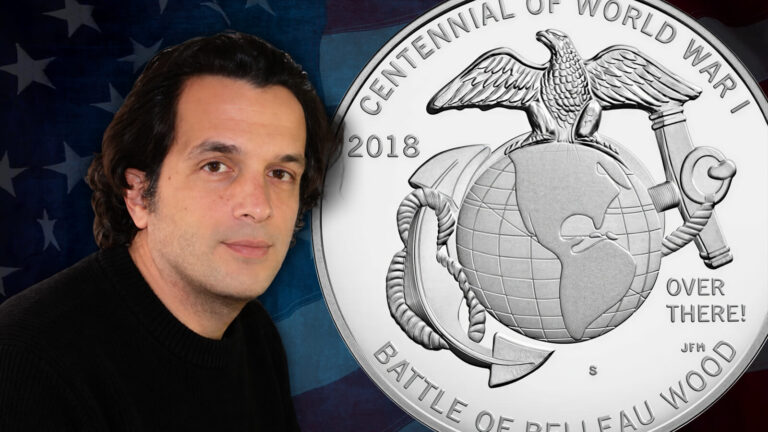
Who Is Joseph Menna, the Mint’s First Digital Sculptor?
Joseph Menna is the thirteenth Chief Engraver of the United States Mint, appointed on February 4, 2019 — the appointment that ended the title's second long vacancy. A classically trained sculptor who made his name sculpting action figures and statues for DC Comics, Hasbro and Fisher-Price, Menna joined the Mint in 2005 as its first full-time digitally skilled artist and changed how American coins are made: modelled on a screen, in software like ZBrush, rather than in plaster.
Read More →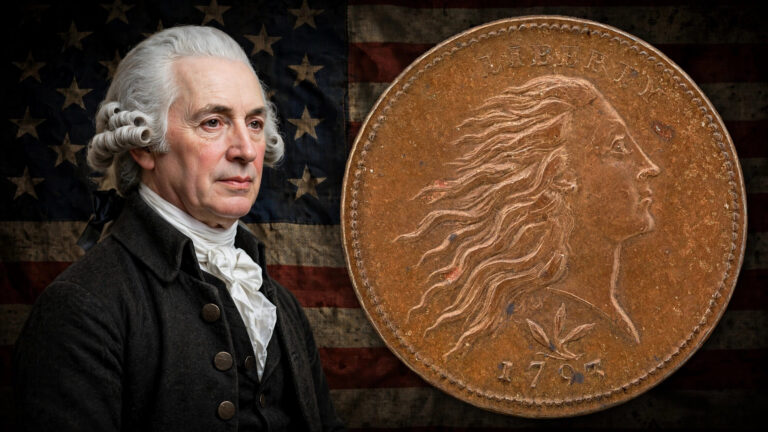
Who Was David Rittenhouse, America’s First Mint Director?
David Rittenhouse was the first Director of the United States Mint, appointed by President George Washington in April 1792 and serving until June 1795. A leading astronomer, instrument maker and scientist, he built the Mint from nothing — hiring its officers, overseeing its first buildings in Philadelphia and launching copper coinage in 1793 and silver coinage in 1794. His tenure is also remembered for a controversial decision to strike the first silver coins finer than the law allowed.
Read More →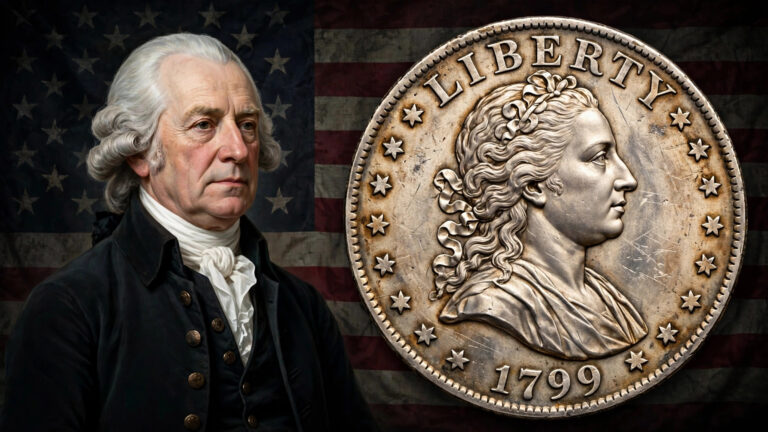
Who Was Elias Boudinot, the Director Who Steadied the Young Mint?
Elias Boudinot was the third Director of the United States Mint, serving from October 1795 to July 1805. A former president of the Continental Congress and a respected New Jersey statesman, he restored the legal silver standard on taking office, kept the chronically underfunded Mint operating — at times depositing his own bullion to keep workers employed — and halted production of silver dollars and gold eagles in 1804 because the large coins were being exported and melted rather than circulating at home.
Read More →