


Who Is Emily Damstra?
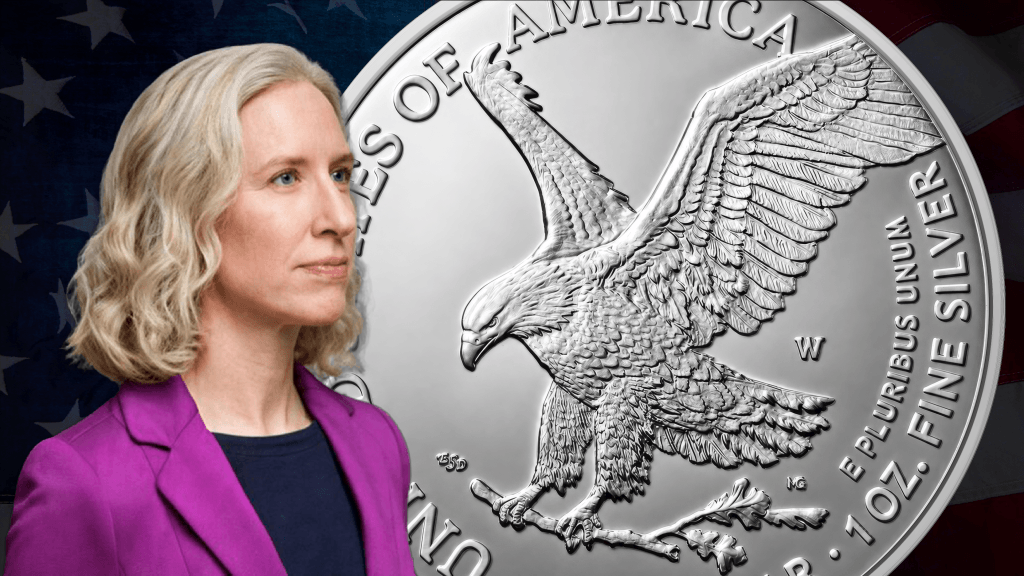
Emily Damstra is the artist behind the American Silver Eagle's Type 2 reverse — the bald eagle in flight, clutching an oak branch, that has appeared on every Silver Eagle since mid-2021. A trained natural science illustrator and a dual citizen of the United States and Canada, she joined the U.S. Mint's Artistic Infusion Program in 2014 after beginning her coin-design career at the Royal Canadian Mint in 2010. She has designed more than 40 coins and medals for the two mints, and her hand signature appears on PCGS Master Designer labels.
Key Takeaways
- Damstra designed the Type 2 Silver Eagle reverse, introduced in mid-2021 and sculpted by Michael Gaudioso.
- She joined the U.S. Mint's Artistic Infusion Program in 2014.
- She has designed more than 40 coins and medals for the U.S. and Royal Canadian Mints.
- Her signature appears on PCGS Master Designer labels on certified Silver Eagles.
How did a natural science illustrator end up designing coins?
Damstra trained as a natural science illustrator — an artist who draws plants and animals with scientific accuracy — before she ever designed a coin. She began her coin career at the Royal Canadian Mint in 2010, and her Canadian work includes the Birds of Prey series — Peregrine Falcon, Bald Eagle, Red-Tailed Hawk, and Great Horned Owl — and the Predator series of Cougar, Lynx, Wolf, and Grizzly. Her initials, "ED," appear on the final two designs of the Royal Canadian Mint's Wildlife Series, the Pronghorn Antelope and the Wood Bison. She joined the U.S. Mint's Artistic Infusion Program in 2014, the program through which outside artists submit designs to the Mint. Her background shows in her coin work: the Silver Eagle reverse is not a heraldic symbol but a lifelike bird, drawn the way a naturalist would observe one.
What is the Type 2 eagle design?
A bald eagle in mid-flight, coming in to land, carrying an oak branch in its talons. The Mint unveiled the design in October 2020, and it replaced John Mercanti's heraldic eagle on Silver Eagles in mid-2021, the series' 35th anniversary year. Damstra has said she was inspired by Miley Frost's design for the Type 1 Gold Eagle — the family of eagles — and the oak branch is meant to suggest strength, endurance, and resilience. The design was sculpted by Michael Gaudioso, and it appears on the reverse of every bullion, proof, and collector Silver Eagle, including the 2026 dual-dated 1776–2026 issues for the nation's 250th anniversary.
What else has Damstra designed for the U.S. Mint?
Her American work goes well beyond the Silver Eagle. She designed the reverses of the 2019 River of No Return (Idaho) and 2020 Tallgrass Prairie (Kansas) America the Beautiful Quarters, the 2021 Christa McAuliffe commemorative silver dollar, the 2018 Breast Cancer Awareness commemorative coins, and the 2017 Boys Town centennial commemorative silver dollar. She also designed the reverses of the 2019 Georgia and 2020 Massachusetts American Innovation dollars and the reverse of the 2020 Steve Gleason Congressional Gold Medal. Two of her designs have won Coin of the Year awards: the 2017 Boys Town dollar and a 2014 Canadian coin, the $20 Silver Maple Canopy — Autumn Allure.
What does Damstra's signature on a label mean?
That the artist who designed the reverse signed the holder. PCGS's Master Designer labels carry her hand signature on certified Silver Eagles, including proof and bullion issues and the 2026 dual-dated coins. The signature is on the label, not the coin, and it does not change the grade. For collectors, the appeal is direct: the person who drew the eagle now on every Silver Eagle signed the label in front of it.
| Type 1 reverse | Type 2 reverse | |
|---|---|---|
| Designer | John Mercanti | Emily Damstra |
| Eagle | Heraldic, behind a shield | In flight, coming in to land |
| Years | 1986–2021 | 2021–present |
FAQ
Who designed the Type 2 Silver Eagle reverse? Emily Damstra designed it; Michael Gaudioso sculpted it. It appeared in mid-2021.
What did Damstra design before the Silver Eagle? Coins and medals for the Royal Canadian Mint, where she began in 2010, and more than a dozen designs for the U.S. Mint.
Is Damstra American or Canadian? Both — she is a dual citizen of the United States and Canada.
Does a Damstra signature change the grade? No. The signature is on the label and the grade is unchanged.
Shop American Silver Eagles at Coin Advisor or call (877) 540-2646.
This article was researched and drafted with AI assistance and reviewed and approved by [Author], [Role] at Coin Advisor, before publication.
Shop NGC and PCGS certified coins at Coin Advisor
Shop Coins →Related Reading
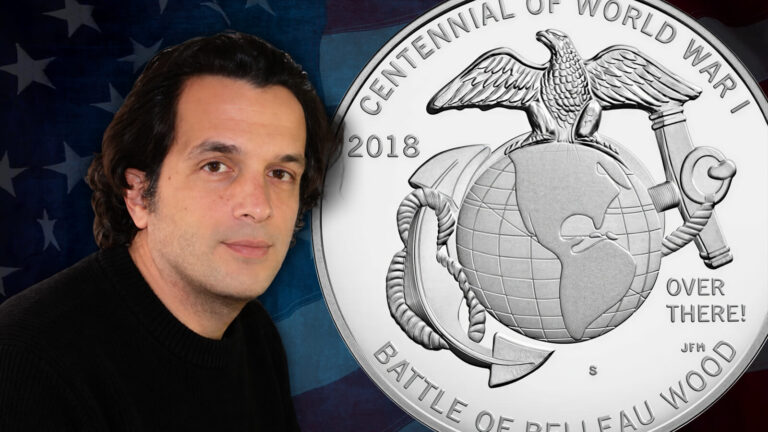
Who Is Joseph Menna, the Mint’s First Digital Sculptor?
Joseph Menna is the thirteenth Chief Engraver of the United States Mint, appointed on February 4, 2019 — the appointment that ended the title's second long vacancy. A classically trained sculptor who made his name sculpting action figures and statues for DC Comics, Hasbro and Fisher-Price, Menna joined the Mint in 2005 as its first full-time digitally skilled artist and changed how American coins are made: modelled on a screen, in software like ZBrush, rather than in plaster.
Read More →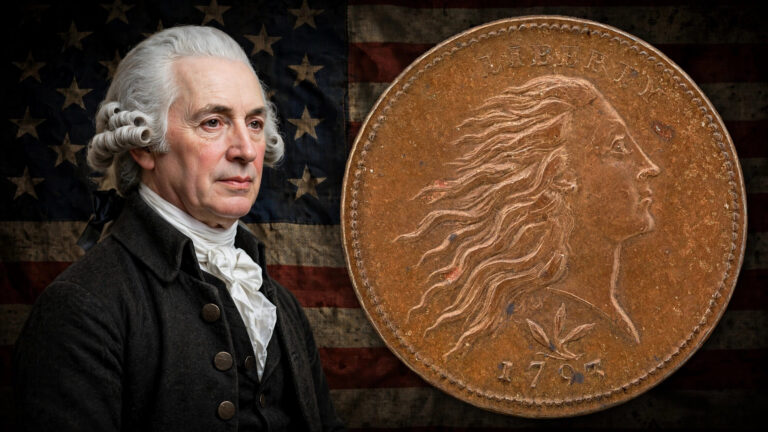
Who Was David Rittenhouse, America’s First Mint Director?
David Rittenhouse was the first Director of the United States Mint, appointed by President George Washington in April 1792 and serving until June 1795. A leading astronomer, instrument maker and scientist, he built the Mint from nothing — hiring its officers, overseeing its first buildings in Philadelphia and launching copper coinage in 1793 and silver coinage in 1794. His tenure is also remembered for a controversial decision to strike the first silver coins finer than the law allowed.
Read More →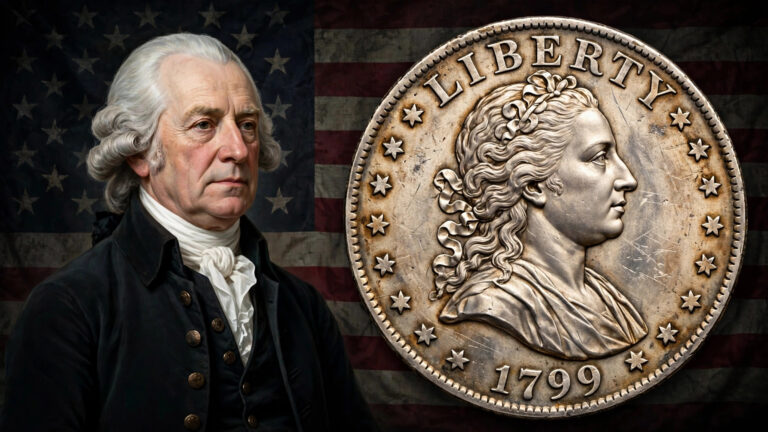
Who Was Elias Boudinot, the Director Who Steadied the Young Mint?
Elias Boudinot was the third Director of the United States Mint, serving from October 1795 to July 1805. A former president of the Continental Congress and a respected New Jersey statesman, he restored the legal silver standard on taking office, kept the chronically underfunded Mint operating — at times depositing his own bullion to keep workers employed — and halted production of silver dollars and gold eagles in 1804 because the large coins were being exported and melted rather than circulating at home.
Read More →