


What’s the Difference Between Proof and Mint State Coins?
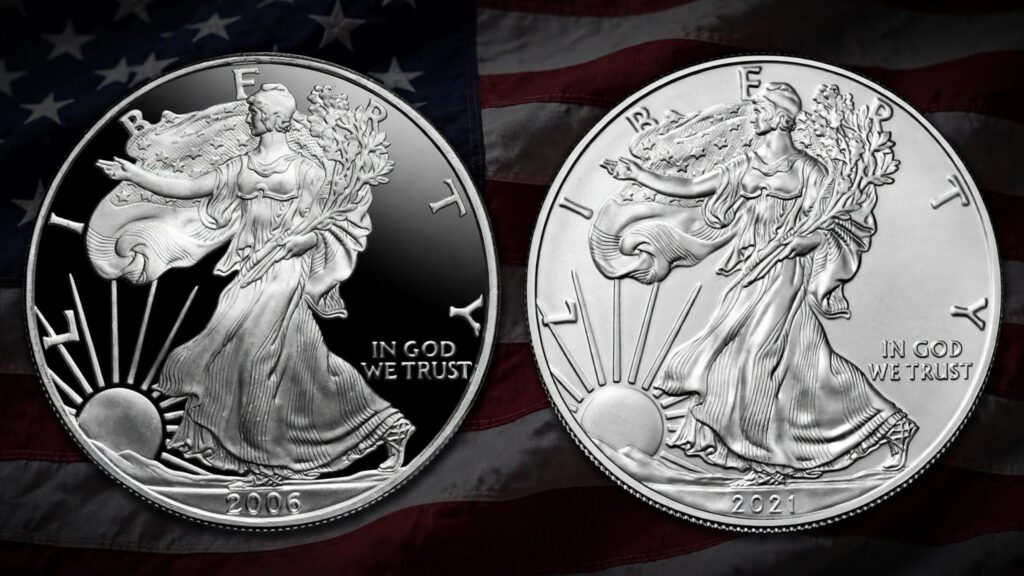
Proof and Mint State answer two different questions about a coin. "Proof" describes how the coin was made — struck more than once with polished dies and planchets, giving it mirrored fields and frosted devices. "Mint State" describes the coin's condition — no wear at all, graded MS60 to MS70 — and it usually applies to a coin struck once, the ordinary way.
Key Takeaways
- "Proof" names a method of manufacture; "Mint State" names a condition.
- Proofs are struck multiple times on polished planchets and dies; Mint State coins are usually struck once, like circulation coins.
- A proof can be worn and still be a proof; a Mint State coin, by definition, shows no wear.
- The label keeps them apart: PF (or PR) for proofs, MS for Mint State business strikes.
What does "proof" actually mean?
It names a manufacturing process, not a grade. The U.S. Mint's own definition is plain: specially treated coin blanks are struck multiple times with specially polished dies to create sharp relief and a mirror-like background, while the frosted, sculpted foreground gives the coin its cameo effect. Proofs are made for collectors, not circulation, and sold individually and in sets. But the proof process guarantees a finish, not a condition — a proof can be mishandled, spotted, or even spent, and it stays a proof, just a worn one.
What does "Mint State" actually mean?
It names a condition: a coin with no trace of wear. On the Sheldon scale, Mint State is the top band, grades 60 through 70, and NGC defines MS as coins struck in the same format as circulation issues. An MS60 coin is uncirculated but may be heavily marked or weakly struck; MS65 is the traditional gem threshold; MS70 is perfect, with no post-production imperfections at 5x magnification. Below 60, wear appears — AU58 sits just under the line. Note the two uses of "uncirculated": in everyday language it means a coin that never circulated, and the Mint sells "uncirculated" collector coins struck on specially burnished blanks and hand-loaded into the press. Those are uncirculated coins — and if certified, they would grade MS, because Mint State is the grade for unworn business strikes.
Can a coin be both a proof and Mint State?
Not on the label — the label picks one prefix. A proof in perfect condition grades PF70; a business strike in perfect condition grades MS70. In everyday language, a proof that never circulated is "uncirculated," but that word is not the MS grade. And the two ideas cross in the other direction too: a proof that was spent or mishandled grades PF58 or lower, because proof describes the making and condition describes the wear. The 70-point scale applies to both kinds of coin; only the prefix changes.
How do you tell them apart?
Look at the finish, then check the label. A proof shows mirror fields and frosted devices with sharp cameo contrast; a Mint State business strike shows standard mint luster, with no mirror and no frost. On the label, the prefix settles it: PF or PR for a proof, MS for a Mint State strike. When you shop, read the words as the Mint and the grading services use them: a listing that says "proof" should mean the finish, and a listing that says "MS65" means a business strike in gem condition. Do not pay a proof price for a coin that only claims to be uncirculated.
| Proof | Mint State | |
|---|---|---|
| Describes | How the coin was struck | How much wear the coin shows: none |
| Striking | Multiple strikes, polished dies and planchets | Usually one strike, standard dies |
| Look | Mirrored fields, frosted devices | Standard mint luster |
| Label prefix | PF or PR | MS |
| Grade range | PF60–PF70 (lower if worn) | MS60–MS70 |
| Can it show wear? | Yes — a proof can be mishandled or spent | No — wear drops it below Mint State |
FAQ
Is a proof coin always uncirculated? No. Proof describes how a coin was made, not its condition — a proof that was handled or spent shows wear and grades below PF60, though it is still a proof.
What does MS70 mean? A business-strike coin graded 70: no wear, and in the grading service's judgment no post-production imperfections at 5x magnification.
Can a Mint State coin be a proof? Not on the label. A proof in perfect condition grades PF70; Mint State (MS) is the prefix for business strikes. In everyday language a proof that never circulated is "uncirculated," but that is not the same as an MS grade.
Which should I collect, a proof or a Mint State coin? That is a matter of taste: proofs for the mirror-and-frost look, Mint State strikes for the standard finish — and the same design in both finishes is a classic pairing.
Shop proof and Mint State coins at Coin Advisor or call (877) 540-2646.
This article was researched and drafted with AI assistance and reviewed and approved by [Author], [Role] at Coin Advisor, before publication.
Shop NGC and PCGS certified coins at Coin Advisor
Shop Coins →Related Reading
What Is First Strike?
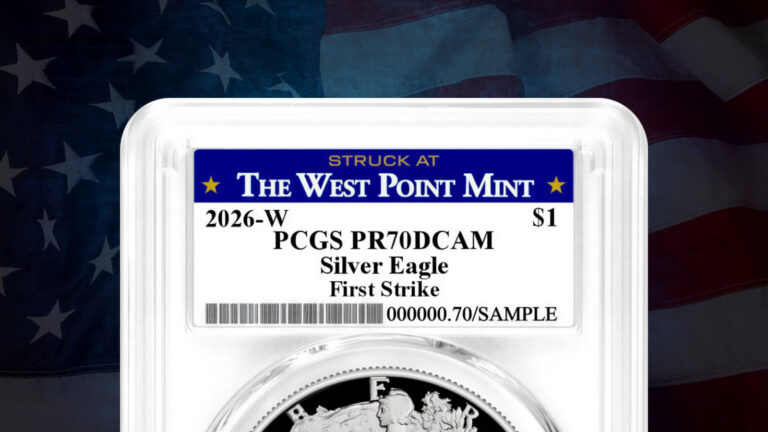
First Strike is PCGS's designation for coins received by PCGS within 30 days of a new issue's release — or shipped in sealed Mint boxes postmarked within that window. It certifies when the coin left the Mint, not when it was struck. The U.S. Mint does not track the order in which it strikes coins and has said so publicly, so no label can prove a coin was literally struck first. NGC's equivalent 30-day designation is Early Releases, or First Releases.
Read More →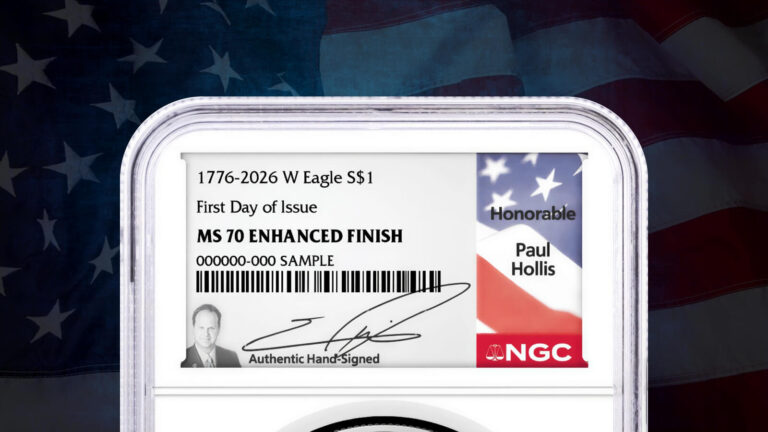
What Is First Day of Issue?
"First Day of Issue" is an NGC designation for a coin bought on the first day a mint puts a new issue on sale — and sent to NGC within a week. It is a pedigree, not a grade: it records the timing of the purchase and the submission, not the quality of the strike. The designation is narrow by design: it is usually available only for bulk submissions or at trade shows, it costs extra, and the submitter must prove the purchase date with receipts.
Read More →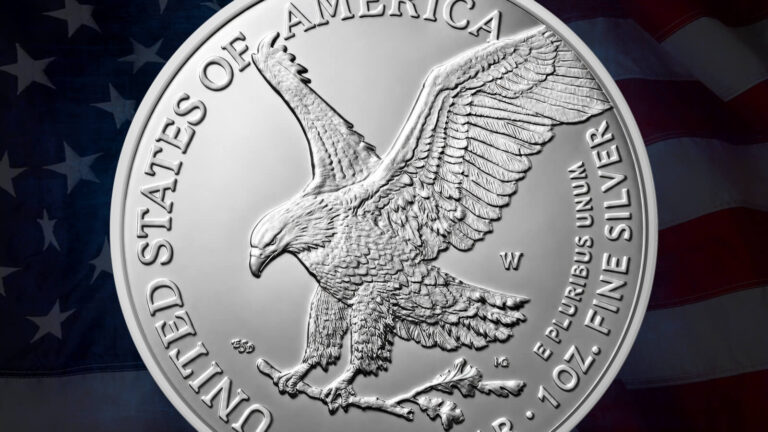
What Is a Type-2 Silver Eagle?
A Type-2 Silver Eagle is an American Silver Eagle struck with the coin's current reverse — Emily Damstra's eagle coming in for a landing with an oak branch, introduced in mid-2021 for the series' 35th anniversary. It replaced John Mercanti's heraldic eagle, which had appeared on the coin since 1986. The obverse is still Weinman's Walking Liberty, refreshed, and the coin still holds one ounce of .999 fine silver.
Read More →