


What Was the First Fractional-Size Proof American Gold Eagle?
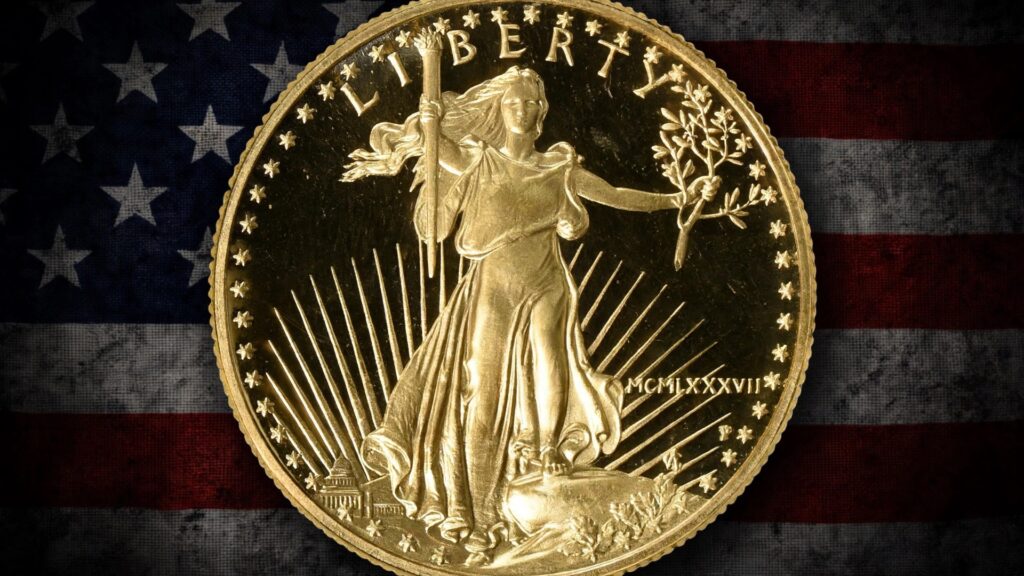
The first fractional-size proof American Gold Eagle is the 1987-P $25 half-ounce coin. In the program’s 1986 debut year, the Mint had offered a proof Gold Eagle in the one-ounce size only; in 1987 it extended the proof line to the half ounce, striking 143,398 of the $25 coins at Philadelphia. The new fractional proof was sold alongside the one-ounce proof — itself struck to 147,498 pieces — in a two-coin proof set, the format that introduced proof Gold Eagle collecting below the one-ounce size.
Key Takeaways
- The 1987-P $25 (1/2 oz) proof is the first fractional-size proof Gold Eagle.
- It was struck at Philadelphia to a mintage of 143,398.
- In 1986 the only proof Gold Eagle offered was the one-ounce coin.
- The half-ounce and one-ounce proofs (147,498) were sold together in a two-coin proof set.
- 1988 was the first year a complete 4-coin fractional proof Gold Eagle collection was produced for collectors.
Why was there no fractional proof Gold Eagle in 1986?
Because the debut-year proof line was deliberately narrow. When the American Gold Eagle launched in 1986, the proof offering consisted of the one-ounce coin alone — a single flagship product for the program’s first year. Fractional bullion sizes existed from the start — the half-, quarter-, and tenth-ounce bullion coins had launched with the program in 1986 — but proof versions of them did not. The half-ounce proof followed in the program’s second year, 1987, once the Mint broadened the collector line beyond the single one-ounce proof: the fractional proof simply gave the half ounce the presentation finish its bullion counterpart already had.
How many 1987-P half-ounce proofs were struck?
143,398, all at the Philadelphia Mint — the “P” in the coin’s name. That total sits remarkably close to the one-ounce proof’s 147,498 for the same year, a sign the two coins were largely bought together as the set they were sold in. For the series, the 143,398 figure also marks the starting point of fractional proof mintages against which every later half-, quarter-, and tenth-ounce proof is compared.
| 1987 proof American Gold Eagles | Mintage |
|---|---|
| $25 — 1/2 oz (Philadelphia) | 143,398 |
| $50 — 1 oz | 147,498 |
How was the first fractional proof sold?
In a two-coin proof set, paired with the one-ounce proof. Rather than offering the half-ounce proof as a standalone product in 1987, the Mint packaged the new $25 coin with the established $50 one-ounce proof, so the fractional debut arrived as part of a set. That packaging is part of the coin’s identity: the first fractional proof Gold Eagle reached collectors as half of a two-coin set, not as an individual issue. The set format also shows in the numbers — the two coins’ mintages, 143,398 and 147,498, differ by barely 4,000 pieces, the signature of two coins bought together as one product.
What did the first fractional proof change for the series?
It made proof Gold Eagles a family instead of a single coin. From 1987 on, the proof line had a second rung: a collector could hold the program’s proof finish at half the one-ounce coin’s gold content. Every fractional proof that followed in the series, and the multi-coin proof sets built from them, traces its place in the lineup to this 143,398-coin Philadelphia debut. Within this tranche’s year, the coin also completes a pattern: 1987 is when both Eagle programs widened — bullion Silver Eagle output more than doubling and the proof Gold Eagle line adding its first fractional size.
When did the Mint strike the first ever 4-coin fractional proof Gold Eagle set?
1988 was the year the Proof American Gold Eagle became a complete series. The Mint had rolled out its proof gold coins gradually — the one-ounce proof alone in 1986, a half-ounce proof added in 1987 — but in 1988 it struck proof versions of the quarter-ounce and tenth-ounce coins for the first time and offered all four sizes together in a four-coin proof set, the first of its kind. Final mintages for the year were 87,133 of the one-ounce $50, 76,528 of the half-ounce $25, 98,028 of the quarter-ounce $10, and 143,881 of the tenth-ounce $5 — figures that include the coins distributed inside the four-coin set, which holds 1.85 troy ounces of gold across the four pieces. All four coins carry Augustus Saint-Gaudens’ striding Liberty on the obverse and Miley Busiek’s family-of-eagles reverse, are dated in Roman numerals (MCMLXXXVIII — a convention the Mint kept through 1991), and are struck in the series’ 22-karat alloy of 91.67% gold hardened with silver and copper, from gold sourced in the United States as the Gold Bullion Coin Act of 1985 requires. The one-ounce proof was struck at West Point and bears the W mint mark, while the fractional proofs of this era were struck at Philadelphia with a P. The Mint sold the coins individually or as a set by mail order in the fall of 1988, and the four-coin proof set remained an annual offering through 2008.
Shop American Gold Eagles and other certified U.S. gold coins at Coin Advisor or call (877) 540-2646 to talk with an advisor about the early Gold Eagle proofs.
FAQ
Which coin was the first fractional-size proof Gold Eagle? The 1987-P $25 half-ounce proof, struck at Philadelphia in 1987.
What does the “P” in 1987-P mean? Philadelphia — the mint that struck the coin. The half-ounce proof’s mintage there was 143,398.
How many 1987-P half-ounce proof Gold Eagles were made? 143,398 — just under the one-ounce proof’s 147,498 for the same year.
How was the 1987-P $25 proof sold? Together with the one-ounce proof in a two-coin proof set, rather than as a standalone product.
This article was researched and drafted with AI assistance and reviewed and approved by [Author], [Role] at Coin Advisor, before publication.
Shop NGC and PCGS certified coins at Coin Advisor
Shop Coins →Related Reading
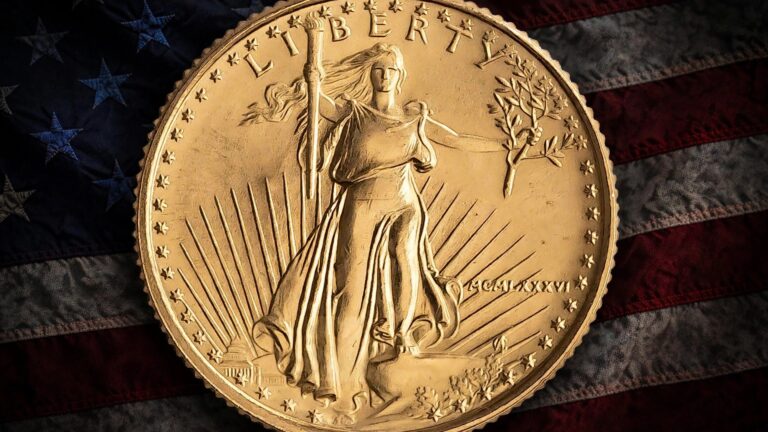
What Were the First American Gold Eagle Bullion Coins?
The first American Gold Eagle bullion coins were released on October 20, 1986, under the Gold Bullion Coin Act of 1985. They were the first gold bullion coins the United States Mint had ever issued, and they ended a gap of more than fifty years in American gold coinage: no U.S. gold coins had been struck since the early 1930s. For the design, the Mint reached back to the most admired gold coin in its history — Augustus Saint-Gaudens' double-eagle Liberty, created for the $20 gold piece of 1907. The one-ounce bullion coin's first-year mintage was 1,362,650 pieces.
Read More →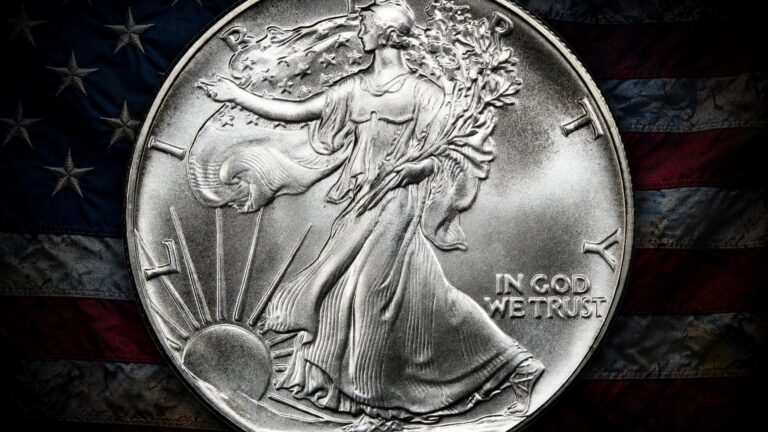
What Was the First American Silver Eagle Bullion Coin?
The first American Silver Eagle bullion coin reached the public on November 24, 1986 — a one-ounce silver bullion coin authorized by the Liberty Coin Act and struck from silver held in the Defense National Stockpile. The program began with a ceremony: Treasury Secretary James Baker struck the first coin at the San Francisco Mint on October 29, 1986. The first-year mintage of 5,393,005 coins sold out almost immediately. The coin pairs Adolph A. Weinman's Walking Liberty with John Mercanti's heraldic eagle, two designs that have defined the series ever since.
Read More →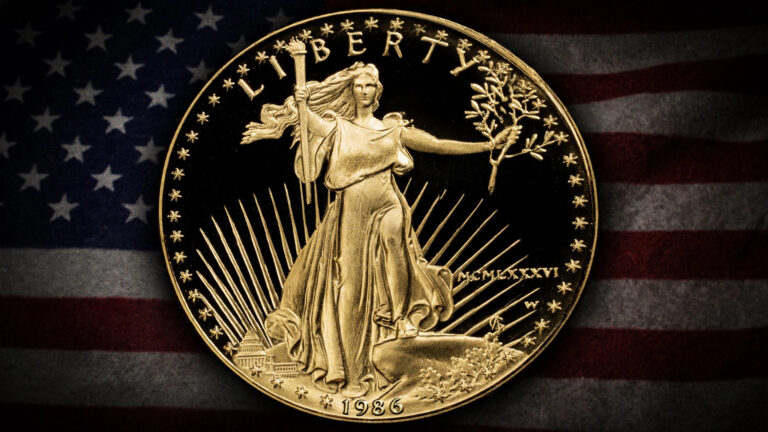
What Is the 1986-W Proof American Gold Eagle?
The 1986-W Proof American Gold Eagle is the one-ounce proof struck at West Point in the Gold Eagle program's debut year — and it was the only proof Gold Eagle offered in 1986. Where the bullion program launched in four sizes at once, the proof lineup began with a single coin. Its mintage of 446,290 remains the highest ever recorded for a proof Gold Eagle of any year or size, a record set in the program's first months and never since approached.
Read More →