

Who Is Michael Gaudioso?
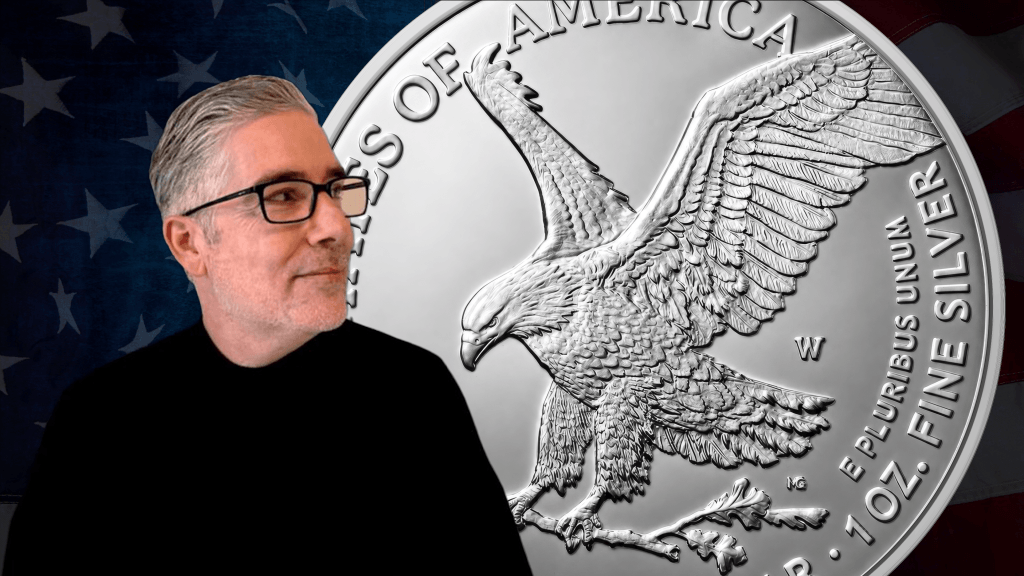
Michael Gaudioso is the former U.S. Mint medallic artist who sculpted the American Silver Eagle's Type 2 reverse — the eagle coming in to land that has appeared on every Silver Eagle since mid-2021. He worked at the Philadelphia Mint from 2008 until his retirement in late 2020, a 13-year career in which he designed and sculpted about 40 coins and medals. His initials, "MG," appear on the Type 2 reverse, and his hand signature appears on NGC U.S. Mint Engraver Series labels.
Key Takeaways
- Gaudioso sculpted Emily Damstra's Type 2 Silver Eagle reverse, unveiled in October 2020.
- He was a medallic artist at the Philadelphia Mint from 2008 to 2020.
- He designed the obverses of the Lyndon B. Johnson (2015) and William Howard Taft (2013) Presidential $1 coins.
- His signature appears on NGC Engraver Series labels on certified Silver Eagles.
What is the difference between designing and sculpting a coin?
At the Mint, the two jobs are usually done by different people. The designer draws the artwork — the composition, the eagle's pose, the placement of the lettering. The sculptor-engraver turns that flat drawing into a three-dimensional model, usually in clay and then plaster, which is reduced to coin size to make the dies. Gaudioso did both jobs at different times: he designed some coins himself and sculpted other artists' designs. The Type 2 Silver Eagle is the second kind — Emily Damstra designed the eagle, and Gaudioso sculpted it. The Mint generally puts the sculptor's initials on the coin, which is why "MG" appears on the Type 2 reverse under the eagle.
What did Gaudioso sculpt for the Silver Eagle?
Damstra's eagle in flight, carrying an oak branch. The design was unveiled by the Mint in October 2020 and first appeared on Silver Eagles in mid-2021, replacing John Mercanti's heraldic eagle after 35 years. Gaudioso has noted the redesign was undertaken at the initiative of Mint Director David J. Ryder, who wanted the series refreshed for its 35th anniversary. The design now appears on every bullion, proof, and collector version of the Silver Eagle, including the 2026 dual-dated 1776–2026 issues.
What else did Gaudioso design and sculpt?
About 40 coins and medals, including the obverses of the Lyndon B. Johnson Presidential $1 coin (2015) and the William Howard Taft Presidential $1 coin (2013), the reverse of the 2018 Native American $1 coin, and work on the 2017 and 2019 American Liberty high relief gold coins and the 2020 American Platinum Eagle. He also sculpted the obverse of the Lady Bird Johnson First Spouse medal, the companion piece to the Johnson dollar. His last sculpt for the Mint was the 2021 Washington Crossing the Delaware quarter — Benjamin Sowards' design of Washington's crossing, the one-year-only issue that followed the America the Beautiful Quarters. Before the Mint he worked as a master painter and designer for Willet Hauser, a stained-glass studio in Winona, Minnesota, and he trained at Parsons School of Design, the University of the Arts in Philadelphia, the New York Academy of Art, and the Repin Institute in St. Petersburg, Russia.
| Coin | Designer | Sculptor |
|---|---|---|
| Silver Eagle Type 2 reverse (2021) | Emily Damstra | Michael Gaudioso |
| Lyndon B. Johnson $1 obverse (2015) | Michael Gaudioso | Michael Gaudioso |
| William Howard Taft $1 obverse (2013) | Barbara Fox | Michael Gaudioso |
| Washington Crossing the Delaware quarter (2021) | Benjamin Sowards | Michael Gaudioso |
Where does Gaudioso's signature appear?
On NGC U.S. Mint Engraver Series labels on certified Silver Eagles, including First Day of Issue examples. Like Mercanti's, his is a signature from the person who made the design on the coin — in his case the sculptor of the reverse every current Silver Eagle carries. Collectors who follow the Type 2 series look for his signature because it connects the coin in the holder to the sculptor of its reverse. The signature is on the label, not the coin, and it does not change the grade.
FAQ
Did Gaudioso design the Type 2 Silver Eagle reverse? No — Emily Damstra designed it; Gaudioso sculpted it. His initials "MG" appear on the reverse.
How long did Gaudioso work at the Mint? From 2008 until his retirement in late 2020 — about 13 years at the Philadelphia Mint.
What do the initials "MG" on the Silver Eagle mean? They are Michael Gaudioso's initials, marking him as the sculptor of the Type 2 reverse.
Does a Gaudioso signature change a coin's grade? No. The signature is on the NGC label and the grade is unchanged.
Shop American Silver Eagles at Coin Advisor or call (877) 540-2646.
This article was researched and drafted with AI assistance and reviewed and approved by Chris Clifton, CEO at Coin Advisor, before publication.
Shop NGC and PCGS certified coins at Coin Advisor
Shop Coins →Related Reading
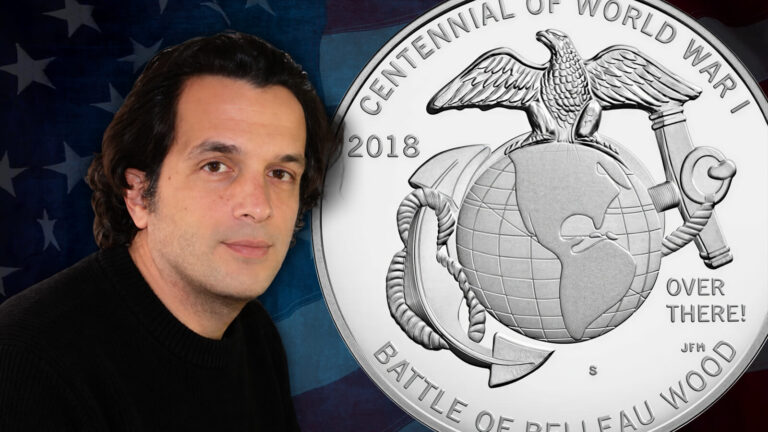
Who Is Joseph Menna, the Mint’s First Digital Sculptor?
Joseph Menna is the thirteenth Chief Engraver of the United States Mint, appointed on February 4, 2019 — the appointment that ended the title's second long vacancy. A classically trained sculptor who made his name sculpting action figures and statues for DC Comics, Hasbro and Fisher-Price, Menna joined the Mint in 2005 as its first full-time digitally skilled artist and changed how American coins are made: modelled on a screen, in software like ZBrush, rather than in plaster.
Read More →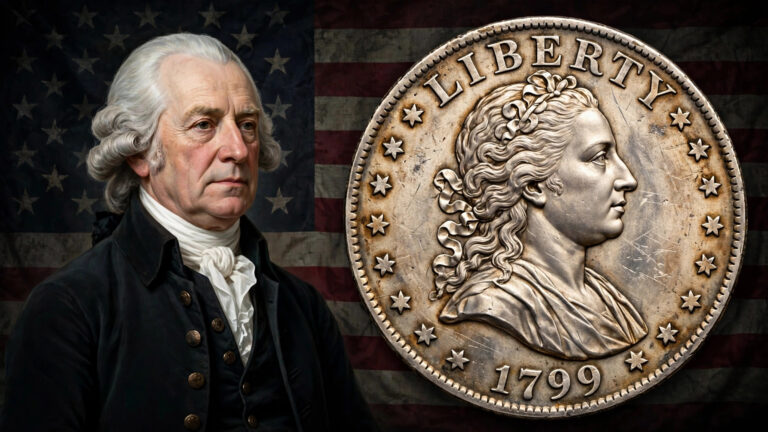
Who Was Elias Boudinot, the Director Who Steadied the Young Mint?
Elias Boudinot was the third Director of the United States Mint, serving from October 1795 to July 1805. A former president of the Continental Congress and a respected New Jersey statesman, he restored the legal silver standard on taking office, kept the chronically underfunded Mint operating — at times depositing his own bullion to keep workers employed — and halted production of silver dollars and gold eagles in 1804 because the large coins were being exported and melted rather than circulating at home.
Read More →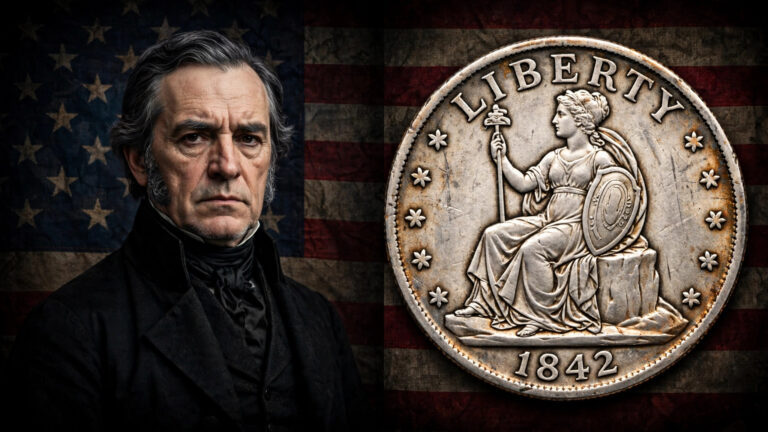
Who Was Robert Patterson, the Director Behind Seated Liberty?
Robert Maskell Patterson was Director of the United States Mint from 1835 to 1851 — the son of an earlier director also named Robert Patterson. Appointed by President Andrew Jackson, he drove the creation of Christian Gobrecht's Seated Liberty design, which spread across America's silver coinage beginning with the Gobrecht dollars of 1836 and the dime and half dime of 1837 and endured, in places, until 1891. He also resisted the gold dollar and double eagle authorized in 1849, and lost that fight to Congress.
Read More →