


What Is a Privy Mark?
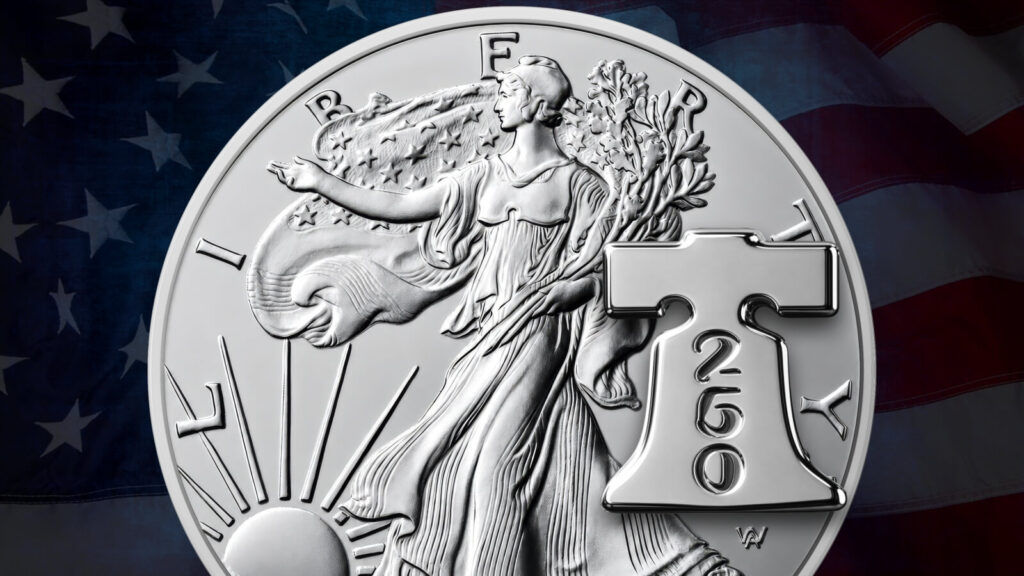
A privy mark is a small symbol added to a coin's design that says something about how or why the coin was made. In past centuries it identified the mint or moneyer or foiled counterfeiters; today it usually marks a special issue or commemorates an event. It is not a mint mark: the mint mark says where a coin was struck, and the privy mark says something else. In 2026, the Liberty Bell privy mark with the numeral "250" marks America's 250th anniversary on the proof and Enhanced Uncirculated Silver Eagles.
Key Takeaways
- A privy mark is a small added symbol that communicates information about a coin's production.
- It is not a mint mark — the mint mark names the mint; the privy mark names the occasion or the issue.
- Used for centuries; recent U.S. examples are the V75 mark (2020) and the Liberty Bell "250" (2026).
- Both 2026 collector Silver Eagles, proof and Enhanced Uncirculated, carry the dual dates 1776 ~ 2026 and the Liberty Bell "250" privy mark.
What is a privy mark, exactly?
A small symbol added to a coin's design that communicates information about its production — the U.S. Mint's definition, unchanged for centuries. For centuries, mints have used them to identify the mint or moneyer, name the artist, or foil counterfeiters; today they usually commemorate events or mark special issues. The mark is struck into the coin at the Mint, part of the design — not added later, and not a counterstamp.
How is a privy mark different from a mint mark?
A mint mark is a letter naming where the coin was struck: P, D, S, or W. A privy mark is a symbol saying something else: an anniversary, a special issue, a production change. A coin can carry both at once: the 2026-W proof Silver Eagle has the W mint mark for West Point and the Liberty Bell privy mark for the nation's 250th anniversary. Confusing them is easy — both are small marks on the coin — but the mint mark tells you where, and the privy mark tells you why this coin is different.
What privy marks has the U.S. Mint used?
In 1853–1855, arrows beside the date signaled a weight change in silver coins; the Mint's records do not call those arrows privy marks, but they did the job of one. In the 1920s, the Alabama and Missouri centennial halves carried marks for the states' order in the Union — Alabama 22nd, Missouri 24th. From 2009 to 2014, the Platinum Eagle carried a small eagle privy mark from an original Philadelphia Mint punch, as part of the Preamble to the Constitution series. In 2020, the V75 mark — "V75" inside the Rainbow Pool outline — honored the 75th anniversary of the end of World War II on quarters and Eagles. In 2024, a five-pointed star appeared on 500,000 bullion Silver Eagles from Philadelphia — the first privy mark on a bullion American Eagle.
Where is the Liberty Bell privy mark on the 2026 Silver Eagles?
On the obverse of both collector versions, beside the dual dates 1776 ~ 2026. The proof (West Point, W, released February 26, 2026, limited to 500,000 coins) and the Enhanced Uncirculated (West Point, W, released July 21, 2026, mintage limit 125,000) both carry a Liberty Bell with the numeral "250" in the field behind Liberty, above IN GOD WE TRUST. The standard 2026 bullion Silver Eagle does not carry it: single date 2026, no privy mark, no mint mark. The mark belongs to the issue, not the year: even the 2026 proof in the Congratulations Set has a single 2026 date and no privy mark. The same Liberty Bell "250" appears across the Mint's 2026 collector issues, and the year's circulating coins carry their own: "JULY 4th" on a quarter, "9-11-01" on a half dollar.
| Privy mark | Mint mark | |
|---|---|---|
| What it says | Something about the coin's production or occasion | Where it was struck |
| Form | A symbol or small inscription | A letter: P, D, S, or W |
| Example | Liberty Bell "250", 2026 Silver Eagles | W, 2026-W proof Silver Eagle |
| Changes? | Varies by issue | Stays with the mint |
| On every coin? | No — only special issues | On collector issues only |
FAQ
Is a privy mark the same as a mint mark? No. A mint mark is a letter naming the mint that struck the coin; a privy mark is a symbol saying something about the issue or the occasion.
Does a privy mark make a coin more valuable? Not by itself. It marks a special issue; a coin's value depends on the issue, the grade, and collector demand.
Where is the Liberty Bell privy mark on the 2026 Silver Eagles? On the obverse, in the field behind Liberty above IN GOD WE TRUST, beside the dual dates 1776 ~ 2026.
Do all 2026 Silver Eagles carry the privy mark? No. The proof and Enhanced Uncirculated versions carry it; the standard bullion Silver Eagle has the single date 2026 and no privy mark — and the 2026 proof in the Congratulations Set has a single date and no mark either.
Shop 2026 Silver Eagles at Coin Advisor or call (877) 540-2646.
This article was researched and drafted with AI assistance and reviewed and approved by Chris Clifton, Founder & CEO at Coin Advisor, before publication.
Shop NGC and PCGS certified coins at Coin Advisor
Shop Coins →Related Reading
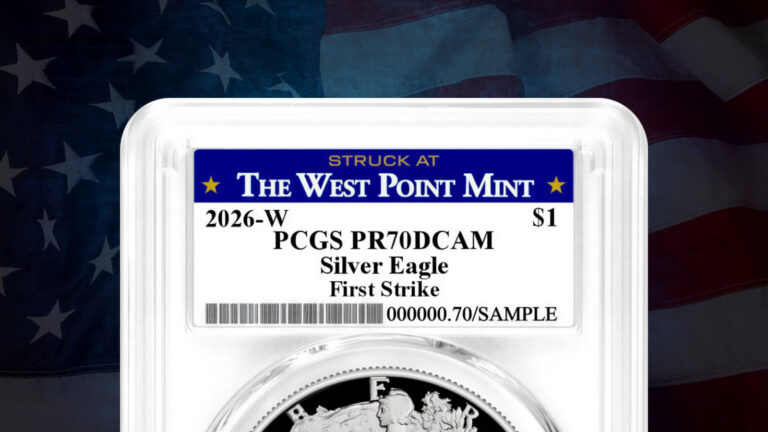
What Is First Strike?
First Strike is PCGS's designation for coins received by PCGS within 30 days of a new issue's release — or shipped in sealed Mint boxes postmarked within that window. It certifies when the coin left the Mint, not when it was struck. The U.S. Mint does not track the order in which it strikes coins and has said so publicly, so no label can prove a coin was literally struck first. NGC's equivalent 30-day designation is Early Releases, or First Releases.
Read More →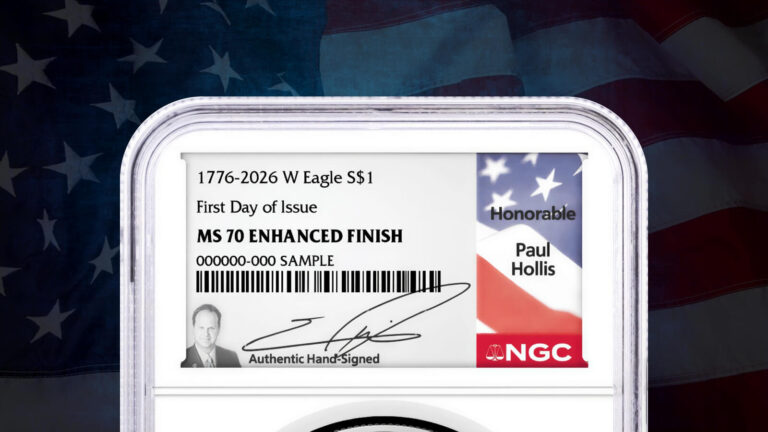
What Is First Day of Issue?
"First Day of Issue" is an NGC designation for a coin bought on the first day a mint puts a new issue on sale — and sent to NGC within a week. It is a pedigree, not a grade: it records the timing of the purchase and the submission, not the quality of the strike. The designation is narrow by design: it is usually available only for bulk submissions or at trade shows, it costs extra, and the submitter must prove the purchase date with receipts.
Read More →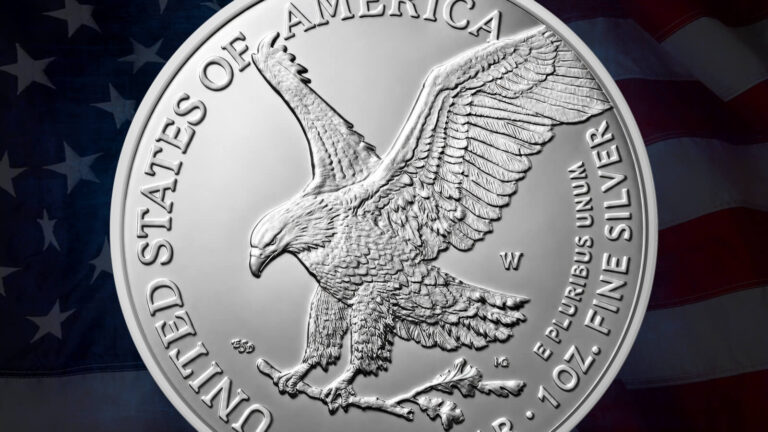
What Is a Type-2 Silver Eagle?
A Type-2 Silver Eagle is an American Silver Eagle struck with the coin's current reverse — Emily Damstra's eagle coming in for a landing with an oak branch, introduced in mid-2021 for the series' 35th anniversary. It replaced John Mercanti's heraldic eagle, which had appeared on the coin since 1986. The obverse is still Weinman's Walking Liberty, refreshed, and the coin still holds one ounce of .999 fine silver.
Read More →