


What’s the Difference Between Proof and Reverse Proof Coins?
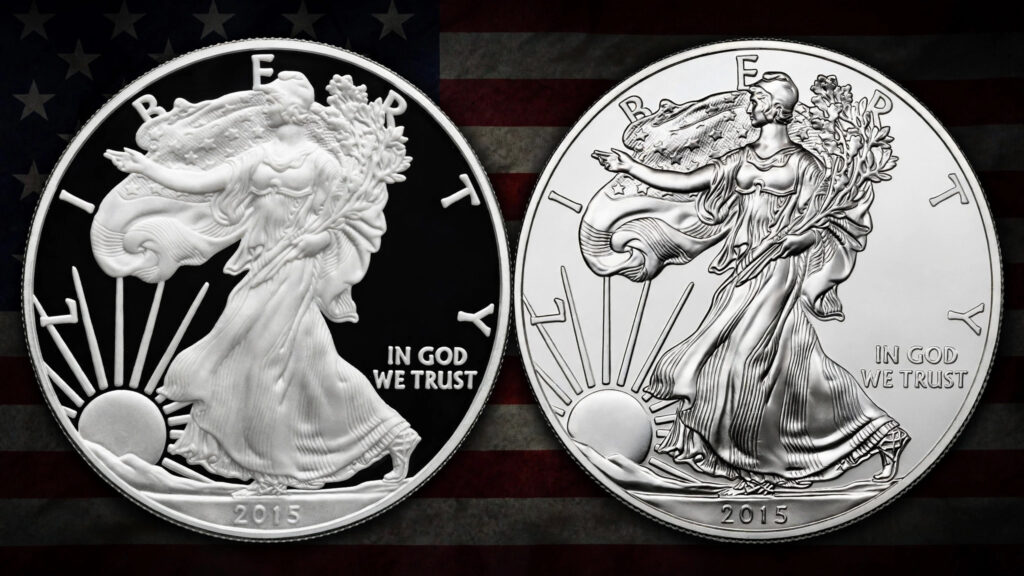
A reverse proof is a proof with the contrast flipped: frosted fields and mirrored devices, instead of mirrored fields and frosted devices. It is made by the same proof process — polished dies, multiple strikes — so it grades with the same PF prefix. The first U.S. reverse proof was the 2006-P Silver Eagle, struck only for the 20th Anniversary 3-coin set.
Key Takeaways
- Reverse proof = frosted fields + mirrored devices; proof = mirrored fields + frosted devices.
- Both are made by the proof process (multiple strikes, polished dies) and both grade with the PF/PR prefix.
- The first U.S. reverse proof was the 2006-P Silver Eagle, available only in the 20th Anniversary 3-coin set.
- An enhanced reverse proof adds selective finishes — individual design elements polished or frosted differently — on the same frosted background.
What does a reverse proof look like?
The design shines like a mirror against a frosted, matte background — the exact inverse of a proof. On a proof, Liberty is frosted and the field is a mirror; on a reverse proof, Liberty is the mirror and the field is frost. Same coin, same design, opposite light. The name confuses people: "reverse proof" does not mean only the reverse is proofed. Both sides carry the inverted finish.
How is a reverse proof made?
By the same proof process, with the die treatment reversed. The field areas of the die are frosted and the devices are polished, and the coin is struck multiple times — so a reverse proof is a proof, not a separate minting method. The U.S. Mint's first was the 2006-P Silver Eagle, struck at Philadelphia for the 20th Anniversary 3-coin set, which also held the 2006-W proof and the 2006-W burnished coin. The reverse proof was available only in that set. Later reverse proofs appeared in anniversary sets and special programs — the Silver Eagle sets of 2011 to 2013, and again in 2019 — rather than as an annual product.
What is an enhanced reverse proof?
A reverse proof where individual design elements get their own finishes. The Mint's description is exact: an enhanced reverse proof coin "has the same frosted background as a reverse proof coin, but what sets it apart are the multiple polished and frosted finishes applied to different isolated design elements." On the 2019 coin, the inscriptions, sun, and borders are polished, Liberty's skin and blouse are lightly frosted, and the background is heavily frosted — the selective treatment sharpens the design element by element. The first enhanced reverse proof was the 2019-W Silver Eagle in the Pride of Two Nations set, issued with the Royal Canadian Mint in July 2019; the second was the 2019-S standalone, released November 14, 2019, capped at 30,000 coins and sold out in about twenty minutes — the lowest-mintage Silver Eagle issued on its own.
How do the labels treat reverse proofs?
Like proofs — with the PF/PR prefix, not MS. A reverse proof is a proof coin, so it grades on the proof scale: PF70 is a flawless reverse proof, just as it is a flawless proof. The cameo designations split by service: NGC has awarded Ultra Cameo to reverse proofs — the 2006 example grades Proof-70 UC — while PCGS examples typically show a plain PR grade with no Deep Cameo designation. One handling note: the frosted field shows marks more readily than a mirrored field does, so a reverse proof is best left in its holder and handled only by the edges.
| Proof | Reverse Proof | Enhanced Reverse Proof | |
|---|---|---|---|
| Fields | Mirrored | Frosted | Frosted (heavily) |
| Devices | Frosted | Mirrored | Mixed — polished, lightly or heavily frosted by element |
| Strikes | Multiple | Multiple | Multiple |
| Label prefix | PF/PR | PF/PR | PF/PR |
| First Silver Eagle | 1986 | 2006-P, 20th Anniversary set | 2019-W, Pride of Two Nations set |
FAQ
Is a reverse proof a proof coin? Yes. It is made by the same proof process with the frosting reversed, and it grades with the PF/PR prefix like any proof.
Why does a reverse proof look "backwards"? Because the frosting is swapped: the fields are frosted and the devices are mirrored. It is deliberate, not an error.
What makes an enhanced reverse proof different? Selective finishes: individual design elements are polished or frosted differently, instead of one uniform frost across the whole design.
Are reverse proofs issued every year? No. They have appeared in anniversary sets and special programs — 2006, 2011–2013, and 2019 for the Silver Eagle — rather than as an annual product.
Shop proof and reverse proof coins at Coin Advisor or call (877) 540-2646.
This article was researched and drafted with AI assistance and reviewed and approved by Chris Clifton, Founder & CEO at Coin Advisor, before publication.
Shop NGC and PCGS certified coins at Coin Advisor
Shop Coins →Related Reading
What Is First Strike?
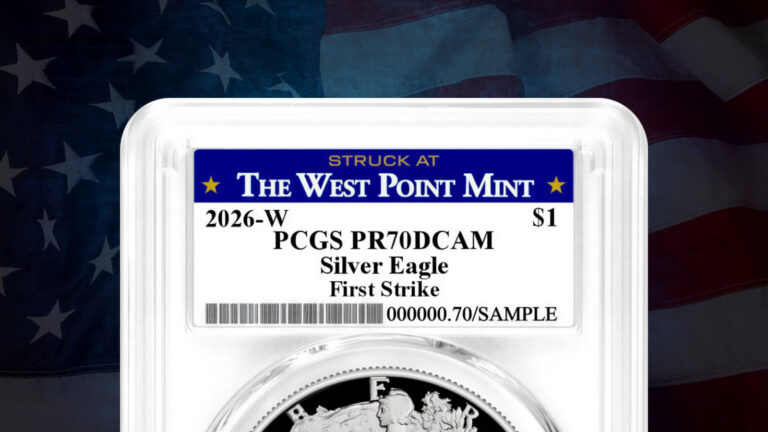
First Strike is PCGS's designation for coins received by PCGS within 30 days of a new issue's release — or shipped in sealed Mint boxes postmarked within that window. It certifies when the coin left the Mint, not when it was struck. The U.S. Mint does not track the order in which it strikes coins and has said so publicly, so no label can prove a coin was literally struck first. NGC's equivalent 30-day designation is Early Releases, or First Releases.
Read More →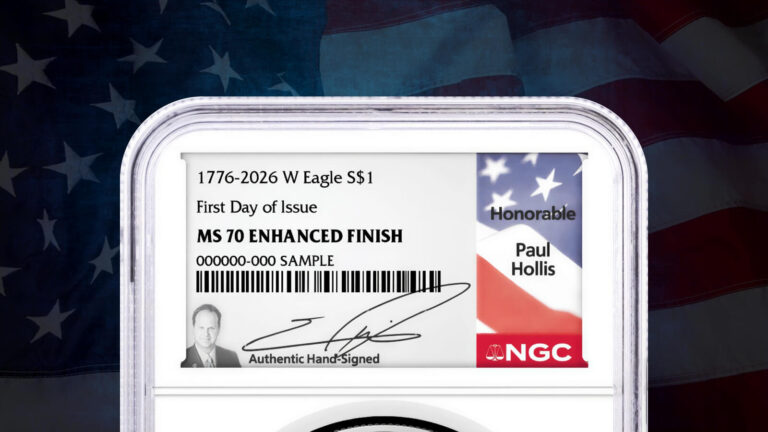
What Is First Day of Issue?
"First Day of Issue" is an NGC designation for a coin bought on the first day a mint puts a new issue on sale — and sent to NGC within a week. It is a pedigree, not a grade: it records the timing of the purchase and the submission, not the quality of the strike. The designation is narrow by design: it is usually available only for bulk submissions or at trade shows, it costs extra, and the submitter must prove the purchase date with receipts.
Read More →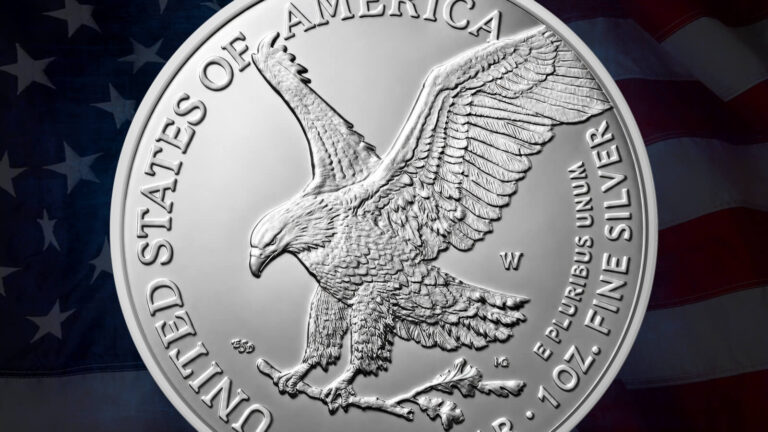
What Is a Type-2 Silver Eagle?
A Type-2 Silver Eagle is an American Silver Eagle struck with the coin's current reverse — Emily Damstra's eagle coming in for a landing with an oak branch, introduced in mid-2021 for the series' 35th anniversary. It replaced John Mercanti's heraldic eagle, which had appeared on the coin since 1986. The obverse is still Weinman's Walking Liberty, refreshed, and the coin still holds one ounce of .999 fine silver.
Read More →