


What’s the Difference Between Proof and Burnished Coins?
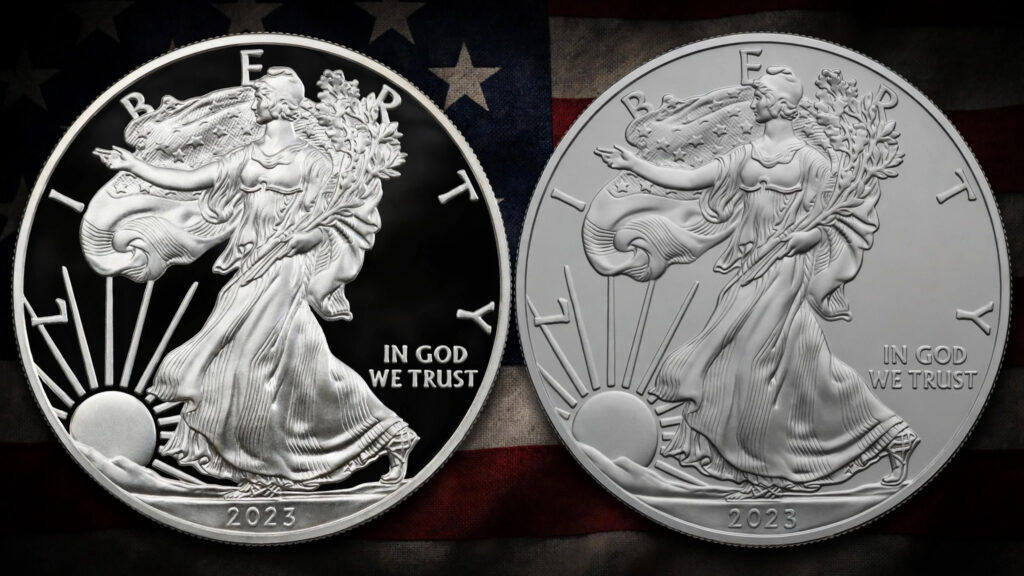
Proof and burnished are the Mint's two collector finishes, and they sit at opposite ends of the contrast scale. A proof is struck multiple times with specially polished dies, giving it mirrored fields and frosted devices. A burnished coin is struck only once with standard dies on a polished planchet, giving it a soft, satin glow — a third finish, between a standard strike and a proof.
Key Takeaways
- Proof = multiple strikes, polished dies, mirror and frost; burnished = one strike, standard dies, polished planchet, satin glow.
- Burnished is a third finish, between a standard strike and a proof.
- Burnished Silver Eagles began in 2006 at West Point (W mint mark), were skipped in 2009 and 2010, and have been struck annually since 2011.
- The labels split: NGC grades burnished Eagles MS; PCGS grades them SP (Specimen). Proofs grade PF/PR at both services.
How is a proof made?
With polished planchets and polished dies, struck more than once at greater pressure. The repeated striking drives the metal fully into the design for sharper detail, while the polished surfaces create mirrored fields and the raised design stays frosted — the cameo effect. It is the Mint's most labor-intensive finish, and the one its proof sets are built on.
How is a burnished coin made?
The planchet is polished before striking, but the coin is struck only once with standard dies. The polished blank gives the finished coin a smooth, even, satin-like glow — quieter than a proof's mirror and smoother than a fresh bullion strike's flash — but because the dies are standard and the strike is single, there is no mirror and no frost. The Mint's own uncirculated collector coins are struck on specially burnished blanks, so burnished is the same family of preparation the Mint uses for its uncirculated products. Burnished American Eagles began in 2006 — silver, gold, and platinum — struck at West Point with the "W" mint mark and sold directly to collectors. The silver version was skipped in 2009 and 2010, when silver blanks were reserved for bullion production, and has been struck annually since 2011.
How do the two look side by side?
A proof is high-contrast: mirror against frost, the design floating above a looking glass. A burnished coin is low-contrast: one even, satin surface from edge to edge, the design showing without glare. In hand, the burnished coin is the quieter of the two; in a photograph, the proof is the dramatic one and the burnished coin can look plain. Same design, same metal, same size — only the finish differs. Handle both by the edges and keep them in their holders: a fingerprint can etch into a mirrored proof field and mark it permanently.
What does the label say — and why do the services disagree?
Proofs are simple: both services grade them PF or PR. Burnished is where the labels split — NGC grades burnished Eagles MS, while PCGS grades them SP, for Specimen. The split exists because a burnished coin is neither a standard business strike nor a proof: it is a collector strike finished like an uncirculated coin, so the two services file it under different headings. The practical point is to read the label's finish and prefix, not just the date. A 2006 Silver Eagle could be a proof (W), a burnished coin (W), or a reverse proof (P) — three finishes in one year, two of them sharing the W mint mark — so the mint mark alone does not settle which coin you are holding.
| Proof | Burnished | |
|---|---|---|
| Planchet | Polished | Polished (burnished) |
| Strikes | Multiple | One |
| Dies | Specially polished | Standard |
| Look | Mirrored fields, frosted devices | Soft satin glow |
| NGC label | PF | MS |
| PCGS label | PR | SP |
| Silver Eagle debut | 1986 | 2006 |
FAQ
Is a burnished coin a proof? No. Proofs are struck multiple times with polished dies; burnished coins are struck once with standard dies.
Why does my burnished Eagle say SP70 instead of MS70? PCGS grades burnished coins as Specimen (SP); NGC grades the same coins MS. Same coin, different label convention — check which service certified it.
Were burnished Eagles issued every year? No. They began in 2006, were skipped in 2009 and 2010 when silver blanks went to bullion production, and have been struck annually since 2011.
How do I tell a burnished coin from a proof in hand? Look at the fields: a proof's fields are mirrors that reflect clearly, while a burnished coin's fields are satin and matte. The label settles it — PF or PR for a proof, MS or SP for a burnished coin.
Shop proof and burnished coins at Coin Advisor or call (877) 540-2646.
This article was researched and drafted with AI assistance and reviewed and approved by Chris Clifton, Founder & CEO at Coin Advisor, before publication.
Shop NGC and PCGS certified coins at Coin Advisor
Shop Coins →Related Reading
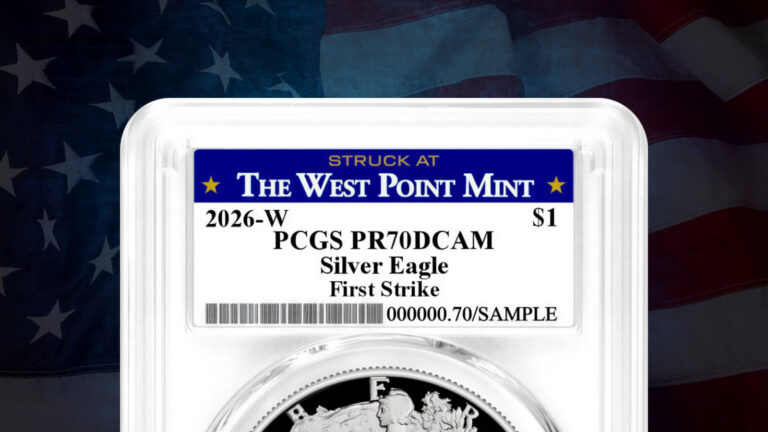
What Is First Strike?
First Strike is PCGS's designation for coins received by PCGS within 30 days of a new issue's release — or shipped in sealed Mint boxes postmarked within that window. It certifies when the coin left the Mint, not when it was struck. The U.S. Mint does not track the order in which it strikes coins and has said so publicly, so no label can prove a coin was literally struck first. NGC's equivalent 30-day designation is Early Releases, or First Releases.
Read More →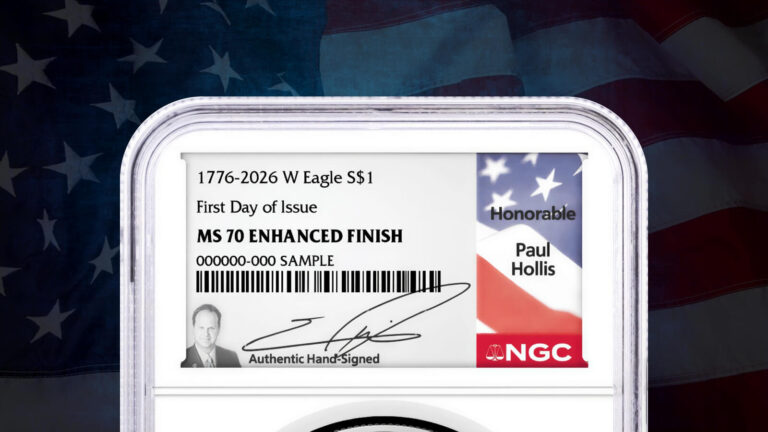
What Is First Day of Issue?
"First Day of Issue" is an NGC designation for a coin bought on the first day a mint puts a new issue on sale — and sent to NGC within a week. It is a pedigree, not a grade: it records the timing of the purchase and the submission, not the quality of the strike. The designation is narrow by design: it is usually available only for bulk submissions or at trade shows, it costs extra, and the submitter must prove the purchase date with receipts.
Read More →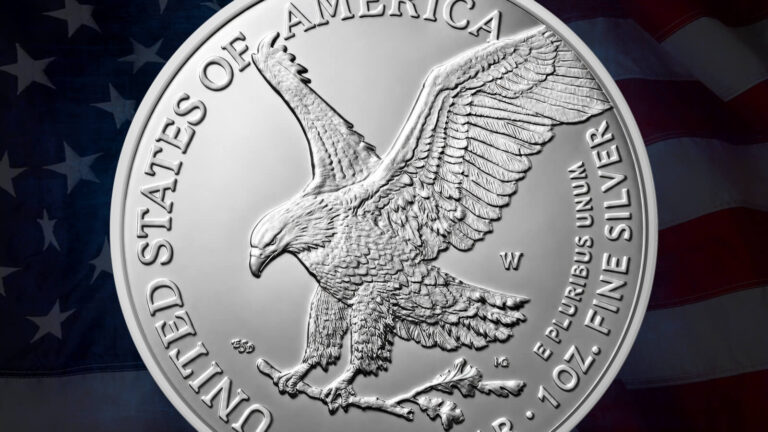
What Is a Type-2 Silver Eagle?
A Type-2 Silver Eagle is an American Silver Eagle struck with the coin's current reverse — Emily Damstra's eagle coming in for a landing with an oak branch, introduced in mid-2021 for the series' 35th anniversary. It replaced John Mercanti's heraldic eagle, which had appeared on the coin since 1986. The obverse is still Weinman's Walking Liberty, refreshed, and the coin still holds one ounce of .999 fine silver.
Read More →