


What Is a Diamond Field on a Coin?
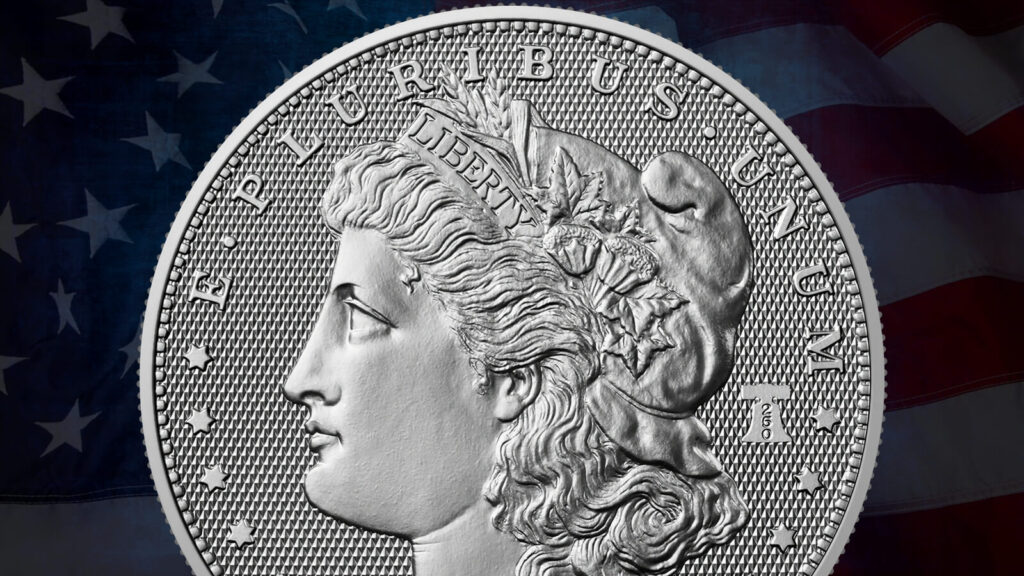
A diamond field is a finish the U.S. Mint created for the 250th anniversary of the nation's founding: instead of a smooth, flat field, the background of the coin is covered in a repeating pattern of tiny diamond-shaped facets that catch the light as the coin turns. It appears on exactly two coins — the 2026 Morgan and Peace dollars in the Diamond Field Two-Coin Set — and the Mint says the finish has never appeared on a U.S. coin before.
Key Takeaways
- A diamond field replaces the smooth field with a repeating lattice of tiny diamond facets.
- The finish was engineered for the semiquincentennial and has never appeared on a U.S. coin before.
- It appears only on the 2026 Morgan and Peace Dollar Diamond Field Two-Coin Set, struck at Philadelphia.
- The raised designs and the Liberty Bell 250 privy mark stand out as smooth islands against the textured field.
What does a diamond field look like?
On an ordinary coin the field — the flat background around the design — is smooth, mirrored on a proof or satin on an uncirculated strike. On a Diamond Field coin the field is covered in dense rows of small pyramidal facets, a repeating diamond lattice that runs right up to the profile of Liberty, the eagle, and the lettering. The raised design stands clear of the pattern, so the portrait and inscriptions read as smooth shapes against a glittering ground. As the coin moves, the facets catch light at every angle, and the field seems to shift and sparkle while the design stays steady. The Liberty Bell 250 privy mark is the most striking detail — left as a smooth, flat island in the middle of the texture, so the bell and the numeral 250 stand out sharply against the pattern around them.
How is a diamond field made?
The Mint describes the Diamond Field coins as the result of "a striking process engineered specifically for the semiquincentennial and unveiled nowhere else, on no other coin, for any other anniversary." What the Mint has not published is a technical description of that process — the product page says nothing about how the pattern is put into the die. The Mint's own video about the set, as reported by World Numismatic News, points to laser engraving: the Mint's die shop has engraved master dies with lasers for several years, and the diamond lattice is engraved into the die that way — a pattern too fine and too regular to be cut by hand. But collectors should know the line between the two sources: the Mint's own words promise a finish never used before; the laser detail comes from the Mint's video as reported, not from the product page.
Which coins have a diamond field?
Exactly two: the 2026 Morgan dollar and the 2026 Peace dollar in the Morgan and Peace Dollar 2026 Diamond Field Two-Coin Set, struck at the Philadelphia Mint with the "P" mint mark. Both are .999 fine silver, 0.859 troy ounce, 38.10 millimeters across — the same specifications as the other modern Morgan and Peace issues. Both carry the two features the Mint added for the semiquincentennial: the dual date "1776 ~ 2026" and the Liberty Bell privy mark with the numeral "250." The set went on sale November 12, 2026, and the Mint sells the two coins only as a pair — neither is available on its own. The Diamond Field set closes a three-finish year for the two dollars: reverse proof versions went on sale in July 2026 and enhanced uncirculated versions in August, with the Diamond Field set arriving last, in November.
How is a diamond field different from a proof or a reverse proof?
The difference is what the finish changes. A proof changes the contrast: mirrored fields and frosted devices, made with polished dies and multiple strikes. A reverse proof inverts that contrast: mirrored devices against frosted fields. A diamond field changes the texture of the field itself: the background is patterned, while the design stands clear of the pattern. It is a finish in its own right, not a variety of proof — the Mint does not describe the Diamond Field coins as proofs, and the pattern is the point of the coin.
| Proof | Reverse proof | Diamond field | |
|---|---|---|---|
| Field | Mirrored | Frosted | Covered in diamond facets |
| Devices | Frosted | Mirrored | Smooth, standing clear of the pattern |
| What it changes | Mirror-and-frost contrast | Mirror-and-frost contrast, inverted | The texture of the field itself |
| Famous example | Annual proof sets | 2006 Silver Eagle | 2026 Morgan and Peace dollars |
FAQ
Is a diamond field a type of proof? No — the Mint describes it as its own finish, not a proof. The pattern is the point of the coin, not a variation on mirror and frost.
Can I buy a Diamond Field Morgan or Peace dollar on its own? No — the Mint sells the two coins only as a pair, in the Diamond Field Two-Coin Set.
What are the Diamond Field coins made of? They are .999 fine silver, 0.859 troy ounce, 38.10 millimeters across, struck at Philadelphia with the "P" mint mark.
Will the Mint use the diamond field again? The Mint says the process was engineered for the semiquincentennial and unveiled nowhere else, and it has not announced any other use for it.
Shop diamond field coins at Coin Advisor or call (877) 540-2646.
This article was researched and drafted with AI assistance and reviewed and approved by Chris Clifton, Founder & CEO at Coin Advisor, before publication.
Shop NGC and PCGS certified coins at Coin Advisor
Shop Coins →Related Reading
What Is First Strike?
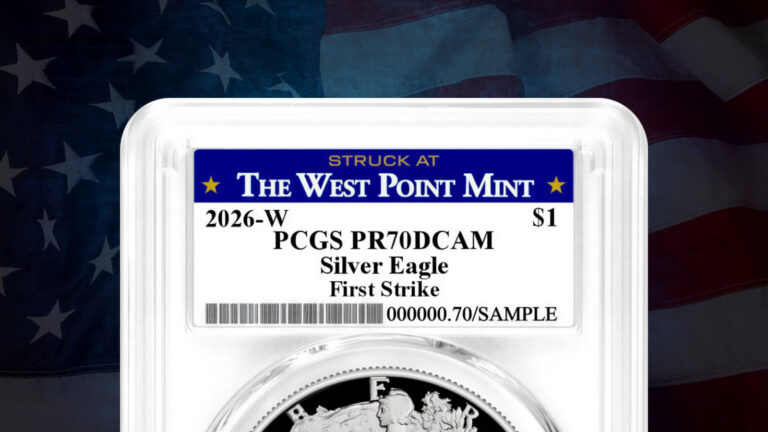
First Strike is PCGS's designation for coins received by PCGS within 30 days of a new issue's release — or shipped in sealed Mint boxes postmarked within that window. It certifies when the coin left the Mint, not when it was struck. The U.S. Mint does not track the order in which it strikes coins and has said so publicly, so no label can prove a coin was literally struck first. NGC's equivalent 30-day designation is Early Releases, or First Releases.
Read More →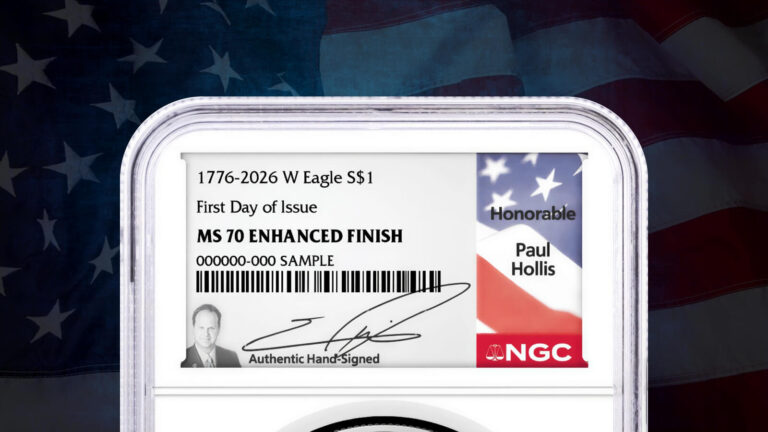
What Is First Day of Issue?
"First Day of Issue" is an NGC designation for a coin bought on the first day a mint puts a new issue on sale — and sent to NGC within a week. It is a pedigree, not a grade: it records the timing of the purchase and the submission, not the quality of the strike. The designation is narrow by design: it is usually available only for bulk submissions or at trade shows, it costs extra, and the submitter must prove the purchase date with receipts.
Read More →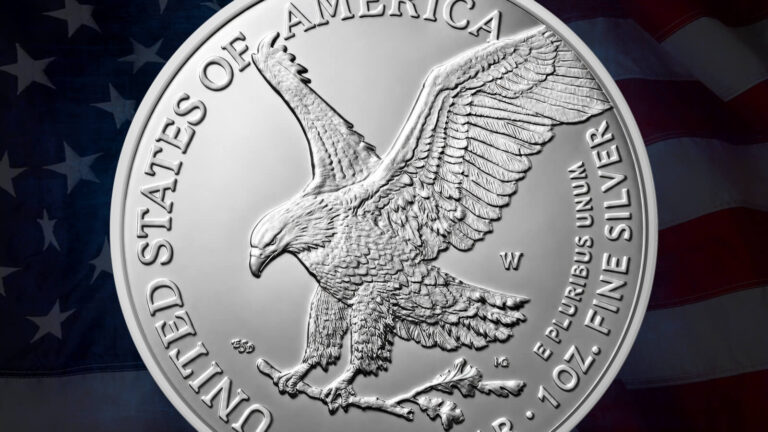
What Is a Type-2 Silver Eagle?
A Type-2 Silver Eagle is an American Silver Eagle struck with the coin's current reverse — Emily Damstra's eagle coming in for a landing with an oak branch, introduced in mid-2021 for the series' 35th anniversary. It replaced John Mercanti's heraldic eagle, which had appeared on the coin since 1986. The obverse is still Weinman's Walking Liberty, refreshed, and the coin still holds one ounce of .999 fine silver.
Read More →