


Where Did Coin Collecting Begin?
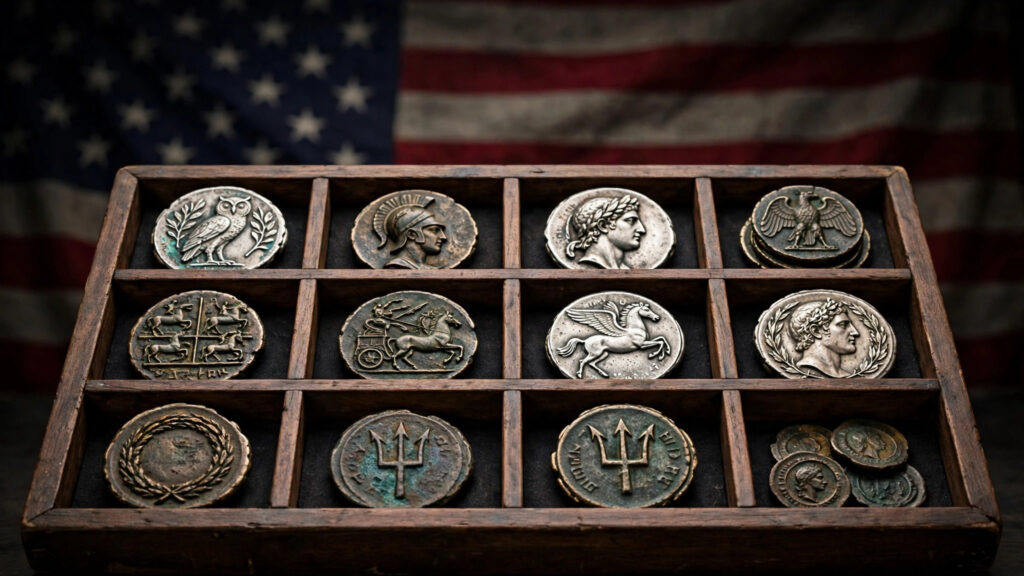
Coin collecting began with ancient coins. The first coins were struck in Lydia, in what is now Turkey, around the 7th century BCE: small lumps of electrum, a natural alloy of gold and silver, stamped with a design — often a lion's head — to certify weight and purity. From Lydia, coinage spread across the Greek world and then the Roman Empire, becoming the trade, propaganda, and art of the ancient world — and the hobby's oldest tradition is still one of its most rewarding.
Key Takeaways
- First coins: Lydia, ~7th century BCE, electrum lumps stamped to certify weight and purity.
- Greek cities struck gods, symbols, and heroes; Roman emperors struck portraits, victories, and building programs.
- Ancient collecting differs: no complete sets exist, condition standards differ, and attribution matters more than grade.
- Entry is surprisingly accessible: genuine two-thousand-year-old coins can cost less than a modern proof set.
What were the first coins?
The innovation was profound: for the first time, value could be certified by a stamp rather than determined by weighing metal at every transaction. From Lydia, coinage spread across the Greek world and then the Roman Empire, becoming the mass media of the ancient world — the one form of communication that reached every corner of an empire. Greek cities struck coins with their gods, their symbols, and their heroes. Roman emperors struck coins with their portraits, their victories, and their building programs. Coins became the trade, propaganda, and art of the ancient world, all at once.
How is ancient collecting different?
Ancient coins are a different kind of collecting from modern series. There are no complete sets — no one can own every Roman coin, because the number of types runs into the tens of thousands, and new types are still being discovered. Condition standards are different: a coin that has survived two thousand years in the ground is judged by different criteria than a coin struck last year, and a coin with an attractive patina — the toning acquired over centuries — may be valued more highly than a coin that has been harshly cleaned. Attribution matters more than grade: identifying the ruler, the mint, the date, and the historical context is the core skill of the ancient collector, requiring reference books, patience, and a willingness to research. An ancient coin without attribution is a mystery; an ancient coin with attribution is a historical document.
| Modern collecting | Ancient collecting | |
|---|---|---|
| Complete sets | Possible for many series | Impossible — tens of thousands of types |
| Condition standard | Grade on the 70-point scale | Patina, preservation, and eye appeal |
| Core skill | Date, mint mark, and grade | Attribution: ruler, mint, date, context |
What do ancient coins offer, and how do you start?
What ancient coins offer is direct contact with history: a denarius of Marcus Aurelius, a tetradrachm of Alexander the Great, a bronze of Constantine — objects that passed through the hands of the ancient world, that bought bread in a Roman market, that paid a Roman soldier. That contact is unlike anything modern coinage offers: modern coins' history is measured in decades, while ancient coins' history is measured in millennia, and the distance they have traveled — through empires, through burial, through excavation, through collections — is part of their appeal. Many collectors who start with modern coins eventually find their way to ancients, and many ancient collectors never leave. The entry point is easier than it appears: late Roman bronzes — small 4th-century coins struck under emperors like Constantine and his successors — are abundant, affordable, and well documented, and they offer a starting point for learning attribution: identifying the emperor from the portrait, the mint from the mint mark, and the type from the reverse design. A few cautions apply: buy from dealers who specialize in ancients, because the field has its own counterfeiting problems and expertise; be wary of harshly cleaned coins, since a coin stripped of its patina loses both value and historical character; and invest in a reference book before investing heavily in coins — attribution is the core skill, and a good reference is worth more than a handful of unattributed purchases. With those habits, ancient collecting is one of the most rewarding corners of the hobby: history you can hold, at a price that surprises most newcomers. History, it turns out, is not always expensive. Sometimes it costs less than a modern proof set, and it is two thousand years old.
FAQ
Where were the first coins struck? In Lydia, in what is now Turkey, around the 7th century BCE.
What were the first coins made of? Electrum, a natural alloy of gold and silver, stamped with a design to certify weight and purity.
Can you complete a collection of ancient coins? No — the number of types runs into the tens of thousands, with new types still being discovered.
How do you start collecting ancients? With late Roman bronzes: abundant, affordable, and well documented — plus a good reference book for attribution.
Shop ancient coins at Coin Advisor or call (877) 540-2646.
This article was researched and drafted with AI assistance and reviewed and approved by [Author], [Role] at Coin Advisor, before publication.
## Notes for the review pass
- Nothing here is published. These are drafts for review, then approval by one of the approvers (who becomes the author of record), then import as WordPress drafts with the categories and dates above.
- At approval, fill in:
[Author]and[Role]in the byline, the disclosure, and the Article schema; link the byline to the approver's bio page. - At publish, set: the image files (match the listed file names/alt text to the site library or video stills); deep-link shop links to the matching product/category pages; embed a matching YouTube explainer where one exists; push the URL through IndexNow/Bing on publish day; keep five pre-planned posts in the queue.
- Two live-post flags still stand (from the earlier blog review): the Congratulations Set article carries visible [DELETE] and [ADD:] editorial markers, and "Understanding Pedigree (otm.alt TEST)" is live with a test marker in its title and URL. Both are worth fixing before the relaunch, independent of these new posts.
- The 8-pillar hub pages are a separate build; these 30 posts use the 5 existing category archives as their pillar hubs for now.
Shop NGC and PCGS certified coins at Coin Advisor
Shop Coins →Related Reading
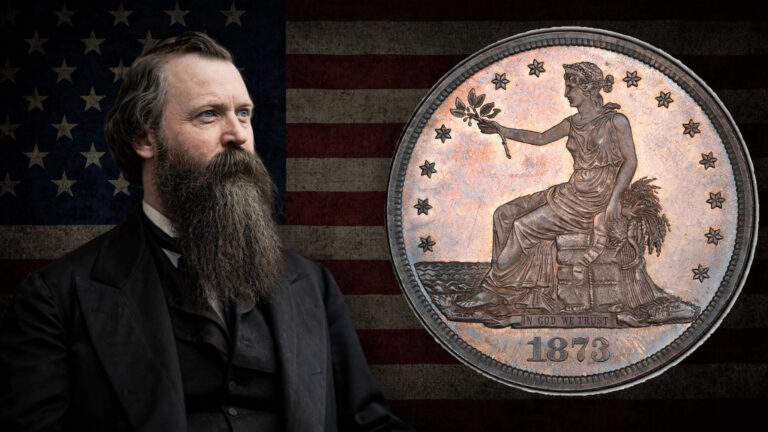
Who Was William M. Stewart, the Senator Who Branded 1873 a Crime?
William Morris Stewart (1827–1909) was Nevada's first senator, the mining lawyer known as the "Father of the Mining Laws of the United States" for the federal mining statutes of 1866 and 1872. His place in coin history is stranger. Stewart was in the Senate in 1873 and voted for the Coinage Act that ended the silver dollar — and then, after silver's price collapsed, he returned to the Senate in 1887 and spent eighteen years denouncing that act as the "Crime of '73," claiming its passage had been a deception. The voting record is the honest footnote to his legend: the man who made "crime" the act's permanent name had been one of its supporters.
Read More →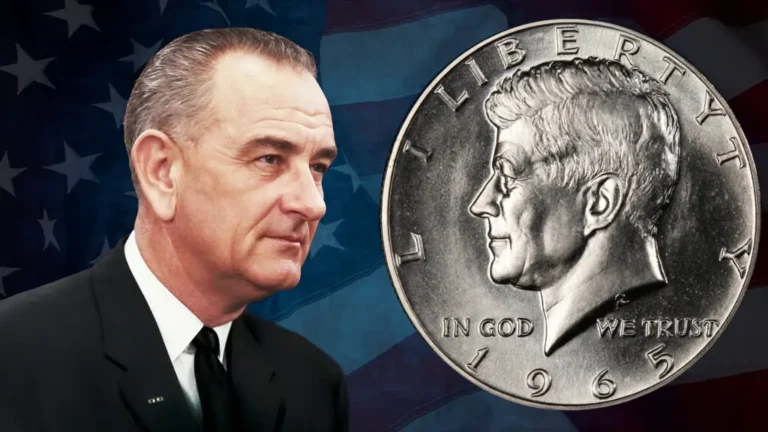
How Did Lyndon B. Johnson End Silver Coinage?
Lyndon B. Johnson ended silver coinage by proposing it himself and then signing it into law. On June 3, 1965 he asked Congress to take silver out of American coins, and on July 23, 1965 he signed the Coinage Act of 1965 (Public Law 89-81), which stripped silver from dimes and quarters entirely, cut the half dollar to 40 percent silver, and stopped silver dollar production — closing the silver system that dated to 1792.
Read More →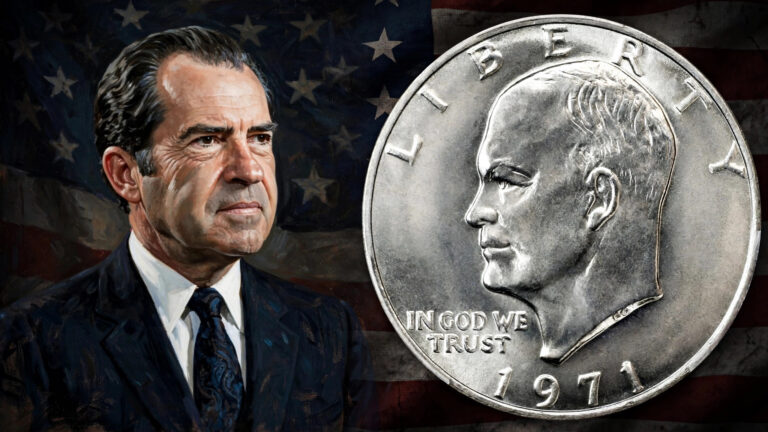
How Did Richard Nixon End the Dollar’s Last Link to Gold?
Richard Nixon ended the dollar's last link to gold personally, on live television, on August 15, 1971, when he announced that the United States would stop converting dollars into gold for foreign governments — closing the "gold window" that had anchored the world monetary system since 1944. The same president also signed the law that created the Eisenhower dollar and removed the last silver from the half dollar, and the act that put Bicentennial designs on the quarter, half dollar, and dollar.
Read More →