


What Is the U.S. Mint at Philadelphia?
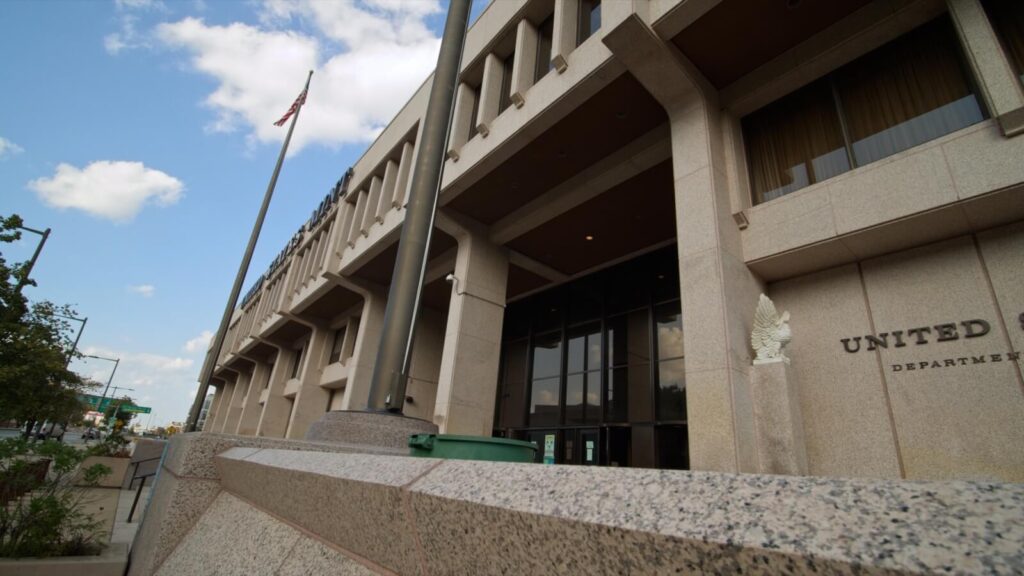
The U.S. Mint at Philadelphia is the nation's first mint and its largest: the fourth building, opened on Independence Mall on August 14, 1969, makes more than 35 million coins a day and produces the dies for the entire Mint system. It strikes circulating coins, annual uncirculated sets, commemoratives, and medals — and its "P" mint mark, absent for nearly 200 years, has appeared on most Philadelphia coins since 1980.
Key Takeaways
- First mint in the nation (Coinage Act of 1792); fourth building opened August 14, 1969.
- World's largest mint: more than 500,000 square feet, about 426 employees, a million coins every 30 minutes.
- Makes the dies for all U.S. Mint facilities — more than 50,000 a year — and houses the Mint's engraving.
- "P" mint mark since 1980 (except the cent); the 2017 cent was the first cent to carry a P.
What does the Philadelphia Mint strike today?
Circulating coinage, first and foremost: pennies, nickels, dimes, quarters, half dollars, and dollars, at a pace of more than 35 million coins a day — a million coins every 30 minutes when the presses are running. Alongside them come the annual uncirculated coin sets, congressionally authorized commemorative coins, and medals, including Congressional Gold Medals. What Philadelphia does not strike is just as telling: proof sets come from San Francisco, and bullion Eagles come from West Point. The facility's 63 presses turn out 47,250 coins a minute at full operation, and its output is measured in the billions — the nation's coin supply, made in one building.
Why is Philadelphia the Mint's die-making hub?
Because the dies are made here — more than 50,000 a year. A die is the hardened steel cylinder carrying the negative image of a coin's design, and every coin the Mint strikes, at any facility, starts with a die made in Philadelphia. The Mint's engraving department is here too, where designs are sculpted and reduced to coin size. That makes Philadelphia the Mint's toolroom as well as its biggest factory: Denver, San Francisco, and West Point all strike with Philadelphia-made dies. The arrangement goes back to the beginning — Philadelphia was the only mint for the nation's first decades, and the die-making stayed where it started.
When did Philadelphia coins get a mint mark?
Almost never, for nearly 200 years. Philadelphia was the mother mint — the only mint, then the first among equals — so its coins carried no mark at all: a coin with no mint mark was a Philadelphia coin. The exceptions prove the rule. The "P" first appeared on the silver Jefferson "war nickels" of 1942–1945, struck above Monticello so the silver alloy could be told apart; it vanished after the war. It returned on the Susan B. Anthony dollar in 1979, and in 1980 it was extended to the nickel, dime, quarter, and half dollar. The cent stayed unmarked — until 2017, when the Mint put a "P" on the cent for the first time, for its 225th anniversary. The lesson for collectors: on a coin dated before 1980, no mint mark usually means Philadelphia; on a modern coin, the "P" says so plainly.
Can you visit the Philadelphia Mint?
Yes — and it is the easiest Mint to visit. The fourth building, on Independence Mall a few hundred yards from the site of the first Mint, offers free self-guided tours past a glass-enclosed gallery overlooking the presses. Inside the lobby are the seven Tiffany glass mosaics from the third Mint building, removed, cleaned, and rehung here, unveiled on June 8, 1971. The building sits in Philadelphia's Historic District, steps from Independence Hall — a working factory in the middle of the nation's founding ground.
| First Mint (1792) | Second Mint (1833) | Third Mint (1901) | Fourth Mint (1969) | |
|---|---|---|---|---|
| Site | 7th and Arch Streets | Chestnut and Juniper Streets | Spring Garden Street | Independence Mall |
| Known for | The first circulating coins — 11,178 copper cents in March 1793 | Serving the Mint through the Civil War era | Seven Tiffany glass mosaics; cost $2 million | The world's largest mint |
| Today | The site, a few hundred yards from the current building | Replaced by the third Mint | The mosaics, rehung in the fourth building in 1971 | Working today |
Four buildings, one mint
Philadelphia has been a mint city without interruption since 1792, but it has been housed four times over. The first Mint — the first public building erected by the federal government under the Constitution — stood at Seventh and Arch Streets, a modest complex where coinage began with copper cents and half cents in 1793 and where the first gold and silver issues followed in 1794 and 1795. Everything was done on the premises: melting, refining, die-making, and striking, much of it by hand and horsepower, at volumes that would not fill a morning’s production today.
Successive buildings chart the industrialization of American coinage. A second mint replaced the first on the same site in the early 1800s. The third, opened in 1833 at Chestnut and Juniper Streets, was a Greek Revival temple of a building — the architectural statement of a young republic taking its money seriously — and it was there that steam power transformed production. That building survives today, absorbed into the campus of the Community College of Philadelphia. The fourth and present mint, opened in 1969 a few blocks from Independence Hall, was among the largest minting facilities in the world: a full city block of presses capable, when it opened, of producing the nation’s entire circulating coinage by itself.
The continuity matters to collectors because Philadelphia’s history is the default history of American coinage. For most of the years between 1793 and the Civil War it was the only mint; every early American coin type, from the Flowing Hair designs of the 1790s through the Seated Liberty coinage, is a Philadelphia story before it is anyone else’s. The later branch mints each have their romances, but Philadelphia is where the national coinage was invented.
Where every design begins
Philadelphia’s least visible role is its most important: every coin the United States makes is designed there. The Mint’s engraving department, housed at Philadelphia since the beginning, turns approved artwork into the sculpted models and digital files from which all dies descend. The Chief Engraver of the United States — an office held in turn by Robert Scot, William Kneass, Christian Gobrecht, James Longacre, Charles Barber, and George Morgan, names collectors know from the coins themselves — leads that work, and the department’s medallists execute designs for every facility in the system.
Since 2003 the process has deliberately opened outward. The Artistic Infusion Program recruits artists from across the country to submit designs, which Philadelphia’s staff then sculpt and adapt for coinage — a partnership between outside artistry and in-house craft that has shaped the modern commemorative program, the America the Beautiful quarters, and the American Innovation dollars. The arrangement preserves something essential: a coin design is not finished when it is drawn. It must survive reduction to the size of a quarter, read clearly in relief, and strike cleanly a hundred million times — and the engravers at Philadelphia are the people who make designs survive that translation.
For collectors, this is why Philadelphia rewards attention even when its coins carry no mint mark. The P that finally appeared on the coinage is almost an afterthought; the mint’s real signature is on every coin the country makes, in the designs themselves.
FAQ
Is the Philadelphia Mint the largest in the world? Yes — the Mint describes it as the world's largest in both size and production, at more than 500,000 square feet.
Why do most Philadelphia coins before 1980 have no mint mark? Philadelphia was the original mint, so its coins needed no mark; the "P" only became standard in 1980.
Does Philadelphia strike proof coins? No. Proof sets come from San Francisco; Philadelphia strikes circulating coins, uncirculated sets, commemoratives, and medals.
Can you tour the Philadelphia Mint? Yes — free self-guided tours from a gallery above the presses.
Shop certified coins at Coin Advisor or call (877) 540-2646.
This article was researched and drafted with AI assistance and reviewed and approved by [Author], [Role] at Coin Advisor, before publication.
Shop NGC and PCGS certified coins at Coin Advisor
Shop Coins →